As Thailand prepares to return to a 30-day visa-free stay for many nationalities, down from the current 60 days, the country is also drawing attention to another rule travelers sometimes forget: proof of funds on arrival.
In a notice published on July 6, 2026, the Tourism Authority of Thailand (TAT) reminded foreign visitors that they must be able to show they have sufficient financial resources when entering the country. This is not a new measure, but a reminder intended to help travelers better prepare for border checks.
The requirement has been part of Thailand’s immigration rules for several decades. According to the TAT, it stems from a Ministry of Interior announcement issued in 1980, with the current amounts later updated in 2000. Immigration Bureau officers may therefore request these documents when assessing whether a traveler is eligible to enter the country.
A possible check at immigration
In practice, foreign visitors may be asked to show funds in Thai baht, an equivalent amount in another currency, or documents proving payment or access to an equivalent amount.
The TAT advises travelers to keep these documents easily accessible during immigration screening so they can present them quickly if requested by an officer.
As with other entry conditions, the final decision rests with Immigration Bureau officers at the port of entry. Holding a visa, an e-Visa, a visa exemption, or a visa on arrival does not automatically guarantee admission if other entry requirements are not met.
How much money can travelers be asked to show on arrival in Thailand?
The amounts vary depending on the traveler’s entry category:
- Transit visa and certain visa-exemption cases provided under Thai immigration rules: 10,000 baht per person or 20,000 baht per family;
- Visa on arrival: 10,000 baht per person or 20,000 baht per family;
- Tourist visa: 20,000 baht per person or 40,000 baht per family;
- Non-immigrant visa: 20,000 baht per person or 40,000 baht per family.
This requirement does not apply to children under 12.
For travelers entering Thailand under the tourist visa exemption scheme, several Thai consular pages mention an amount of 20,000 baht per person or 40,000 baht per family. Travelers should therefore check the guidance that applies to their nationality and place of departure before traveling.
Passport, outbound ticket, accommodation: Other entry requirements remain unchanged
This reminder does not change Thailand’s other entry requirements. Travelers must still hold a valid travel document, be eligible for the visa or visa exemption they are using, comply with the authorized length of stay, and be able to provide accommodation details if requested.
Proof of departure from Thailand may also be required where the rules call for it, for example in the form of a return or onward ticket.
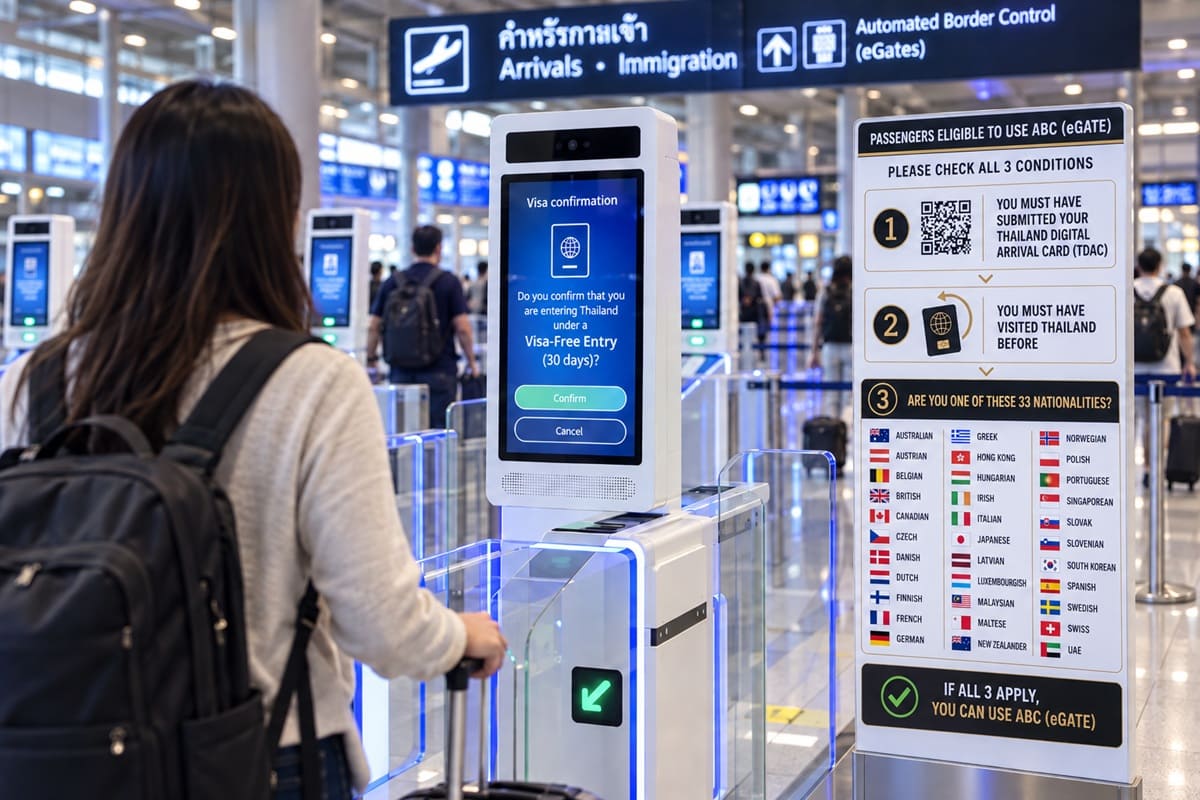
Foreign visitors should also take into account other current requirements, including the Thailand Digital Arrival Card (TDAC), which must be completed online before arrival in Thailand. This digital arrival card does not replace a visa and, on its own, does not constitute permission to enter the country.
VisasNews Take
This reminder should not be seen as a sudden tightening of Thailand’s entry formalities. It mainly brings back into focus a rule many travelers are unfamiliar with because it is not checked every time. To avoid unnecessary questions on arrival, travelers should be able to show that their stay is funded, that accommodation has been arranged, and that an outbound ticket is available where required. In Thailand, as in many countries, a visa or visa exemption allows a traveler to present themselves at the border, but final admission remains a decision made at the port of entry.