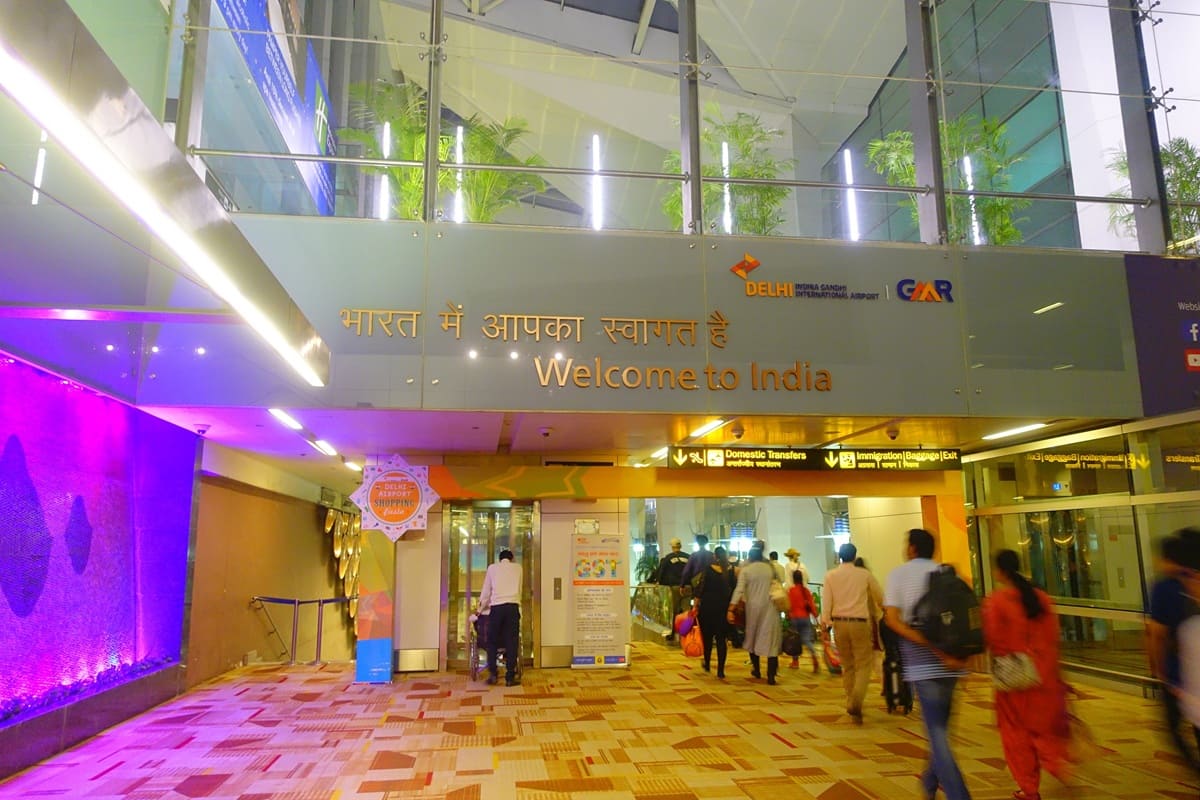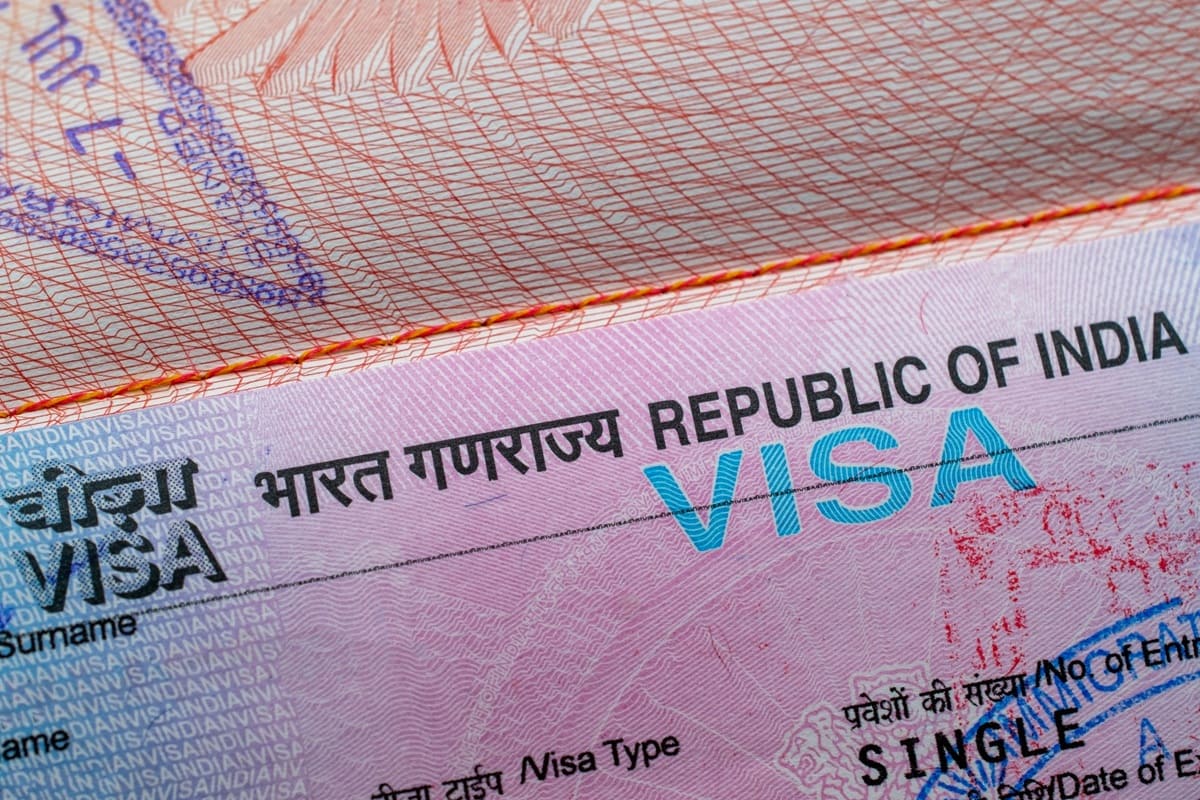
India could move to adjust its tourist entry formalities in the coming months.
A report published by NITI Aayog, the Indian government’s policy think tank, in collaboration with the Ministry of Tourism, recommends making entry into the country smoother for foreign visitors. Among the proposals is a gradual shift toward a “Tourist Visa-on-Arrival” for certain nationalities.
The report also points to likely improvements to the electronic visa (e-Visa) application portal, with the aim of making the online process simpler, more reliable and easier for foreign travelers to understand.
At this stage, these measures have not yet taken effect, but the issue is moving forward as India seeks to strengthen its tourism competitiveness against other Asian destinations.
An official report that puts visas at the center of India’s tourism strategy
The “Unlocking Growth in Tourism and Hospitality Sector” report was launched in late June in New Delhi during a national workshop organized by NITI Aayog and the Ministry of Tourism.
The document focuses in particular on the reforms needed to support tourism and hospitality in India. It covers investment, accommodation, tour operators and infrastructure, while also dedicating a specific section to visa-related reforms.
For Indian authorities, entry formalities are no longer being treated as a purely administrative issue. They are presented as a tourism competitiveness tool, alongside hotel capacity, transport links and the quality of the visitor experience.
A 90-day tourist visa on arrival under consideration
The most visible recommendation concerns the possible introduction of a tourist visa on arrival for selected countries.
The report specifically refers to a 90-day, multiple-entry “Tourist Visa-on-Arrival,” which would allow eligible travelers to obtain their entry authorization directly upon arrival at designated airports and seaports.
The goal would be to reduce pre-departure formalities, especially for last-minute trips, short stays, multi-country itineraries in the region and repeat visitors.
The scheme would, however, be gradual and targeted. Eligible countries could be selected based on several criteria, including tourism potential, reciprocity for Indian travelers, migration risk and cooperation with Indian authorities.
India already has a visa-on-arrival system, but it is currently limited to nationals of Japan, South Korea and the United Arab Emirates, provided they have previously obtained an Indian e-Visa or a regular paper visa.
India wants to make the e-Visa portal smoother
The report does not only recommend a possible visa on arrival. It also highlights several very practical difficulties in the current e-Visa application process.
NITI Aayog describes a process that remains too complex and fragmented. Travelers sometimes have to enter similar information across different systems, including for the visa, the digital e-Arrival Card or certain registration formalities. The report also says the e-Visa form asks for a large amount of information for a standard tourist stay, making the process heavier and potentially giving travelers the impression of unnecessary complexity.
The document also mentions technical issues on the portal, including session timeouts, blocking CAPTCHAs, display bugs and poor optimization for some browsers or mobile devices. Payments are another sensitive point, with transaction failures on some foreign cards and integration with international payment networks considered insufficient.
Application tracking is another important issue for travelers. The portal does allow users to check certain statuses, but the report says support remains limited when an application is still being processed, delayed or blocked by a technical problem. This imperfect user experience also fuels confusion with fake websites imitating official platforms.
India’s e-Visa has already seen several recent changes
India says it has already begun improving the system.
The report cites portal rationalization, user experience improvements, the integration of external payment gateways, more unified applicant profiles and simpler data entry. These changes are intended to make applications more reliable, easier to understand and less discouraging for foreign travelers.
Between August 2025 and February 2026, India also expanded the scope of the e-Visa, adding new eligible nationalities, with 175 countries currently eligible, as well as a new visa subcategory and several additional airports, seaports and land entry points.
Other measures are linked to the overall traveler experience, even though they are not directly visa-related. The report notably mentions multilingual tourist assistance, the digital e-Arrival Card and the UPI One World prepaid wallet, designed to make certain on-the-ground payments easier for international visitors.
This push toward digitization can also be seen in the recent return of Air Suvidha 2.0, the online health declaration for international passengers, which illustrates India’s intention to manage more travel formalities through digital channels.
Immigration services are already being modernized
These recommendations are part of a broader modernization effort already approved by the Indian government.
In March 2026, India’s Cabinet approved the continuation of the IVFRT program (Immigration, Visa, Foreigners Registration & Tracking) through March 31, 2031, with a budget of 18 billion Indian rupees, about $190 million. The program is designed to modernize services related to immigration, visa issuance and foreigner registration.
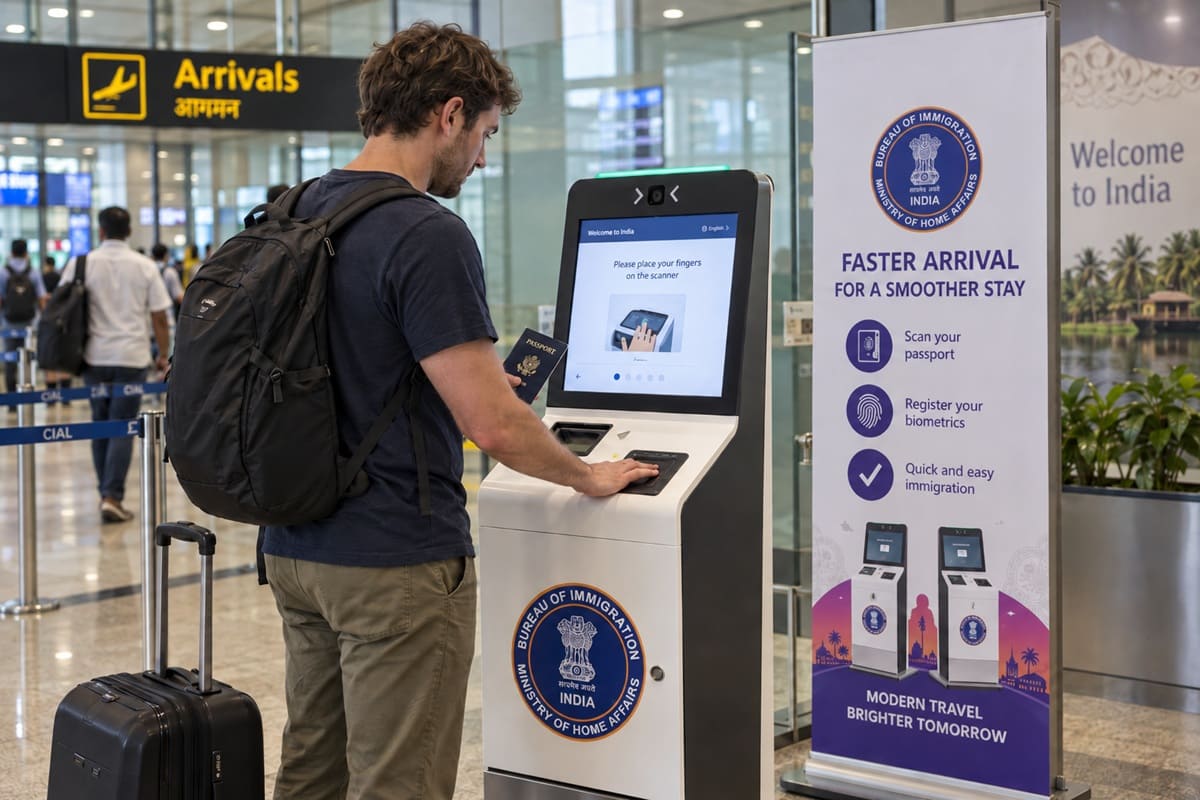
The government plans to introduce more integrated digital platforms, mobile services, self-service kiosks and stronger infrastructure at immigration checkpoints. According to the authorities, the IVFRT system has already allowed a very large majority of e-Visa applications to be processed within 72 hours in recent years and helped reduce the average immigration processing time.
Airports are also part of the strategy
Visa facilitation is only one part of India’s strategy. The country also wants to strengthen air connectivity, particularly to secondary cities, remote regions and tourist areas that remain harder to reach.
The government has approved a new phase of the UDAN program (Ude Desh ka Aam Naagrik, India’s regional air connectivity scheme), with 288.4 billion Indian rupees, about $3 billion, allocated for the 2026-2036 period. The plan notably includes the development of 100 airports from currently unserved airstrips, support for around 441 aerodromes and the creation of 200 modern heliports in hard-to-access areas.
VisasNews Take
India appears to be addressing a very practical issue for travelers: how simple the journey feels before departure. If confirmed, a tourist visa on arrival would mark an important shift for a destination where the e-Visa is useful in principle, but can still feel cumbersome in practice.
For now, nothing changes in the steps travelers must take. The expanded tourist visa on arrival remains a reform proposal, not a new rule in force. The e-Visa therefore remains the reference point for eligible travelers, who should continue to check their status on official Indian portals before departure.
The signal is still worth noting. India is no longer only talking about attracting more visitors. It is also beginning to tackle the small points of friction that can make travelers hesitate before booking: forms, payments, application tracking, arrival formalities and domestic connectivity.