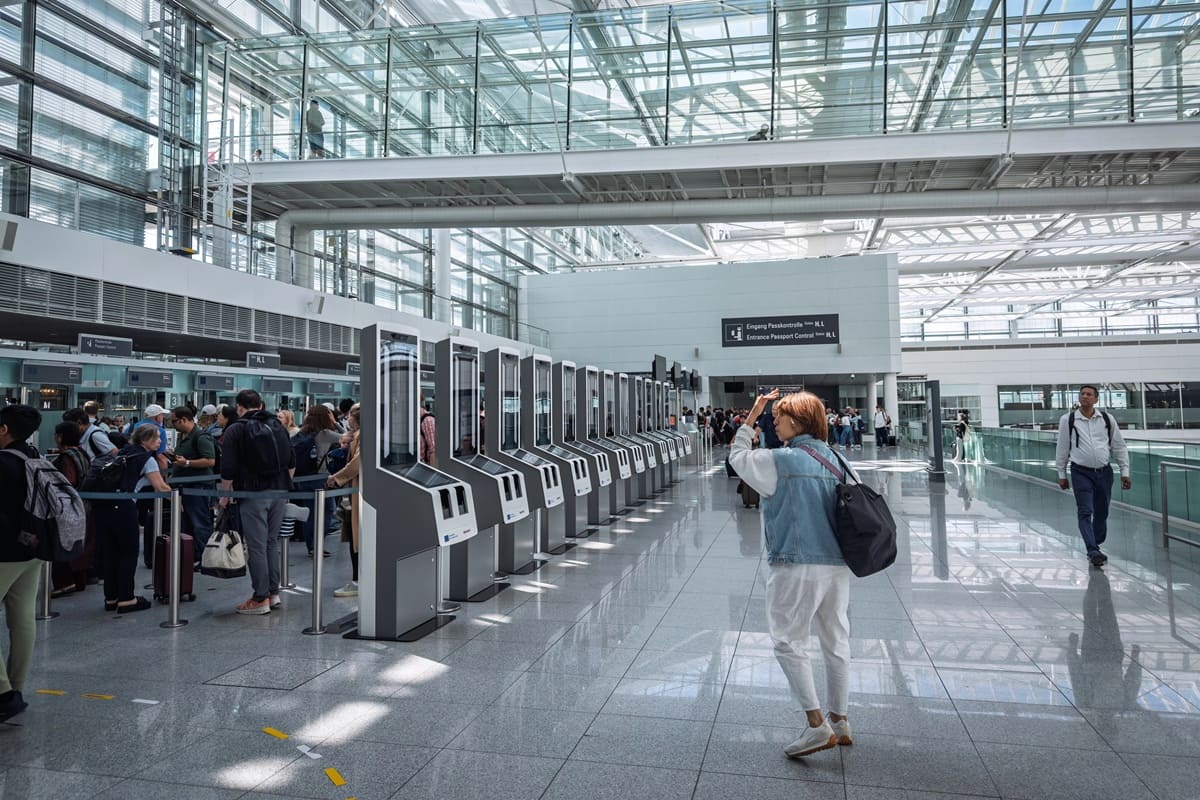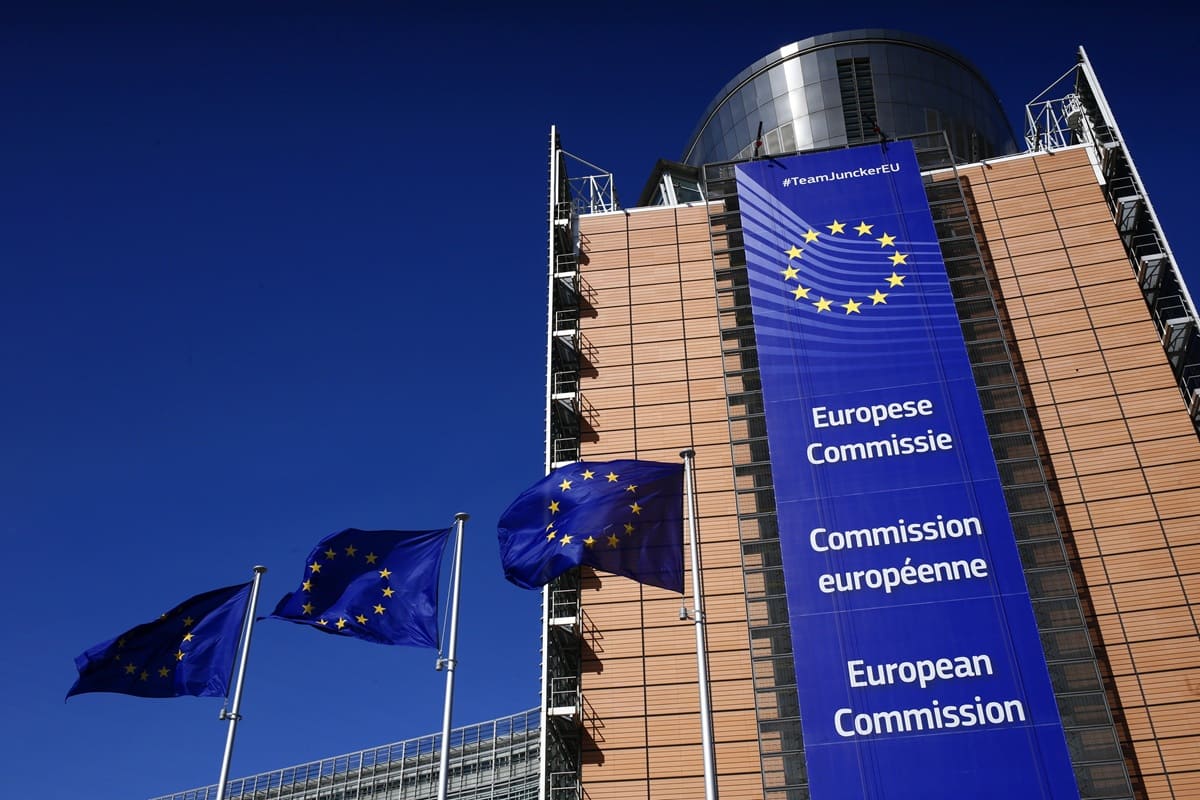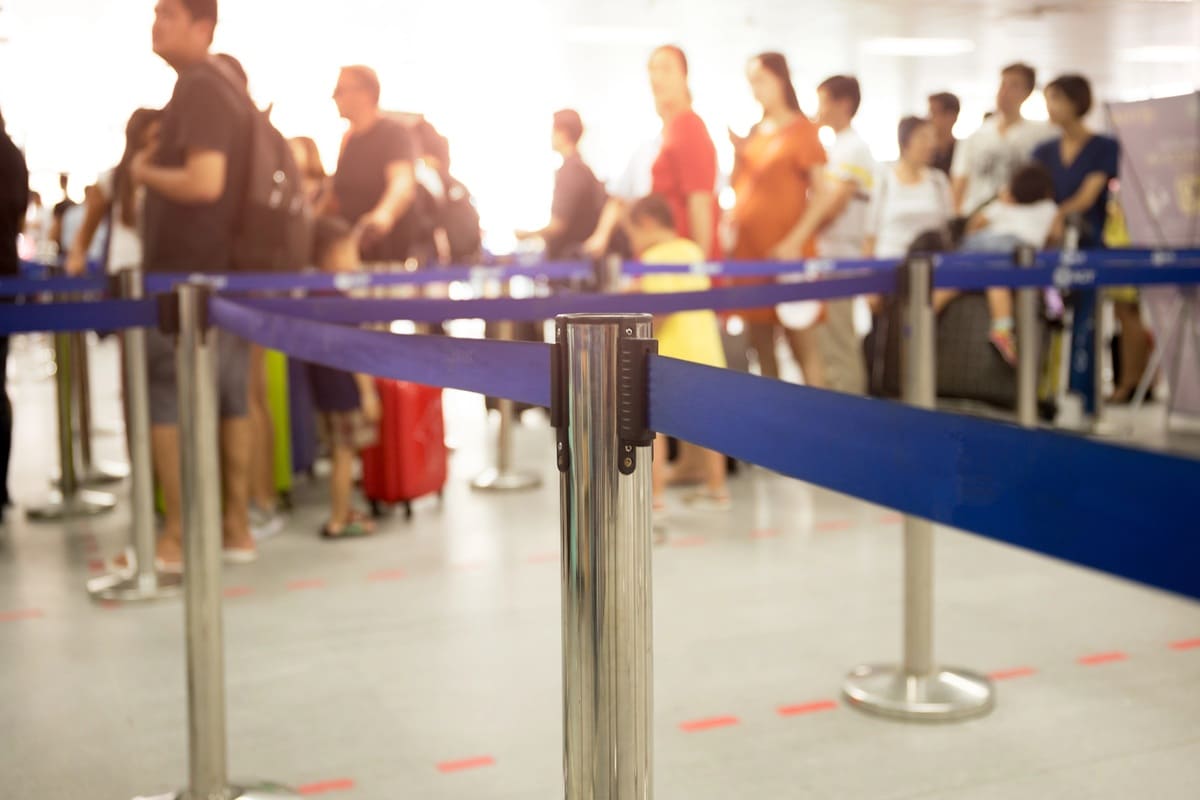
The Entry/Exit System (EES) is now in force at the external borders of the Schengen Area. But its rollout remains closely watched by the travel industry, as the smoothness of border checks still varies widely from one crossing point to another.
In an analysis published on June 9, 2026, the World Travel & Tourism Council (WTTC) warned of the potential economic consequences of prolonged queues at Schengen borders. According to the study, up to 41 million visitor arrivals in Europe and $45.4 billion in tourism spending could be at risk if long waits became a regular feature of entering the Schengen Area.
The analysis does not challenge the principle of the Entry/Exit System. Instead, it highlights a very real risk for European destinations: travelers may broadly accept a more modern border system, provided it does not turn arrival in Europe into a long, uncertain or poorly understood experience.
Three-hour delays could change travel choices
The scenario examined by the WTTC is based on regular waits of three to four hours at borders. In that situation, about one-third of surveyed travelers said they would be much less likely to visit the Schengen Area, or would choose not to visit at all.
The risk appears particularly pronounced in the U.K. market. According to the survey, 39% of travelers from the United Kingdom said they would be much less likely to travel to the Schengen Area if waits of three hours or more became common. That figure stands at 33% among U.S. and Canadian travelers, and 27% among Australian travelers.
Applying these findings to 2026 visitor forecasts, the WTTC estimates that 41 million arrivals could be exposed to a risk of postponement, cancellation or a shift toward other destinations. The tourism spending potentially affected would reach $45.4 billion.
The study also found that 63% of surveyed travelers would likely consider a destination outside the Schengen Area if delays were regularly expected. Among those who would change their plans entirely, 4% would choose a European destination outside Schengen, such as Ireland or Cyprus, while 6% would travel outside Europe altogether.
These figures give an economic dimension to the difficulties already observed since the EES came into force. The system can operate smoothly when equipment, staffing and organization are properly coordinated, but it can also lengthen processing times when procedures are poorly managed or passenger flows are heavy.
A system broadly accepted, but still poorly understood
The WTTC stresses an important point: surveyed travelers do not reject the EES. After reading a description of the system, 65% of respondents said they supported it. Support was highest in the United States, at 74%, and in Australia, at 70%, but lower in the United Kingdom, at 55%.
The use of biometrics also does not appear to face widespread opposition. Only 6% of surveyed travelers said they had a very negative view of biometric border checks. However, 33% took a neutral position, saying their support would depend on how their data is managed and used.
The most frequently cited benefits were stronger border security, mentioned by 57% of respondents; faster processing on future trips, cited by 52%; and greater confidence in border controls, mentioned by 43%. Travelers also pointed to better identification of overstayers and less reliance on manual passport stamping.
But awareness of the system remains limited. According to the study, 55% of surveyed travelers have heard little or nothing about the EES. Nearly one in two travelers, 49%, do not know what will be required of them when entering or leaving the Schengen Area.
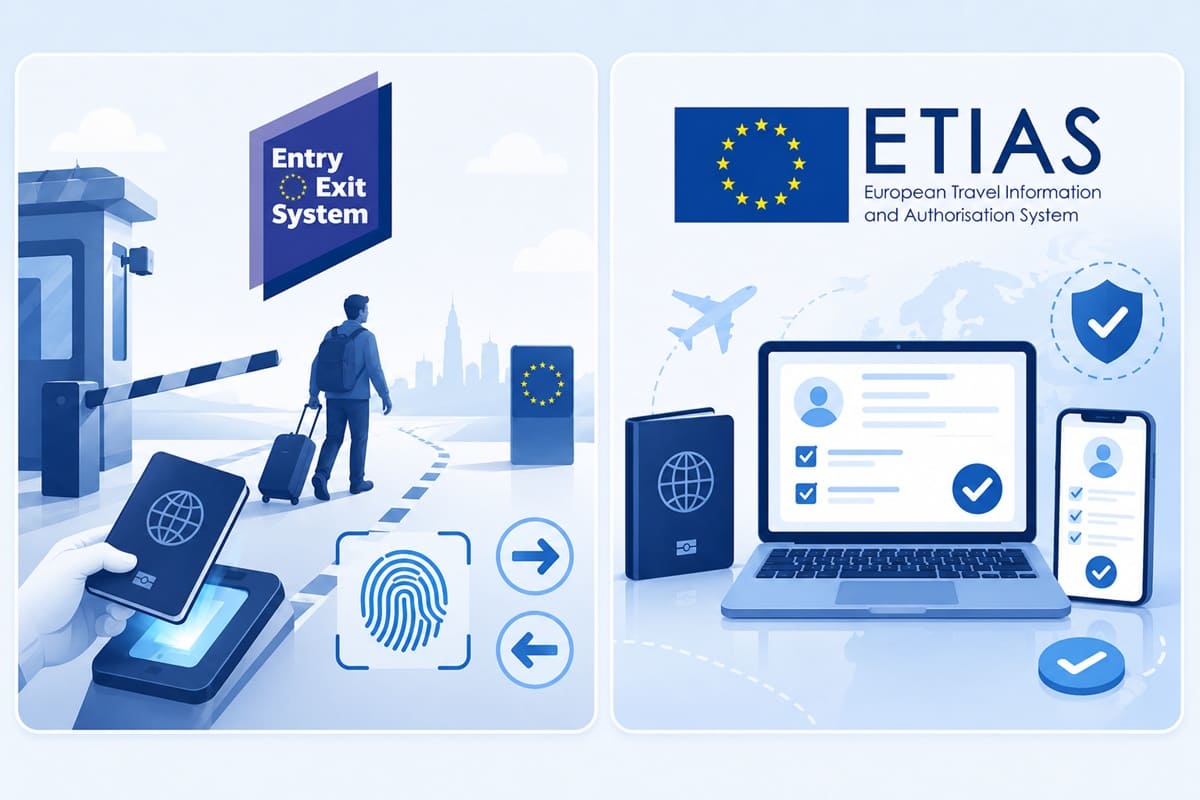
That lack of understanding is particularly problematic during the system’s ramp-up phase. The EES requires, in particular, the registration of a facial image and four fingerprints during a traveler’s first crossing, followed by lighter checks on subsequent trips. If travelers do not understand when these formalities apply, waiting times may become harder to anticipate and accept.
Waiting times are travelers’ top concern
For surveyed travelers, the main concern linked to the EES is longer waiting times, cited by 39% of respondents. Data privacy, in connection with the use of biometrics, follows closely behind at 36%.
Other concerns relate directly to the practical organization of travel. Respondents cited the risk of missing a return flight, mentioned by 28%; additional hassle when flying, also cited by 28%; and the possibility of missing a connecting or onward flight, mentioned by 26%.
The report also points to confusion about how the EES actually works. To prepare for possible delays, 23% of surveyed travelers said they planned to arrive earlier at their departure airport. But the EES applies at Schengen entry and exit border checks, not as a pre-boarding formality in the way ETIAS will.
That confusion confirms one of the study’s main findings: the issue is not only technical. It is also educational. Travelers need to know what will be required of them, when it will happen, and how much time the procedure may add to their journey.
WTTC calls for more pre-registration and clearer information
To reduce friction, the WTTC is urging European member states to strengthen three areas: digital pre-registration, communication and operational readiness.
The first priority concerns digital tools that would allow certain information to be processed before travelers reach the border. In the survey, 28% of respondents cited digital handling before travel as their top expectation for making the EES smoother. The WTTC is calling in particular for faster adoption of the “Travel to Europe” app, designed to support digital pre-registration.
The second priority is traveler information. The study shows that 22% of respondents want clear, step-by-step instructions before departure. The WTTC recommends a coordinated communication campaign in key origin markets, especially the United Kingdom, the United States, Canada and Australia. Airlines, airports, travel agencies, tour operators and tourism destinations should all have simple and consistent messages explaining how the system works.
The third priority concerns operational conditions at borders. The organization says fully functional equipment, sufficient staffing and smoother procedures are needed at all border crossing points. Surveyed travelers also expressed a clear expectation for fast, reliable and predictable processes.
Gloria Guevara, WTTC president and CEO, said the EES represents “an important step forward in modernising Europe’s borders and strengthening security.” But she stressed that the challenge is no longer whether the system should move forward: it is how to ensure the smoothest possible implementation through better cooperation between governments, border authorities and the travel sector.
According to Guevara, solutions already exist, including greater use of digital pre-registration tools, better communication with travelers and stronger operational readiness at border crossing points.
A test for the Schengen Area’s tourism image
The study shows that travelers are willing to accept some disruption if the EES eventually makes travel smoother. Overall, 87% of respondents said they would accept minor inconvenience if the system improves future border crossings. But 55% said their acceptance depends entirely on the length of the delay.
The WTTC also found that, if major disruption occurred, 69% of travelers would believe the EES should be adapted or temporarily paused until the problems are resolved. Only 22% said the system should continue as planned regardless of disruption.
For European tourism, the issue is clear: the EES can strengthen security, improve the tracking of entries and exits, and modernize border controls, but its acceptance will depend heavily on the experience travelers have at the border.
With ETIAS still expected by the end of 2026, the operational success of the EES is also essential to avoid a buildup of poorly understood requirements for visa-exempt travelers. The WTTC’s message is therefore less a criticism of the system than a warning: a digital border will only be truly accepted if it remains clear, predictable and sufficiently smooth.