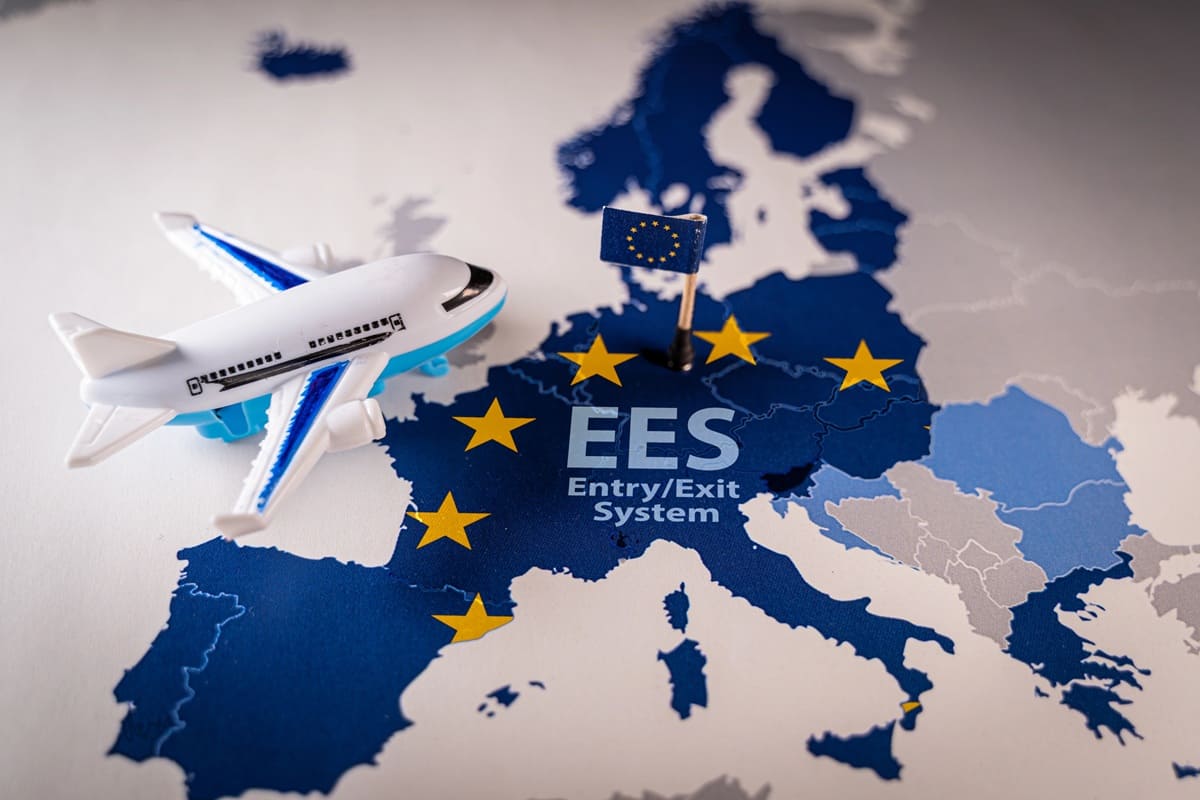
Since April 10, 2026, third-country nationals traveling to the Schengen Area for short stays have, in principle, been required to be registered in the EES when crossing the border.
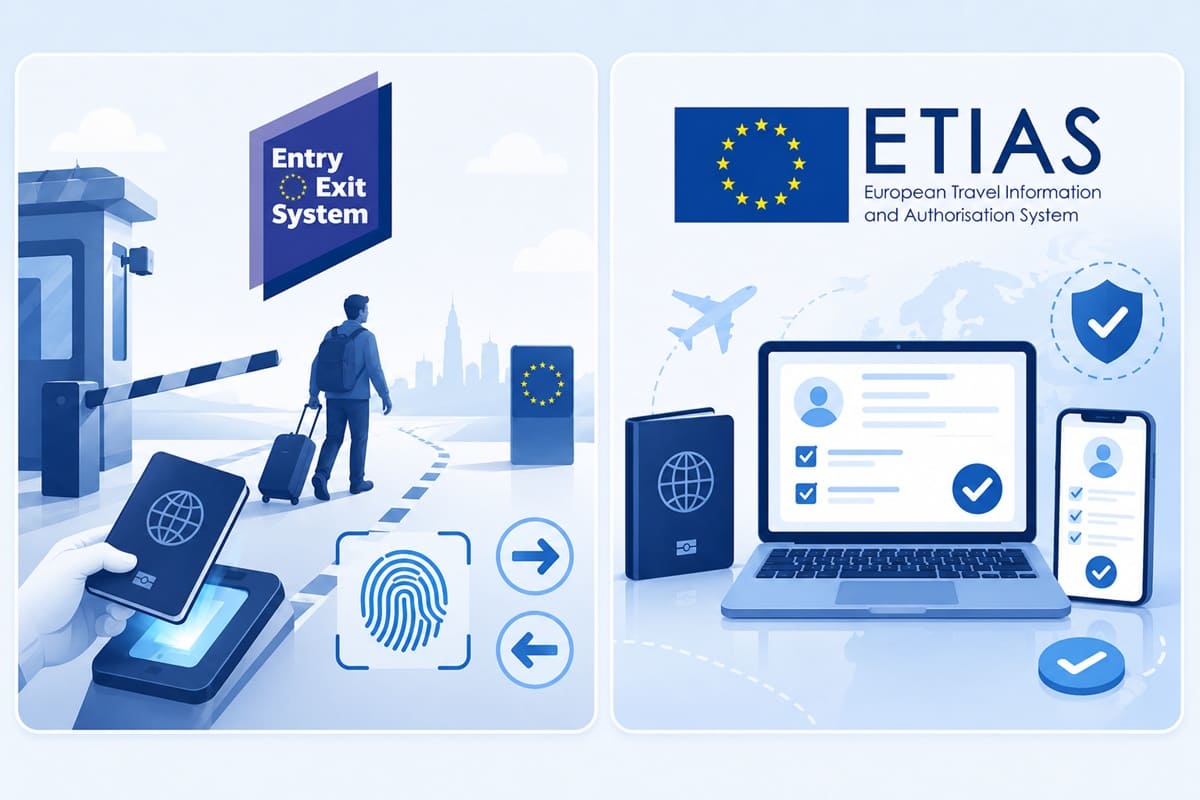
The system includes the collection of a facial image and four fingerprints during the first registration, followed by lighter checks on subsequent crossings. For British, American, Australian and Canadian travelers, among others, this new step marks a significant change in the formalities for entering Europe.
Speaking on The Independent’s travel podcast, Dr. Nick Brown, a specialist in European systems and a former IT professional for international organizations, described a rollout that varies sharply from one country and airport to another.
“With ambitious plans in some places, EES is working absolutely like clockwork. In others, it isn’t,” he said, pointing to both mistakes by national authorities and, in some cases, “technological chaos.”
At Palma, an EES process seen as smooth and well organized
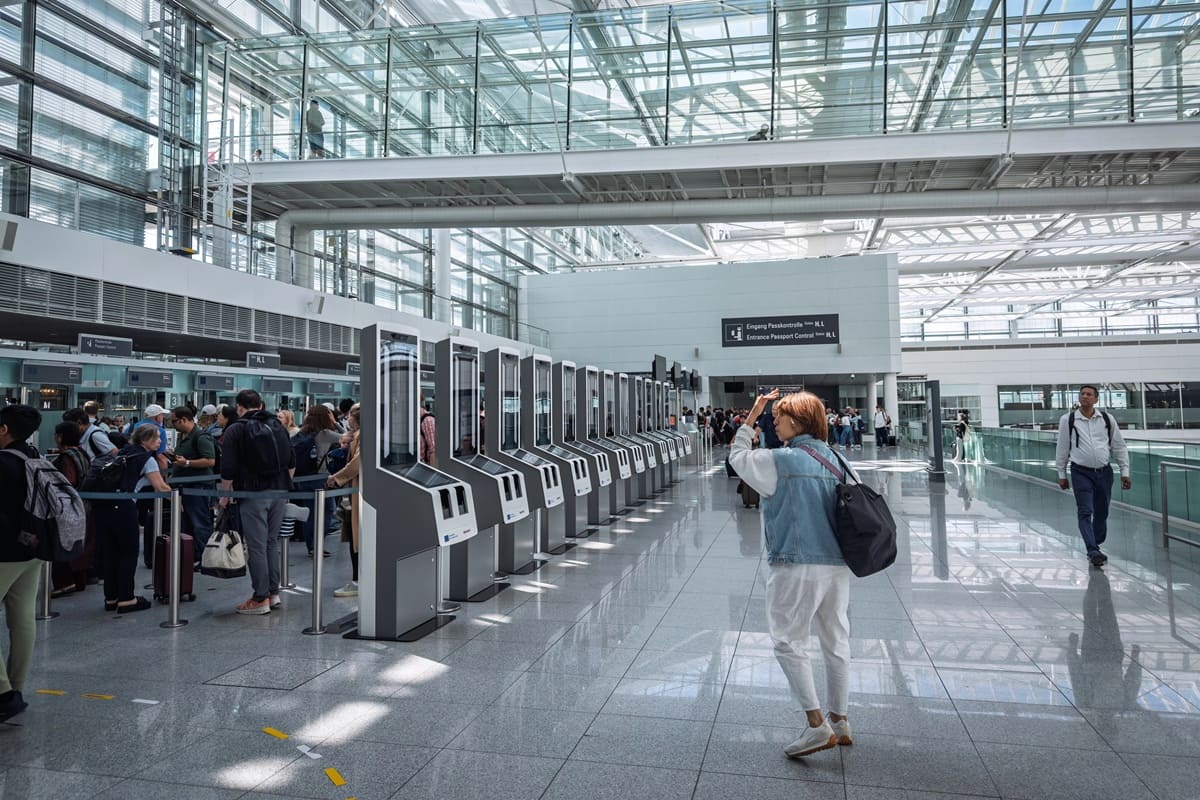
The expert cited Palma de Mallorca Airport, where he lives, as an example of a successful rollout. According to him, the kiosks and eGates allow travelers to complete the process without any particular difficulty, provided they use their passport correctly.
“When I go to Palma airport, everything seems very, very well organized and run. The machines are working. People are giving the ‘right’ amount of biometrics,” Brown said. Before a flight to London, he said he carried out “a little bit of time and motion” to see how long the process actually took.
Based on his observations, registration could take about 45 seconds when travelers placed the correct passport page in the reader. “Actually a couple of people were looking around going, ‘Is that it?’ And the very helpful front-of-house staff were saying, ‘Yep, that’s fine,’” he said.
The kiosk, however, is only the first step. “Then you go to the eGate because the kiosk just pre-registers your biometric. The eGate is what actually admits you to Spain,” he explained. For Brown, the example shows that an effective rollout is possible when equipment, staff and organization are properly coordinated.
Ongoing difficulties at some airports
The situation appears far more complicated at other border points…
The expert pointed in particular to Milan, where problems have been reported at all three airports serving the city. “Milan appears to be making up everything as it goes along,” he said, criticizing the systematic fingerprinting of travelers who had already been registered on arrival.
These problems illustrate one of the main challenges of the EES: adding biometric formalities can quickly increase border processing times when passenger flows are heavy or when procedures are not properly managed.
In some cases, biometric collection may be temporarily suspended when queues become too long. For Brown, that flexibility is not unusual. “The rules are actually designed so that it doesn’t matter absolutely if you don’t get your biometrics done on one or other occasion,” he said.
The system’s aim remains for the vast majority of affected travelers to be registered or checked on most crossings. “We’re not running a nuclear program here,” the expert said, stressing that member states have a degree of flexibility in how the system is implemented on the ground.
A system designed before Brexit
Brown also noted that the EES was designed before Brexit. The EU legislation establishing the Entry/Exit System was adopted before the United Kingdom left the European Union and became, for short stays in the Schengen Area, a third country.
That change significantly expanded the number of travelers covered by the system, particularly at borders heavily used by British travelers. “EES was never designed to be implemented at 400 airports,” he said. In his view, the system had instead been designed for a few dozen major airports handling flights from the Gulf, North America and other regions outside Europe.
That reality partly explains the current difficulties. The EES is not just a new IT tool. It also requires a practical reorganization of passenger flows, control equipment, staff training and coordination between national authorities, airports and carriers.
ETIAS still expected in the final quarter of 2026
Despite these problems, Brown does not believe the European Union will necessarily postpone the launch of ETIAS, the European Travel Information and Authorization System. This electronic travel authorization, intended for visa-exempt travelers to the Schengen Area, is set to be the next major step in the digitalization of entry formalities in Europe.
“I think the EU will declare EES a success, and so they will maintain that date,” he said. The official timetable still calls for ETIAS to go live in the final quarter of 2026.
ETIAS will not be a visa, but an electronic travel authorization obtained before departure by travelers who do not need a short-stay visa. In principle, it will be similar to the U.S. ESTA or the U.K. ETA. The authorization will cost €20 and may be valid for up to three years, or until the passport used for the application expires.
A transition period before ETIAS becomes mandatory
The expert nevertheless urged travelers not to worry too soon. Even if ETIAS is launched in late 2026, it is not expected to become mandatory for all travelers immediately.
“Nobody needs to worry about that too much, however, because firstly it might slip. Also there will be a six-month phase-in period during which time ETIAS will not be required,” Brown said.
He illustrated that transition period with a concrete example. If ETIAS went live on October 1, 2026, travelers would not necessarily need to have it on that exact day to board a flight to Europe. “So you’ll have six months to get it. On that basis, you wouldn’t actually need it to get on the plane until 1 April [2027],” he said.
This transition period will be essential for travelers, airlines, travel agencies and border authorities. It is intended to avoid a sudden break in boarding procedures and to give visa-exempt travelers time to adjust to the new requirement.
ETIAS could even make some checks smoother
Unlike the EES, which applies directly at the border during entry and exit, ETIAS will be checked before departure. Airlines and other carriers will be required to verify that affected travelers hold a valid authorization before allowing them to board.
“As with the U.S. ESTA, and as with the U.K. ETA, if you don’t have an ETIAS, they aren’t going to let you on the plane,” Brown said.
In his view, that pre-departure check could even help make some arrival procedures smoother. “It might even make the EES process quicker because everyone who’s landing — their passport will already be in EES. So it might speed things up a little,” he said.
For travelers, the distinction between the two systems remains essential. The EES is a border registration system, handled at the time of entry and exit. ETIAS will be a pre-travel electronic authorization, requested online before departure by visa-exempt travelers.