ETIAS launch could be pushed back to 2027
The launch of ETIAS, the electronic travel authorization expected for visa-exempt travelers heading to the Schengen Area, could ultimately be pushed back to 2027.
The European Entry/Exit System, known as EES, is now fully in use at the external borders of the Schengen Area, but its operation still varies widely from one border crossing to another. Despite these difficult early stages, the European travel authorization ETIAS remains expected in the final quarter of 2026.
The 2026 State of Schengen report confirms the growing role of new digital tools at Europe’s borders. Following the full rollout of EES in April, the European Union is now preparing for the launch of ETIAS, expected in the final quarter of 2026.
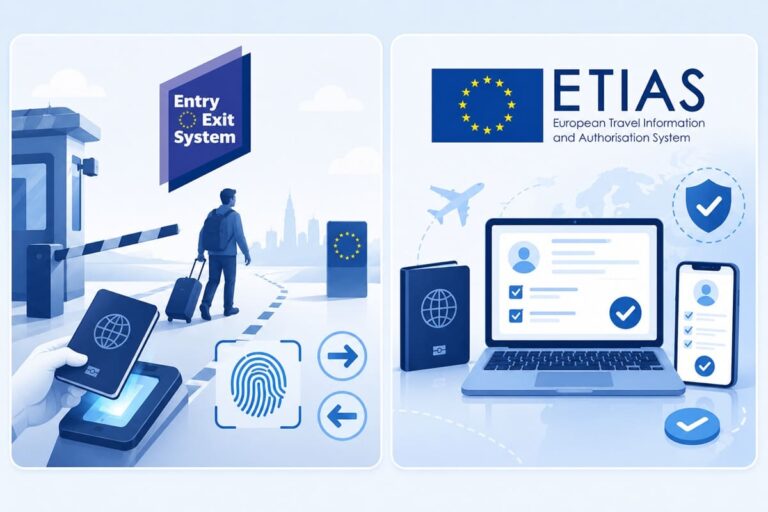
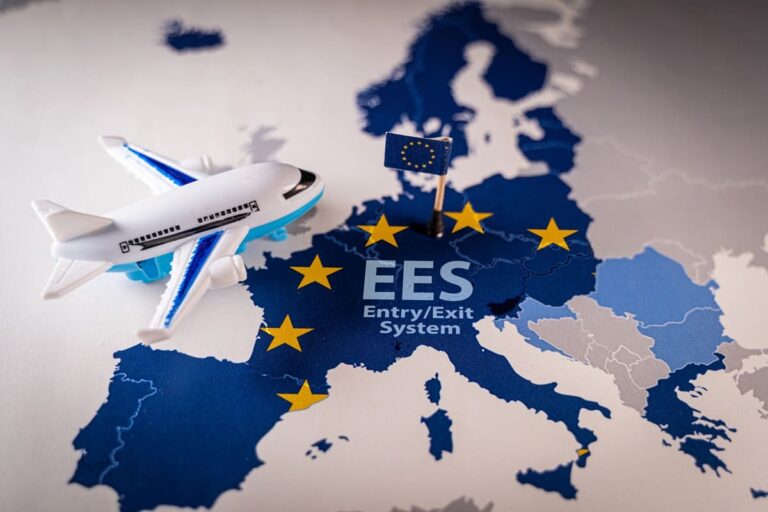
The European Commission outlines the key differences between EES and ETIAS, two systems that are often mentioned together but do not apply to exactly the same travelers or the same stage of the journey.
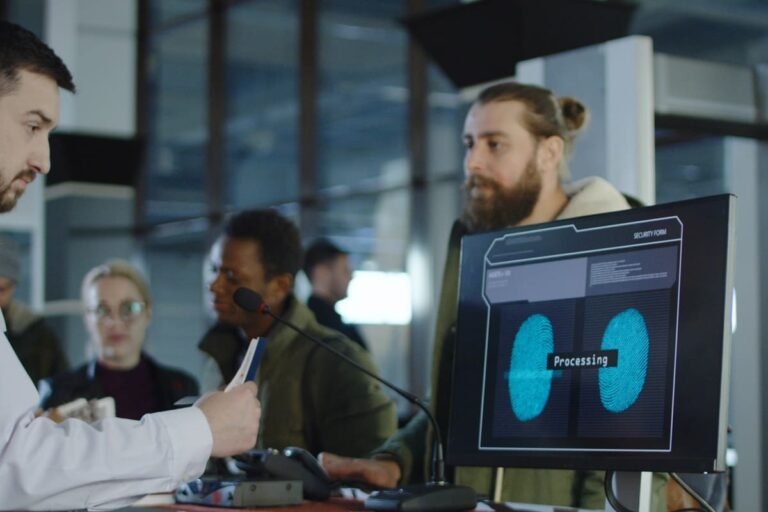
Europe’s new Entry/Exit System, or EES, is now fully operational. For millions of non-European travelers, passport stamps are becoming a thing of the past, replaced by digital border records and biometric data collection.
The modernization of the European Union’s external borders is now underway. Since the fall of 2025, the Entry/Exit System (EES) has been gradually rolled out, while ETIAS, expected by the end of 2026, will complete this new digital landscape. Two acronyms that are often confused, yet two clearly distinct systems, both reshaping travel formalities for journeys to Europe. Here’s a closer look.
The European Commission has simultaneously presented the first European strategy on asylum and migration management and the European Union’s very first visa strategy. Designed as two complementary pillars, these initiatives set out a shared direction for the next five years, aimed at strengthening border controls, reducing irregular migration, attracting talent, and modernizing mobility management in a changing geopolitical and security environment.
Starting on October 12, 2025, the new Entry/Exit System (EES) for travelers will begin to be rolled out at the external borders of European countries. Designed to modernize controls, this system will be fully operational by April 2026. The Entry/Exit System (EES) is a European program aimed at automating the
The fee for the ETIAS electronic travel authorization, expected at the end of 2026, will increase from €7 to €20. This decision by the European Commission aims to cover the system’s costs and align it with international standards. However, several European tourism stakeholders have expressed reservations…
Even though the European Travel Information and Authorization System (ETIAS) has yet to be rolled out, its original price tag of €7 might already be headed upward. The reason? The European Union is looking for ways to tackle its post-COVID debt. Set to take effect at the end of 2026,
As the Schengen Area marks its 40th anniversary, the European Commission has unveiled a bold roadmap to modernize border management. With a focus on digitizing visas, rolling out the EES and ETIAS systems, and strengthening cybersecurity, the EU is shaping a more seamless, secure, and digitally-driven Schengen zone. As the
Members of the European Parliament’s Civil Liberties Committee have given the green light to the phased implementation of the Entry/Exit System (EES) at the European Union’s external borders. On April 23, On April 23, the European Parliament’s Civil Liberties Committee approved the step-by-step deployment of the Entry/Exit System (EES), continuing
The European Union has announced a further postponement of the ETIAS and EES systems, designed to modernize border control in the enlarged Schengen area. Faced with technical and organizational challenges, their implementation is now scheduled for October 2025 and the end of 2026.
In 2025, the European Union will introduce two new systems to strengthen the management of its external borders: EES and ETIAS. The aim is to modernize controls, improve security and facilitate the flow of travelers. Find out what’s going to change and how to prepare. The European Union is preparing