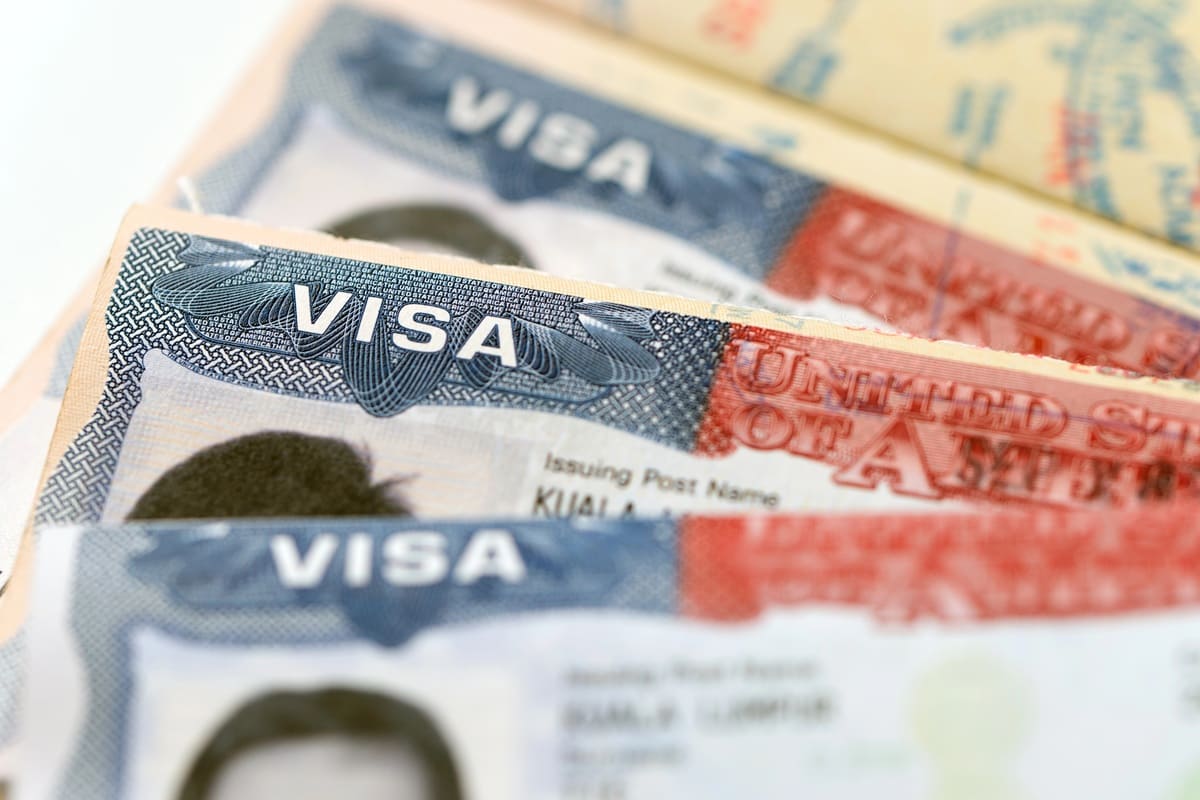
Visa applicants in Africa seeking to travel to the United States may soon face a major reorganization of the U.S. consular network.
According to an internal memo obtained by the Associated Press and three U.S. officials cited by the news agency, the State Department plans to significantly reduce the number of U.S. embassies and consulates in Africa authorized to process visa applications. The nearly 50 posts currently handling these procedures would be reduced to 20 consular hubs in the coming weeks.
No precise date has reportedly been set, but implementation is expected in June, according to the officials cited by AP.
The State Department has not publicly confirmed the details of the reorganization, but said it regularly reviews its overseas operations to align resources with U.S. priorities.
A consular network narrowed to 20 hubs
According to the internal memo cited by the Associated Press, only 20 U.S. missions in Africa would continue to handle the full range of visa processing.
The designated hubs would reportedly be:
- Abidjan (Côte d’Ivoire); Accra (Ghana); Addis Ababa (Ethiopia); Cape Town and Johannesburg (South Africa); Dakar (Senegal); Dar es Salaam (Tanzania); Djibouti (Djibouti); Kampala, (Uganda); Kigali (Rwanda); Kinshasa (Democratic Republic of the Congo); Lagos (Nigeria); Lomé (Togo); Luanda (Angola); Malabo (Equatorial Guinea); Monrovia (Liberia); Nairobi (Kenya); Port Louis (Mauritius); Praia (Cape Verde); and Yaoundé (Cameroon).
The list covers several major regions of the continent, but would leave many countries without full local visa-processing capacity. Applicants living in countries outside the hub network would need to travel to one of the approved locations to continue their application, particularly when a consular interview is required.
For affected travelers, the change could bring significant additional costs, including regional airfare, accommodation, local transportation, appointment availability issues and administrative requirements linked to entering the country where the relevant consulate is located.
Services would continue, but be limited in non-hub countries
Consular sections in countries not included on the list would not necessarily close. They would continue to operate, but with reduced responsibilities.
According to the reported plan, they could still provide certain services to U.S. citizens, including passport renewals, emergency consular assistance, cases involving a specific national interest and some diplomatic visa applications.
Routine immigrant and nonimmigrant visa processing, however, would be transferred to the designated hubs. Depending on the case, this could affect B-1/B-2 business and tourist visas, student visas, exchange visitor visas, work visas and immigration procedures.
A new step amid tighter visa restrictions
The reorganization would come as part of a series of measures taken by the U.S. administration to tighten access to visas and strengthen immigration controls.
Since the beginning of 2026, several restrictions have already affected African nationals. The State Department has fully or partially suspended visa issuance for nationals of several countries under Presidential Proclamation 10998, which took effect on January 1, 2026. Some African countries are subject to a full visa suspension, while others face partial restrictions covering visitor, student, exchange or immigrant visas.
The United States has also been applying a visa bond pilot program for certain B-1/B-2 applicants. Nationals of several countries, including many African states, may be required to post a bond of $5,000, $10,000 or $15,000 if a consular officer determines it is necessary during the visa interview. Payment of the bond does not guarantee visa issuance.
Visa processing has also been disrupted in recent weeks by U.S. measures linked to the Ebola outbreak. Since May 18, 2026, the U.S. embassies in Juba, Kinshasa and Kampala have temporarily suspended all visa services, for both immigrant and nonimmigrant visa applications.
Applicants should anticipate delays and travel requirements
For African travelers planning to visit the United States, the practical impact would depend on the applicant’s country of residence, nationality, visa category and the capacity of the relevant consular hub to absorb additional demand.
Applicants could face longer appointment wait times at the posts that remain authorized to process visas, particularly if multiple countries are redirected to the same hub. Appointment availability, already uneven across U.S. embassies, could become a central factor in trip planning.
The change could also complicate procedures for students, business travelers, families, temporary workers and immigrant visa applicants who do not live in a country selected as a hub. In some cases, applying for a U.S. visa could require international travel before the planned trip to the United States even begins.
The State Department also notes in its general guidance that nonimmigrant visa applicants applying outside their country of nationality or residence may find it more difficult to qualify, and that visa application fees are nonrefundable and nontransferable.
A measure still awaiting official confirmation
At this stage, the reorganization has not yet been detailed on the official websites of the State Department or the U.S. embassies concerned. Travelers should therefore regularly check the instructions published by the relevant embassy or consulate before booking an appointment or arranging travel.
If implemented, concentrating visa processing in 20 hubs would mark a major shift in access to U.S. consular services across Africa. It would not necessarily change visa eligibility rules on its own, but it could make the process longer, more expensive and more complex for many applicants.
Travelers planning a trip to the United States are advised to begin the visa process as early as possible, check the validity of any fees already paid, monitor appointment availability and consult the official pages of U.S. embassies before making any nonrefundable bookings.