A false statement on a Chinese visa application could soon have lasting consequences for future travel to China.
On July 31, 2026, China’s State Council published new regulations governing entry and exit procedures. Signed by Premier Li Qiang on July 22, Decree No. 841 will take effect on September 15, 2026.
Among its key provisions is a new mechanism allowing authorities to temporarily bar foreign nationals from entering China if they provide false information during immigration procedures.
Entry bans of one to five years
Article 5 of the new regulations provides that a foreign national who submits false documents or makes false statements while applying for a Chinese visa abroad or seeking entry at a Chinese border checkpoint may be barred from entering the country for a period of one to five years.
Depending on the circumstances, the decision may be made by the authorities responsible for issuing visas or by China’s immigration authorities.
The penalty will therefore not be automatic, nor will every case result in a five-year ban. The regulations state that authorities may impose an entry ban and give them discretion to determine its duration within the one-to-five-year range. No detailed scale setting out which circumstances would result in a one-, two- or five-year ban has been published so far.
An immediate visa or entry refusal will also remain possible. Article 3 authorizes the relevant authorities to verify a traveler’s identity and the purpose of the application, conduct interviews, and request additional documents, information or electronic data.
Checks at Chinese consulates and at the border
The new rules do not apply only to applications submitted through a Chinese embassy, consulate or visa application center.
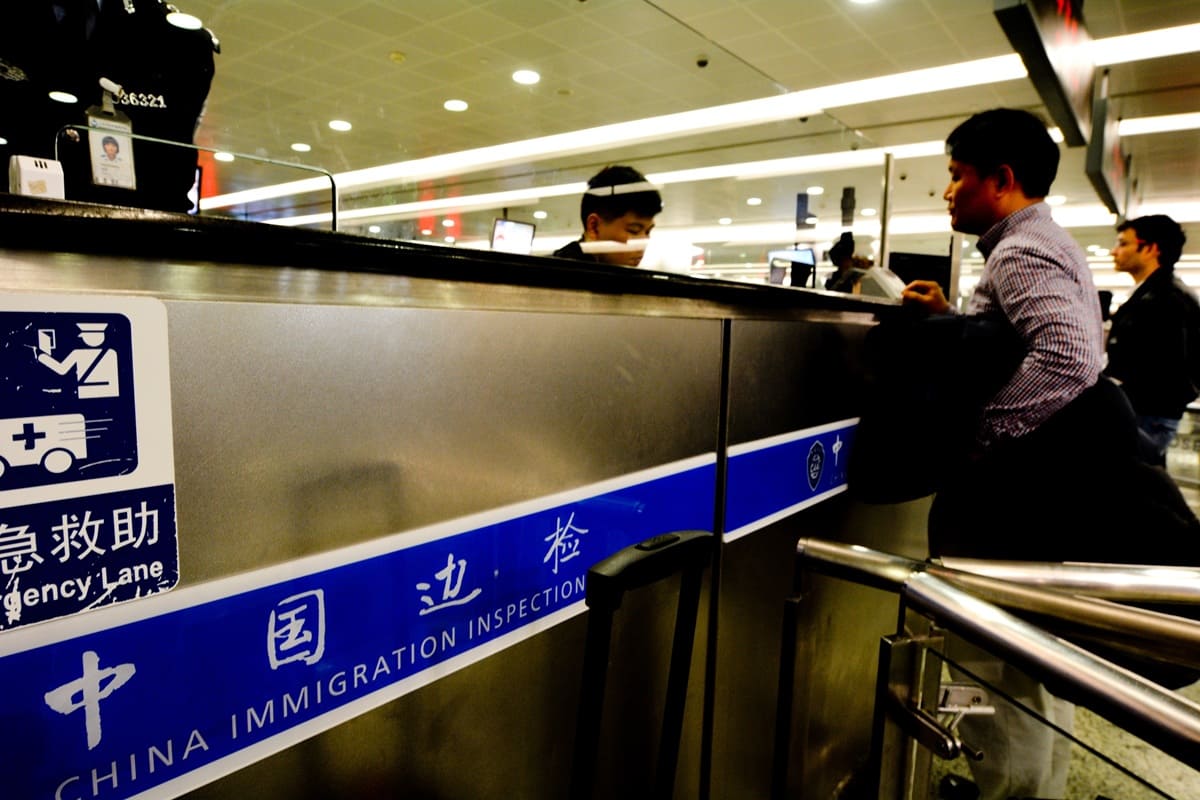
Article 5 also covers false information provided by a foreign national when they “apply for entry” at a Chinese border checkpoint. The provision may therefore be applied during immigration checks on arrival at an airport, seaport or land border crossing.
The wording does not limit the measure to visa holders. It is broad enough to potentially apply to travelers using a visa exemption or a visa-free transit arrangement when they are required to establish their identity, the purpose of their stay or the circumstances of their trip before border authorities.
Chinese authorities note that foreign nationals are admitted only after their documents have been examined and entry has been approved by border inspection officials. Existing law already allows entry to be denied when a traveler has used fraudulent means or appears likely to engage in activities inconsistent with the stated purpose of the trip.
Error, itinerary change or fraud: what the decree does not define
Decree No. 841 does not precisely define what will constitute a “false statement,” nor does it provide an official list of documents or situations that will result in an entry ban.
It therefore cannot be assumed that a simple data-entry error, a canceled hotel reservation or an ordinary change of itinerary will automatically lead to a multi-year ban.
Guidance issued by Chinese diplomatic missions and visa application centers does, however, provide some indication of the types of circumstances that may draw closer scrutiny from the authorities.
For example, a fabricated or deliberately altered invitation letter, a falsified bank statement, an entirely fictitious itinerary, the concealment of a previous stay in China, or presenting a business trip as ordinary tourism could potentially be treated as false documentation or a false statement.
By contrast, a genuine change of hotel, flight or travel plans after an application has been submitted cannot automatically be treated as fraud solely on the basis of the new regulations. Travelers should nevertheless be prepared to explain any such change and, when requested, provide updated and consistent information.
People and organizations issuing invitations are also covered
Responsibility under the new rules will not fall solely on the applicant or traveler.
Any individual, company or organization issuing an invitation letter or other supporting document will be responsible for the accuracy of its contents and will be required to cooperate with checks carried out by Chinese authorities.
An individual who provides a foreign national with a false invitation or fraudulent documents may face a fine of between 5,000 and 10,000 yuan. Companies and organizations may be fined between 10,000 and 50,000 yuan, with any proceeds obtained through the violation also subject to confiscation.
The decree also tightens oversight of intermediaries operating in China that provide paid consulting, application preparation or immigration-related services. These service providers will be prohibited from supplying false documents, helping clients produce them, or promoting their services using misleading or exaggerated claims.
These requirements apply to activities carried out within China. They do not mean that every visa agency established abroad will be required to register with China’s National Immigration Administration.
An existing requirement, now backed by a more specific penalty
Providing accurate information is not a new requirement for obtaining a Chinese visa.
China’s Exit and Entry Administration Law already allows a visa to be denied to a foreign national who has used fraudulent means. It also permits border authorities to refuse entry in such circumstances.
Visa procedures generally require applicants to complete an online application and submit the necessary supporting documents. Chinese embassies, consulates and visa application centers may request additional documentation or further information, and acceptance of an application for processing does not guarantee that a visa will ultimately be issued.
The key change taking effect September 15 is therefore the explicit introduction of an entry ban that may last from one to five years.
VisasNews Take
The five-year maximum should not be understood as an automatic penalty for every minor mistake on an application. The decree targets false documents and misleading statements, but it does not yet define the exact line between a clerical error, a genuine change of plans and fraud. For travelers, the key is consistency between the stated purpose of the trip, the supporting documents provided and the stay actually planned. Information that is no longer accurate should be corrected or explained rather than concealed.