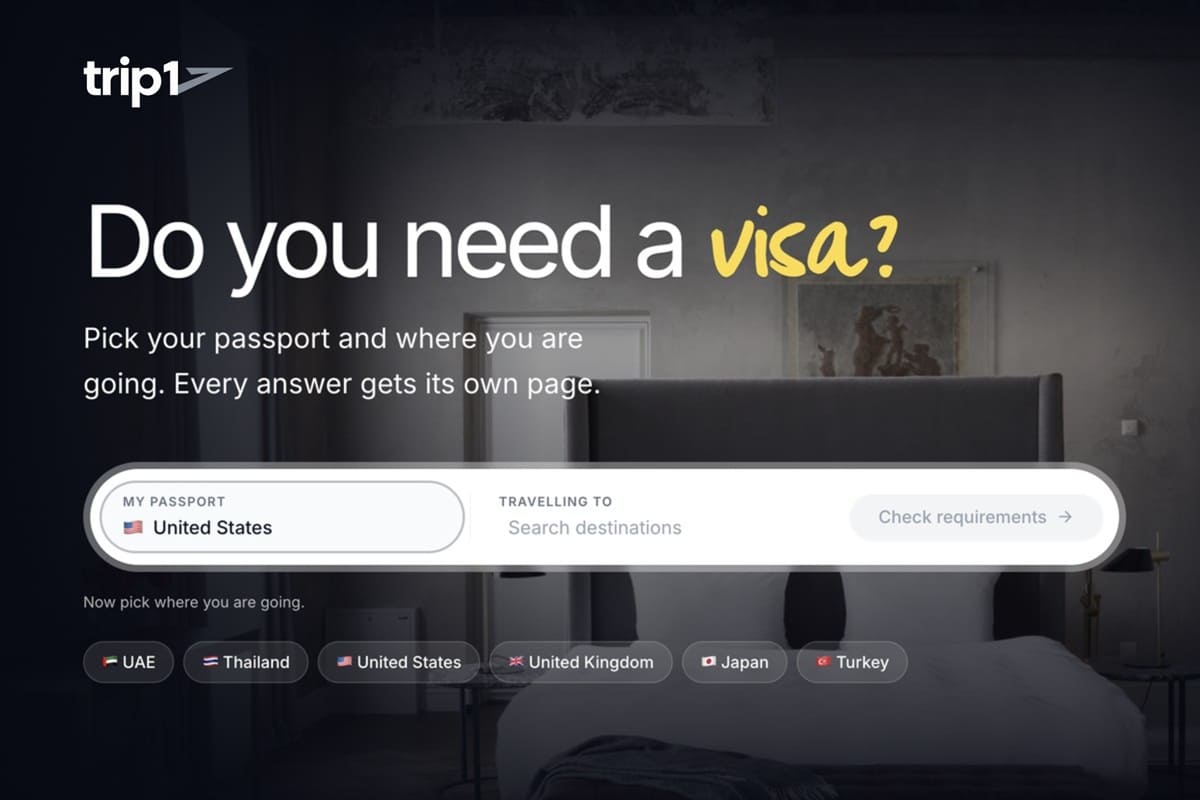
International travel planning typically begins with destinations, flights, and accommodation. Entry documentation is often left until the final stages, and that is precisely where many travellers encounter costly problems. trip1, a global hotel booking platform offering transparent pricing and flexible payment options, has addressed this gap with a free visa requirements tool designed for travellers of every nationality. Before confirming any booking, travellers can check visa requirements for their specific passport and destination and receive a clear, reliable answer within seconds.
This article examines why accurate visa information matters, how entry rules differ between travellers, and what makes trip1’s visa checker a practical resource for trip planning.
Why Visa Requirements Depend on Your Passport, Not Just Your Destination
Most travel visa information online is organised by country: a single page covering entry to Japan, another for Turkey, another for the United Arab Emirates. This approach overlooks a fundamental point. Visa requirements are determined by two factors together: the passport a traveller holds and the country they intend to enter.
The same itinerary may be entirely visa-free for one traveller while requiring weeks of preparation, supporting documents, and an embassy appointment for another. A German citizen and an Indian citizen booking identical flights to the same city can face completely different entry conditions. A generic country overview cannot reliably answer the question “do I need a visa?” for any individual traveller.
trip1’s visa checker resolves this by asking for both inputs. Users select their nationality and their destination, and each passport and destination combination is presented on its own dedicated page, showing the precise rules that apply.
Comprehensive Visa Requirements by Country: 211 Destinations Covered
The tool contains entry requirements for 211 countries and territories. Coverage extends well beyond high-traffic destinations such as the United States, the United Kingdom, Thailand, Japan, and the UAE, to include less frequently visited locations such as Bhutan, Kiribati, Suriname, and Timor-Leste.
Destinations are organised alphabetically for fast navigation, while the most frequently searched routes are featured prominently for immediate access. This breadth of coverage is particularly valuable for travellers planning multi-country itineraries, long-haul stopovers, or journeys to destinations where verified entry information is difficult to locate.
Visa-Free Countries: Discover Where Your Passport Can Take You
Beyond destination-specific searches, the platform offers a reverse lookup that many travellers find especially useful. By selecting a passport, users can view every country accessible to that nationality, grouped according to the type of entry each destination requires.
This feature is well suited to flexible or spontaneous travel planning. Travellers seeking visa-free countries for a short break, or destinations that require no advance paperwork, can review their options at a glance and plan accordingly. Passport pages are available for a broad range of nationalities, including Lithuania, Germany, France, the United Kingdom, the United States, Brazil, India, China, Nigeria, the Philippines, and many others.
Understanding the Five Types of Entry Requirements
Rather than offering a simple “visa required” or “visa not required” result, the tool classifies entry requirements into the five categories that travellers encounter in practice.
Visa-free entry allows travellers to be admitted on arrival for a defined number of days without prior application.
Travel authorisation refers to pre-screening systems such as ESTA for the United States, ETIAS for the Schengen Area, and electronic travel authorisations (ETAs) for the United Kingdom, Canada, and Australia. These are not visas, but approval must be obtained online before boarding.
E-visa is a full visa that is applied for, paid for, and issued entirely online prior to departure.
Visa on arrival is issued at the border upon landing, generally subject to a fee and the presentation of specified documents such as a return ticket and accommodation details.
Consular visa requires an advance visa application through an embassy or consulate, frequently involving biometric data collection and an in-person appointment.
Understanding which category applies has direct implications for trip planning. An e-visa provides certainty before departure, whereas a visa on arrival is only confirmed at the destination. Where both options exist, the e-visa is generally the more secure choice, as airlines verify it at check-in and any issues are identified before travel begins.
Passport Validity and the Six-Month Rule
Some of the most common travel disruptions are unrelated to visas altogether. The first concerns passport validity. Many countries require a passport to remain valid for a specified period beyond the date of arrival, with the six-month passport rule being the most widely applied standard. Some destinations require three months, while others require validity only for the duration of the stay.
This requirement is enforced by airlines at check-in as well as by immigration authorities at the border. Consequently, a passport expiring a few months after the planned return date can prevent boarding, even for a trip that requires no visa. trip1 displays the applicable passport validity requirement on every destination page.
Arrival Registration and Digital Entry Cards
A growing number of countries now require travellers to complete a separate digital arrival card or online registration before entry. Because this step is distinct from the visa application process, it is frequently overlooked, and failure to complete it can result in delays or complications at immigration. trip1 highlights any arrival registration obligations alongside the visa and passport validity information for each destination.
Clear Answers to Frequently Asked Visa Questions
The visa requirements page also includes a concise reference section addressing the terminology travellers most often find confusing. It explains the distinction between a visa and a travel authorisation, the practical process of obtaining a visa on arrival, the rationale behind passport validity rules, and how an e-visa differs from a visa issued at the border. The content is written for everyday travellers rather than immigration specialists, making it a useful introduction for anyone preparing for international travel, including first-time tourist visa applicants.
Official Sources Remain Essential
trip1 is transparent that its visa checker provides guidance rather than formal authorisation. Entry requirements can change at short notice, and final admission decisions rest with border officials. Factors such as dual nationality, residence permits, and travel for business, employment, or study may alter the applicable rules. The recommended approach is to use the tool to establish which requirements apply, then verify those details with the relevant official government source before booking or departing.
Conclusion: Check Entry Requirements First, Then Plan with Confidence
Verifying entry requirements at the outset is one of the most effective ways to avoid cancelled plans, forfeited bookings, and difficulties at the airport. With coverage of 211 destinations, dedicated pages for every passport and destination combination, and clear guidance on passport validity and arrival registration, trip1’s visa requirements tool makes this essential first step straightforward and efficient.
Once travellers have confirmed they meet the entry conditions for their destination, the remainder of their trip planning can proceed with confidence.