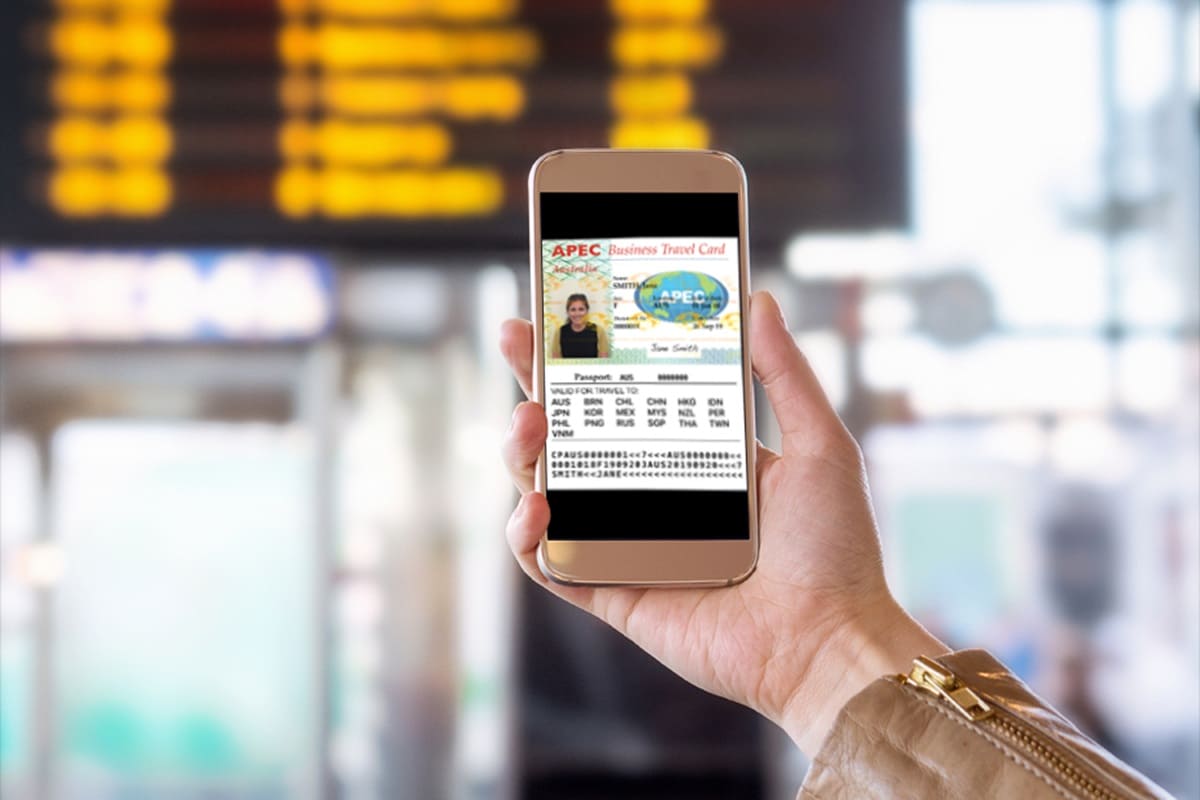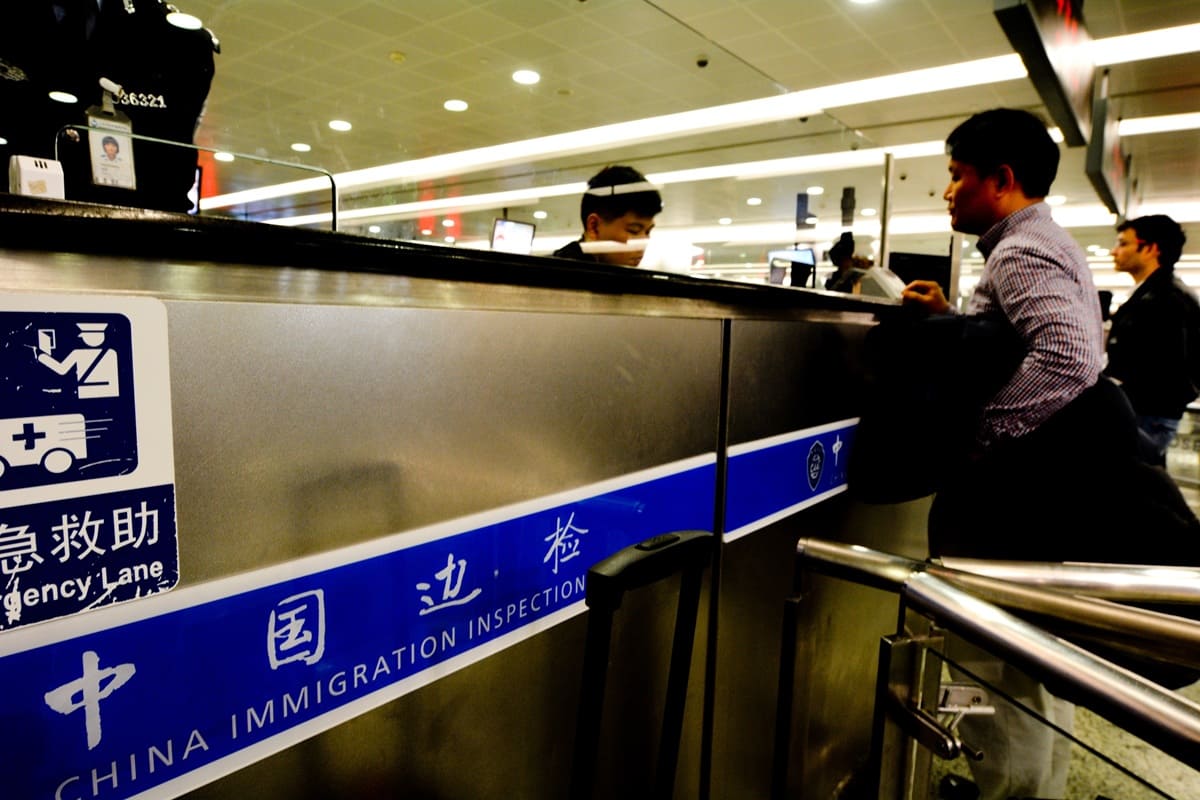
As China has just added Kyrgyzstan and Vietnam to its 240-hour visa-free transit program, nationals of 57 countries can now stay in certain parts of China for up to 10 days without a visa when traveling onward to a third country or region. The latest expansion took effect on August 20, 2026.
Originally limited to 72- or 144-hour stays, the policy was significantly expanded in December 2024. The maximum stay was increased to 240 hours, or 10 days, while travelers were also given access to a broader range of provinces. Following the addition of five new ports of entry in Guangdong Province in November 2025, the program now covers 65 ports of entry across 24 provinces, autonomous regions and municipalities.
This exemption should not, however, be confused with a standard tourist visa waiver: to qualify, travelers must genuinely be transiting through China on their way to another destination.
What is China’s 240-hour visa-free transit policy?
China’s visa-free transit policy allows eligible travelers to enter China without obtaining a visa in advance and stay for up to 240 hours within designated areas.
The key requirement is that the journey must involve a genuine transit. China must be an intermediate stop between two different countries or regions.
An itinerary such as: US → China → Japan may therefore qualify.
By contrast: US → China → US does not constitute transit to a third country or region.
Hong Kong and Macao can also count as third regions under the policy. An itinerary such as New-York → Shanghai → Hong Kong, or Hong Kong → Shanghai → Tokyo, may therefore meet the transit requirement, provided all other admission conditions are satisfied.
Final eligibility is determined by Chinese border control authorities upon arrival.
Which countries are eligible for China’s 10-day visa-free transit?
Since August 20, 2026, nationals of 57 countries have been eligible for the 240-hour visa-free transit policy. Kyrgyzstan and Vietnam have joined the 55 nationalities already covered by the program.
Europe: 40 countries
- Albania, Austria, Belgium, Belarus, Bosnia and Herzegovina, Bulgaria, Croatia, Cyprus, Czech Republic, Denmark, Estonia, Finland, France, Germany, Greece, Hungary, Iceland, Ireland, Italy, Latvia, Lithuania, Luxembourg, Malta, Monaco, Montenegro, North Macedonia, the Netherlands, Norway, Poland, Portugal, Romania, Russia, Serbia, Slovakia, Slovenia, Spain, Sweden, Switzerland, the United Kingdom and Ukraine.
Americas: 6 countries
- Argentina, Brazil, Canada, Chile, Mexico and the United States.
Oceania: 2 countries
- Australia and New Zealand.
Asia: 9 countries
- Brunei, Indonesia, Japan, Kyrgyzstan, Qatar, Singapore, South Korea, the United Arab Emiratesand Vietnam.
Indonesia joined the program in June 2025, increasing the number of eligible nationalities from 54 to 55. The addition of Kyrgyzstan and Vietnam now brings the total to 57.
What are the requirements for the 240-hour visa-free transit?
Being a national of one of the 57 eligible countries is not enough on its own. Travelers must meet several requirements.
They must:
- hold an international travel document valid for at least three months;
- meet the entry requirements for the next country or region on their itinerary, including holding a visa when required;
- have a confirmed ticket or other proof of onward transportation to a third country or region, with departure scheduled within the 240-hour period;
- enter China through one of the 65 authorized ports of entry;
- remain within the geographic areas covered by the program;
- complete the temporary entry formalities with Chinese immigration authorities.
Chinese authorities specify that travelers must be able to present a valid travel document and a confirmed onward ticket showing a specific date and itinerary.
Travelers using the 240-hour visa-free transit policy may also submit their arrival information online through China’s digital “e-Arrival Card”. The official portal states that this option is available to foreign travelers transiting through China who need to leave the restricted area of the port of entry and whose stay does not exceed the authorized 24- or 240-hour transit period.
By contrast, travelers making a direct 24-hour transit without leaving the restricted area of the port of entry are among those exempt from this declaration.
There is therefore no “240-hour transit visa” that must be obtained before departure. When the requirements are met, temporary entry procedures are completed with border control authorities upon arrival in China.
How are the 240 hours calculated?
The 240-hour period is calculated in a particular way.
China’s National Immigration Administration states that the authorized stay begins to be calculated from 12:00 a.m. on the day after the traveler enters China.
For example, if a traveler is admitted to China on the afternoon of September 1, the official 240-hour period begins at 12:00 a.m. on September 2.
In practice, this means the total time spent in China can be slightly longer than ten exact 24-hour periods measured from the traveler’s physical arrival time.
Travelers must, of course, comply with the final departure date and time specified by immigration authorities.
What are the 65 ports of entry eligible for China’s visa-free transit?
The 240-hour visa-free transit policy is available through 65 airports, seaports, railway terminals and land border checkpoints across 24 provincial-level regions.
| Province / municipality | Eligible ports of entry |
|---|---|
| Beijing | Beijing Capital International Airport; Beijing Daxing International Airport |
| Tianjin | Tianjin Binhai International Airport; Tianjin Port |
| Hebei | Shijiazhuang Zhengding International Airport; Qinhuangdao Port |
| Liaoning | Shenyang Taoxian International Airport; Dalian Zhoushuizi International Airport; Dalian Port |
| Shanghai | Shanghai Hongqiao International Airport; Shanghai Pudong International Airport; Shanghai Port |
| Jiangsu | Nanjing Lukou International Airport; Sunan Shuofang International Airport; Yangzhou Taizhou International Airport; Lianyungang Port |
| Zhejiang | Hangzhou Xiaoshan International Airport; Ningbo Lishe International Airport; Wenzhou Longwan International Airport; Yiwu Airport; Wenzhou Port; Zhoushan Port |
| Anhui | Hefei Xinqiao International Airport; Huangshan Tunxi International Airport |
| Fujian | Fuzhou Changle International Airport; Xiamen Gaoqi International Airport; Quanzhou Jinjiang International Airport; Wuyishan Airport; Xiamen Port |
| Shandong | Jinan Yaoqiang International Airport; Qingdao Jiaodong International Airport; Yantai Penglai International Airport; Weihai Dashuipo International Airport; Qingdao Port |
| Henan | Zhengzhou Xinzheng International Airport |
| Hubei | Wuhan Tianhe International Airport |
| Hunan | Changsha Huanghua International Airport; Zhangjiajie Hehua International Airport |
| Guangdong | Guangzhou Baiyun International Airport; Shenzhen Bao’an International Airport; Jieyang Chaoshan International Airport; Nansha Port; Shekou Port; Guangzhou Pazhou Passenger Terminal; Hengqin Port; Hong Kong-Zhuhai-Macao Bridge; Zhongshan Port; West Kowloon Station on the Guangzhou-Shenzhen-Hong Kong Express Rail Link |
| Hainan | Haikou Meilan International Airport; Sanya Phoenix International Airport |
| Chongqing | Chongqing Jiangbei International Airport |
| Guizhou | Guiyang Longdongbao International Airport |
| Jiangxi | Nanchang Changbei International Airport |
| Shaanxi | Xi’an Xianyang International Airport |
| Shanxi | Taiyuan Wusu International Airport |
| Heilongjiang | Harbin Taiping International Airport |
| Guangxi | Nanning Wuxu International Airport; Guilin Liangjiang International Airport; Beihai Fucheng Airport; Beihai Port |
| Sichuan | Chengdu Shuangliu International Airport; Chengdu Tianfu International Airport |
| Yunnan | Kunming Changshui International Airport; Lijiang Sanyi International Airport; Mohan Railway Port |
The list included 60 ports of entry when the 240-hour policy was introduced in December 2024. Since November 5, 2025, five additional entry points have been added in Guangdong: Guangzhou Pazhou Passenger Terminal, Hengqin Port, the Hong Kong-Zhuhai-Macao Bridge, Zhongshan Port and West Kowloon Station on the Guangzhou-Shenzhen-Hong Kong Express Rail Link. This brought the total to 65.
Where can travelers go in China during the 10-day visa-free stay?
Entering China through one of the 65 authorized ports does not mean travelers are free to travel anywhere in the country.
The policy covers 24 provinces, autonomous regions and municipalities, but the geographic area in which travelers are allowed to stay varies by destination.
In 18 provincial-level regions, travelers may move throughout the entire administrative area:
- Beijing, Tianjin, Hebei, Liaoning, Shanghai, Jiangsu, Zhejiang, Anhui, Fujian, Shandong, Henan, Hubei, Hunan, Guangdong, Hainan, Chongqing, Guizhou and Shaanxi.
In six other provinces or regions, the permitted area is more limited:
| Province / region | Permitted area |
|---|---|
| Shanxi | Taiyuan and Datong |
| Heilongjiang | Harbin |
| Jiangxi | Nanchang and Jingdezhen |
| Guangxi | Nanning, Liuzhou, Guilin, Wuzhou, Beihai, Fangchenggang, Qinzhou, Guigang, Yulin, Hezhou, Hechi and Laibin |
| Sichuan | Chengdu, Zigong, Luzhou, Deyang, Suining, Neijiang, Leshan, Yibin, Ya’an, Meishan and Ziyang |
| Yunnan | Kunming, Yuxi, Chuxiong, Honghe, Wenshan, Pu’er, Xishuangbanna, Dali and Lijiang |
One of the main changes introduced with the 240-hour policy is that travelers can move between multiple provinces covered by the program, as long as they remain within the authorized areas.
A traveler admitted in Shanghai can therefore continue to Jiangsu or Zhejiang, and potentially travel on to other eligible areas, provided the maximum stay and geographic restrictions are respected.
Can travelers enter through one city and leave China from another?
Yes. The program allows travelers to build an itinerary involving several cities or authorized provinces, with no requirement to leave China through the same port where they entered.
After being admitted under the visa-free transit policy, travelers can move within the permitted areas of the 24 provincial-level regions and leave China through another border checkpoint covered by the 240-hour policy.
The entire itinerary must nevertheless remain within the authorized travel areas, and the traveler must depart for the third country or region before the permitted stay expires.
What activities are allowed during the visa-free transit period?
The 240-hour stay is not limited to simply waiting for a connecting flight.
Travelers may use the period for activities including:
- tourism;
- business;
- visits;
- family visits.
Activities that require prior authorization in China, including employment, study or journalistic activities, remain subject to the appropriate visa requirements.
10-day visa-free transit or 30-day visa exemption: What is the difference?
For many travelers, including French, Belgian, Swiss, Luxembourgish, British and Canadian nationals, another Chinese visa policy is currently more convenient for a regular stay.
China currently grants holders of ordinary passports from 50 countries a unilateral visa exemption for stays of up to 30 days, including for tourism, business, family or friend visits, exchanges and transit.
For 48 of these countries, the exemption is currently scheduled to remain in effect through December 31, 2026:
- Andorra, Argentina, Australia, Austria, Bahrain, Belgium, Brazil, Bulgaria, Canada, Chile, Cyprus, Croatia, Denmark, Estonia, Finland, France, Germany, Greece, Hungary, Iceland, Ireland, Italy, Japan, Kuwait, Latvia, Liechtenstein, Luxembourg, Malta, Monaco, Montenegro, the Netherlands, New Zealand, North Macedonia, Norway, Oman, Peru, Poland, Portugal, Romania, Saudi Arabia, Slovakia, Slovenia, South Korea, Spain, Sweden, Switzerland, the United Kingdom and Uruguay.
Two countries follow a different timetable:
- Russia: the unilateral 30-day visa exemption is currently scheduled to remain in place through December 31, 2027;
- Brunei: no expiration date is currently set for the exemption.
A French traveler planning, for example, a 10-day tourist stay in Shanghai therefore does not currently need to arrange an itinerary involving onward travel to a third destination: a French passport already qualifies for China’s 30-day visa exemption.
The fundamental difference lies in how the two policies work. The 30-day exemption allows travelers to visit China without having to continue to a third destination, while the 240-hour visa-free transit policy requires China to be an intermediate stop between the point of departure and another country or region.
The 10-day transit policy nevertheless remains particularly important for nationalities that do not qualify for China’s unilateral 30-day exemption. This includes US and Mexican citizens, who are eligible for the 240-hour visa-free transit program but are not among the 50 nationalities currently covered by the unilateral 30-day exemption.
VisasNews Take
China’s 240-hour visa-free transit policy has become much more than a simple option for travelers waiting for a connecting flight. With a stay of up to 10 days, 57 eligible nationalities, 65 ports of entry and the ability to travel between several authorized regions, the program now makes it possible to plan a substantial trip to China without applying for a visa in advance. One key rule remains unchanged: China must be an intermediate stop on the way to a third country or region. For British, Canadian, French, Belgian and Swiss travelers, the unilateral 30-day visa exemption currently in effect remains the easier option for a standard tourist stay.