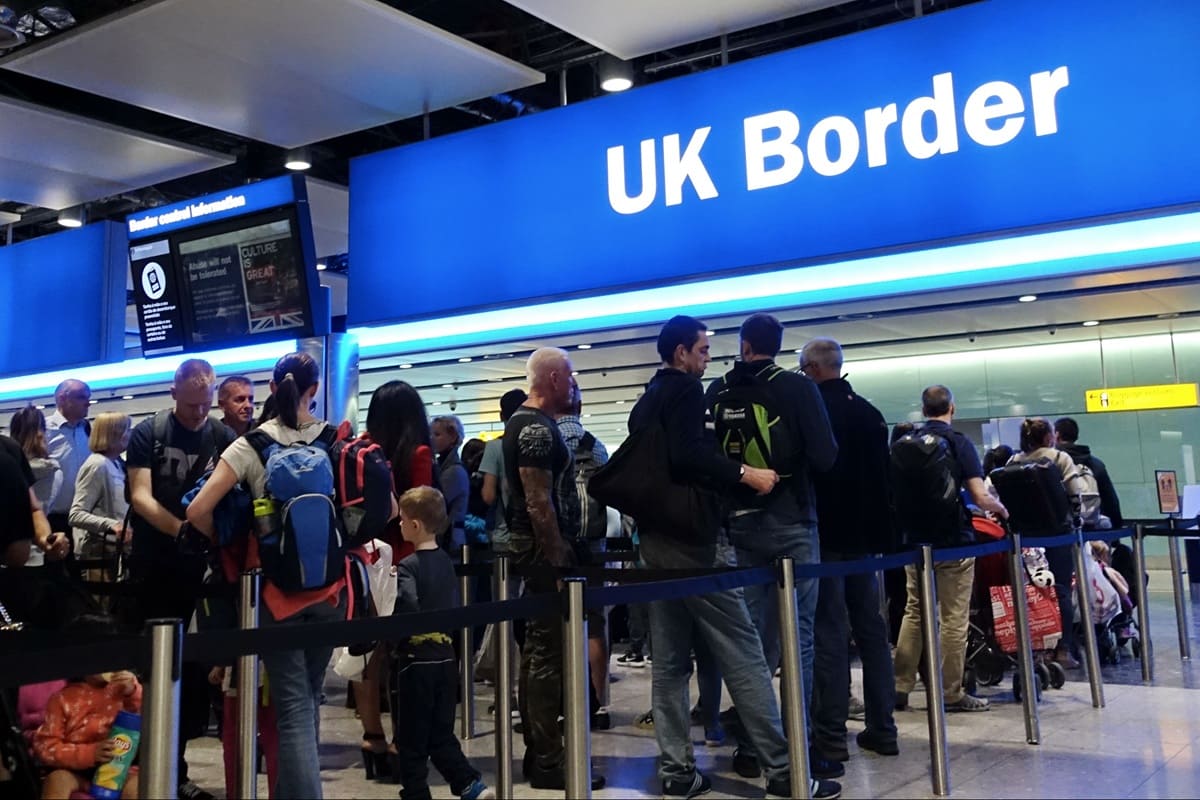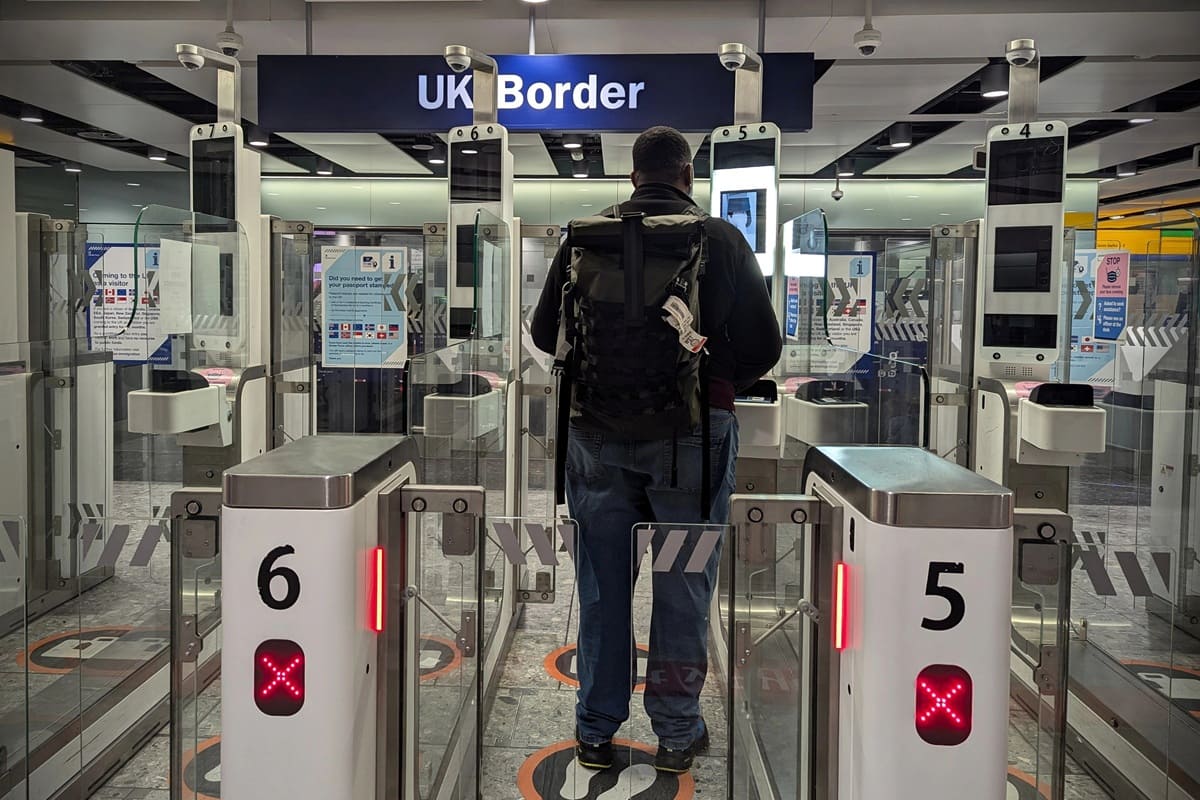
Since October 6, 2026, Border Force has begun introducing new “contactless” technology at airports across the UK, allowing eligible travelers to clear automated border control without having to place their passport on the eGate reader.
The rollout began at East Midlands Airport, where several gates have already been upgraded, and will gradually expand to other airports across the country. All affected eGates are expected to be converted by early 2027.
How do the new contactless eGates work?
The process is relatively straightforward.
When a traveler approaches the eGate, a live photo of their face is taken. The system then compares it with verified information already held by UK authorities relating to the traveler’s identity, passport, journey and immigration status.
If the checks are successful, the gate opens automatically without the traveler having to physically scan their passport.
According to the Home Office, trials carried out so far suggest the process can be up to 25% faster than the current passport-scanning procedure.
Border Force Director General Phil Douglas said the technology would help make travel “smoother and faster” while maintaining the UK’s strict border security standards.
The goal is therefore not to remove identity or immigration checks. Those checks will continue to take place, but increasingly in the background using digital information already linked to the traveler.
Travelers still need to carry a passport
A “contactless” border check does not mean travelers will be able to enter the UK without a passport.
Border Force has stressed that passengers must still travel with a valid passport and keep it with them when crossing the UK border.
If the system is unable to complete the necessary checks automatically, the eGate may ask the passenger to place their passport on the reader, just as it does today. Travelers may also be referred to a Border Force officer for additional checks.
The main change therefore concerns how identity is verified at the gate: when all the necessary information is available and matches, there is no longer any need to physically present the passport to the scanner.
British citizens first, followed by other eGate-eligible travelers
The rollout is deliberately limited at first.
For now, the new contactless eGates are available only to British citizens traveling on a British passport.
Over the coming months, the system is expected to be gradually extended to other nationalities that are already allowed to use UK eGates.
This includes citizens of European Union countries, as well as several non-European nationalities already eligible for automated border control, including travelers from the United States, Canada and Australia.
No detailed timetable has yet been announced for when contactless access will become available to each eligible nationality.
Karen Dee, chief executive of AirportsUK, said the rollout should help maintain “fast and efficient borders” while improving the passenger experience.
Which UK airports will offer contactless eGates?
The rollout began at East Midlands Airport and is expected to gradually expand to major UK airports already equipped with eGates.
Border Force lists the following airports:
- Birmingham;
- Bristol;
- Cardiff;
- East Midlands;
- Edinburgh;
- Gatwick;
- Glasgow;
- Heathrow;
- London City;
- Luton;
- Manchester;
- Newcastle;
- Stansted.
The upgrade mainly involves software updates to existing eGates rather than the systematic replacement of the equipment itself.
Birmingham is among the first airports expected to introduce the technology after East Midlands.
Steve Griffiths, managing director of East Midlands Airport, said the system could help make passengers’ journeys “smoother, swifter and simpler.”
Birmingham Airport has also confirmed that it has been working with Border Force and other industry partners to prepare for the introduction of the new process.
For US travelers, the ETA remains mandatory
The simplified eGate process does not change the entry requirements travelers must meet before traveling to the UK.
US citizens, along with Canadians, Australians, eligible European nationals and other visa-exempt travelers, must still hold a valid Electronic Travel Authorization (ETA), unless they are exempt or already hold another immigration status allowing them to enter the UK.
The ETA is electronically linked to the passport used for the application. Since February 25, 2026, travelers subject to the requirement must have their digital authorization before traveling to the UK.
The move toward contactless eGates fits into that broader system: UK authorities increasingly have access to key traveler information before a passenger even reaches the border, through passport records, ETAs or eVisas and travel data submitted in advance.
Once the contactless technology becomes available to US and other eligible travelers, they will still need to:
- travel with a valid passport;
- hold a valid ETA when required;
- present their passport if requested by the system or a Border Force officer.
The difference is that, under normal circumstances, travelers will no longer necessarily need to take out their passport and scan it at the eGate.
Children can now use eGates from age 8
The latest change comes only a few months after another expansion of access to the UK’s automated border controls.
Since July 8, 2026, children aged 8 and over have been allowed to use eGates when traveling with an adult, provided they are at least 1.2 meters tall. Previously, access was restricted to older children. The UK government estimated at the time that around 1.5 million additional children could use eGates each year.
Phil Douglas said the new contactless system builds on that broader expansion of automated border processing.
The UK border is becoming increasingly digital
The rollout of contactless eGates is part of a wider transformation of the UK border system that has been under way for several years.
The expansion of the ETA, the shift toward eVisas, the advance transmission of traveler information and now biometric identification without physically scanning a passport are gradually moving more border checks to an earlier stage of the journey.
The UK had already tested the technology in a pilot program at Manchester Airport before preparing to expand it to additional ports of entry.
For travelers, the border is not disappearing. It is simply becoming less visible when digital checks can be completed automatically.
VisasNews Take
The launch of contactless eGates does not remove the requirement to carry a passport or comply with UK entry formalities. For US, Canadian, Australian and other eligible visa-exempt travelers, the ETA remains mandatory when applicable and stays electronically linked to the passport used for the application. The change applies only to the border-control process: when the system has all the information it needs, travelers no longer have to physically place their passport on the reader. For now, the service is limited to British citizens and will gradually be extended to other nationalities already eligible to use UK eGates.