Apparently, some passport stamps require going a very long way to get them. In this case, about 250 miles above Earth.
The timing is especially fitting, as another crew is preparing to leave that very place. After nearly eight months aboard the International Space Station, the four members of Crew-12 are scheduled to undock from the ISS on Wednesday, October 7, before returning to Earth the following day with a splashdown off the California coast. The European Space Agency is providing live coverage of the return.
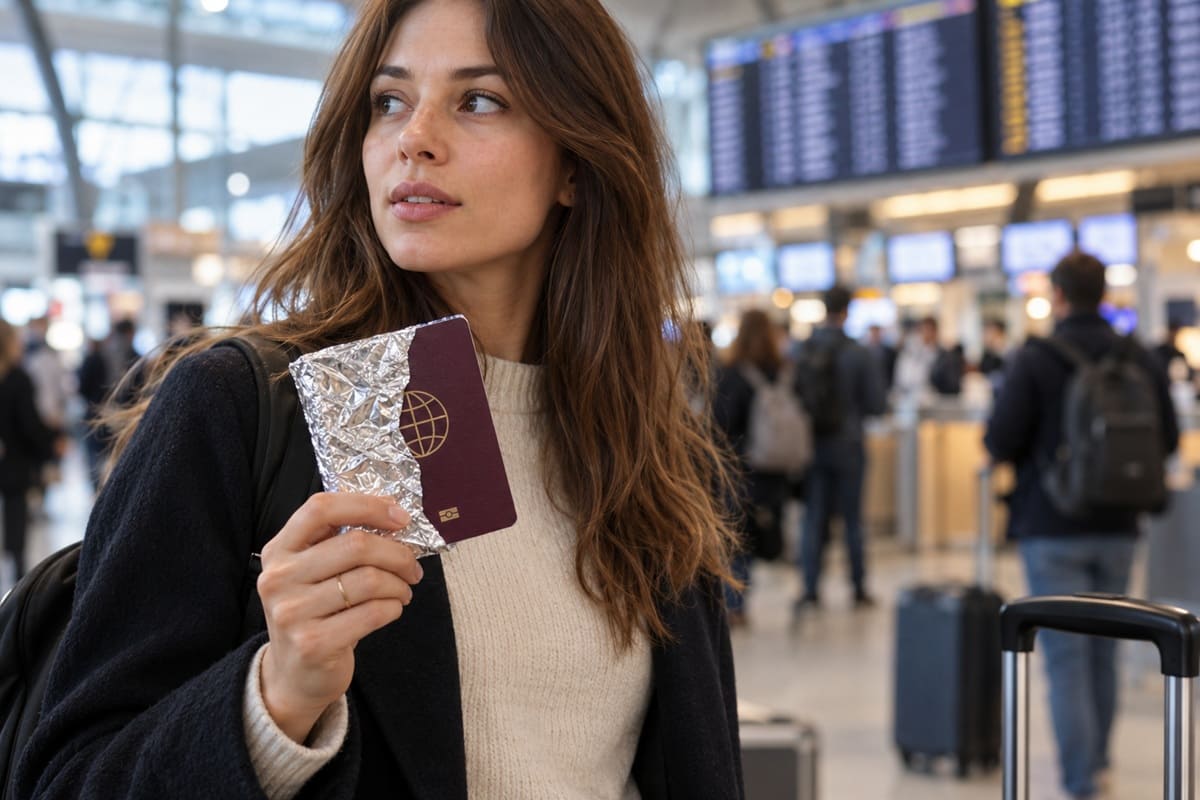
In an Instagram post shared on October 6, 2026, Indian astronaut Shubhanshu Shukla revealed one of the more unusual souvenirs from his time aboard the International Space Station (ISS): a station stamp placed directly on a page of his passport.
“The rarest passport stamp isn’t on Earth,” the astronaut joked, alongside a series of photos showing both his passport and the small stamp used aboard the station.
The ISS does, in fact, have stamps that have been used to mark mail and various keepsakes that have actually traveled aboard the orbital laboratory — and, occasionally, a passport page.
No immigration checkpoint 250 miles above Earth
Of course, the ISS stamp is not an entry stamp in any official immigration sense.
The International Space Station is neither a country nor a territory with its own border controls. No visa is issued on arrival, and no immigration officer is waiting for astronauts at the end of their journey.
Shukla plays on that contrast himself: no immigration lines and no visa on arrival, but a trip made at roughly 17,500 mph to reach the station.
The ISS orbits roughly 250 miles above Earth and circles the planet about once every 90 minutes. As a result, its occupants experience around 16 sunrises and sunsets every day.
Another reason this souvenir is so unusual is the tiny number of people who have ever had the opportunity to visit the station. NASA says that more than 280 astronauts have visited the ISS since operations began.
Shubhanshu Shukla became the first Indian astronaut to stay aboard the ISS
Shubhanshu Shukla traveled to the International Space Station in June 2025 as part of the private Axiom Mission 4 (Ax-4).
Serving as the mission’s pilot, the Indian Space Research Organisation (ISRO) astronaut flew alongside American astronaut Peggy Whitson, Poland’s Sławosz Uznański-Wiśniewski and Hungary’s Tibor Kapu.
Their Crew Dragon spacecraft launched from Florida on June 25, 2025, and docked with the ISS the following day. The crew returned to Earth on July 15 after about two and a half weeks in space, during which they carried out roughly 60 scientific experiments.
The mission made Shukla the first Indian astronaut to stay aboard the International Space Station.
More than a year after returning to Earth, he continues to share photos and stories from the experience on social media.
Other space travelers have had their passports stamped before
Shubhanshu Shukla is not, however, the first ISS visitor to turn a passport into a space souvenir.
In 2007, Hungarian-American software executive Charles Simonyi, who became the fifth space tourist to visit the ISS, deliberately packed his passport among his personal belongings before launch.
Speaking before the flight, the former Microsoft executive explained that one of the main reasons he was taking it was so he could have it stamped once he reached the station.
Two years later, during his second trip to space, Simonyi did it again. By then he had a new passport, and he said he wanted to collect the ISS stamps again, joking that this time he already knew where to find the best ones.
The Bank of Canada Museum also documents the existence of an ISS stamp used to identify documents and objects that have traveled aboard the station. The museum holds a prototype Canadian five-dollar note that went to space and also bears the station’s stamp. It specifically mentions Charles Simonyi’s stamped passport and describes the practice as a tradition started by the Russians.
Flags, envelopes and other souvenirs have also been stamped in space
Passports are only one of the items to have received an ISS stamp.
In 2005, American entrepreneur Greg Olsen, the third space tourist in history, took a small Princeton University flag aboard the ISS. The flag, now preserved in the university’s archives, bears the International Space Station stamp on the back.
In January 2016, British ESA astronaut Tim Peake signed several commemorative philatelic envelopes aboard the ISS marking the 150th anniversary of the Royal Aeronautical Society. The UK’s National Space Centre says those items also carry the official International Space Station stamp.
So the story of the “ISS stamp” goes back much further than Shubhanshu Shukla’s latest post. But his passport offers a particularly striking new example of this small spacefaring tradition.
And it may be one of the few passport stamps where the real challenge is not getting a visa — but simply making it all the way to the “border checkpoint.”
VisasNews Take
The stamp placed in Shubhanshu Shukla’s passport is first and foremost a souvenir: it has no immigration value and does not record entry into any territory. The International Space Station is not a state, and its occupants do not cross an international border there in the sense used for travel formalities. Even so, with fewer than 300 people having visited the ISS since it began operating, this small stamp is arguably among the hardest passport markings in the world to obtain.