
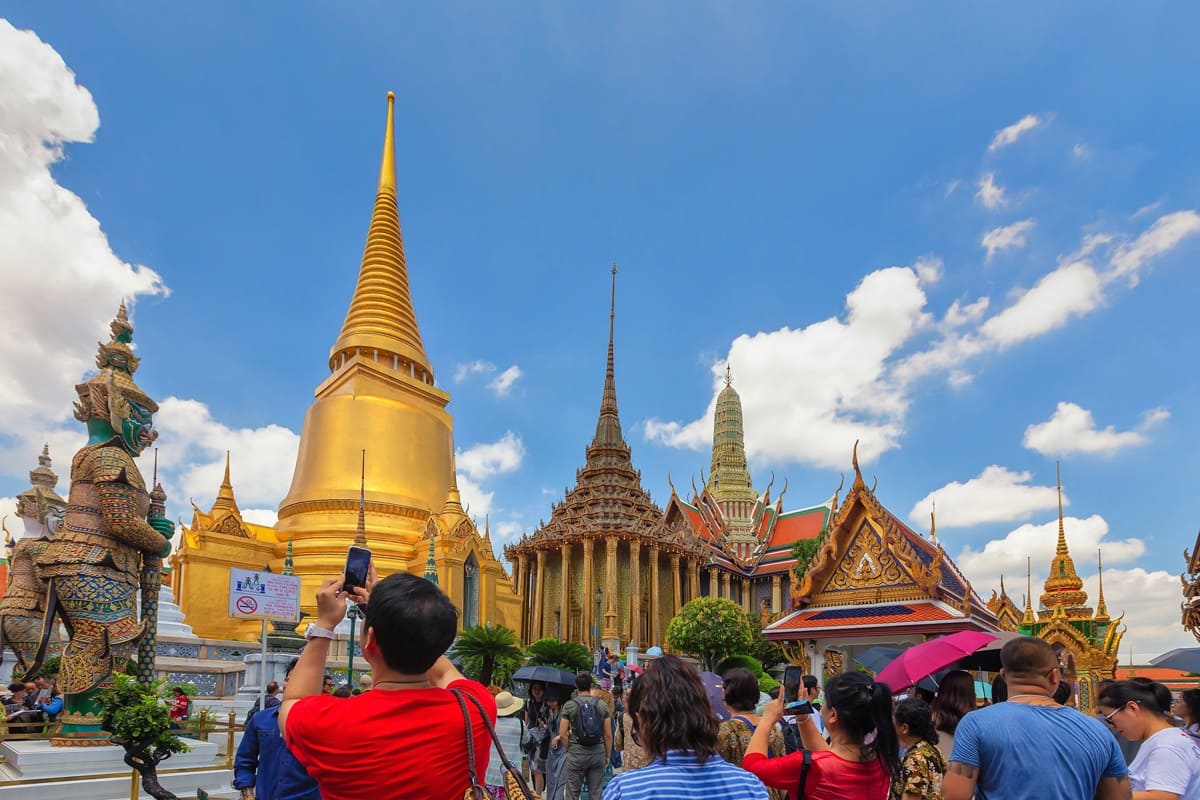
Starting tomorrow, travelers arriving in Thailand will be subject to new entry rules.
After two years during which nationals of 93 countries and territories could enter visa-free for stays of up to 60 days, the scheme introduced in July 2024 will come to an end on the evening of September 14, 2026.
The four orders published in the Royal Gazette on August 31, 2026 officially take effect on September 15, 2026.
The most visible change is the length of stay, which will be reduced to 30 days for many nationalities. But the changes do not stop there: the purpose of travel covered by the exemption is changing, land-border entries will now be limited, some countries are moving to a different entry regime, and others are losing visa-free access altogether.
30 days visa-free for Americans, Britons, Australians and Canadians
For US, UK, Australian and Canadian citizens, the principle remains straightforward: no visa will be required for a tourist stay of up to 30 days in Thailand.
However, the period granted on entry will be cut in half compared with the rules in force until today, which still allow an initial stay of up to 60 days.
In total, 60 countries and territories will qualify for the new 30-day tourist visa exemption starting September 15, 2026:
| Australia | Iceland | Oman |
| Austria | India | Philippines |
| Bahrain | Indonesia | Poland |
| Belgium | Ireland | Portugal |
| Bhutan | Israel | Qatar |
| Brunei | Italy | Romania |
| Bulgaria | Japan | Saudi Arabia |
| Canada | Jordan | Singapore |
| Croatia | Kuwait | Slovakia |
| Cyprus | Kyrgyzstan | Slovenia |
| Czech Republic | Latvia | South Africa |
| Denmark | Liechtenstein | Spain |
| Estonia | Lithuania | Sweden |
| Fiji | Luxembourg | Switzerland |
| Finland | Malaysia | Taiwan |
| France | Maldives | Turkey |
| Georgia | Malta | Ukraine |
| Germany | Netherlands | United Arab Emirates |
| Greece | New Zealand | United Kingdom |
| Hungary | Norway | United States |
An extension of up to 30 additional days should also remain possible. It must be requested in Thailand and is subject to approval by Thai immigration authorities. However, the orders published on August 31 establishing the new lists do not themselves set out the details of this procedure.
Travelers from these 60 countries may also choose to apply before departure for a category “TR” electronic tourist visa (e-Visa). This visa allows a tourist stay of 60 days from the date of arrival in Thailand, twice the period granted under the visa exemption from September 15, 2026. For a single entry, the “TR” visa is valid for three months from the date of issuance and may also be extended for an additional 30 days through Thai immigration authorities.
Visa-free entry is now limited to tourism
This is one of the most significant changes.
The scheme introduced in 2024 explicitly allowed visa-free entry for tourism, certain short-term professional activities, or brief business engagements.
The new 30-day order published in the Royal Gazette, by contrast, applies to foreign nationals entering Thailand temporarily solely for tourism purposes. On September 3, the Thai Ministry of Foreign Affairs also clarified that the new 30-day and 15-day visa exemption schemes, as well as Visa on Arrival, apply to tourist travel. Travelers entering Thailand for another purpose must now use the visa category corresponding to their activity.
Land-border entries will be limited
The reform also reintroduces a restriction on entries through land borders.
For travelers using the 30-day visa exemption, land-border crossings will be limited to two entries per calendar year. Nationals of Brunei, Indonesia, Malaysia and Singapore are not subject to this limit.
The restriction applies only to land-border entries, meaning travelers arriving by air or sea are not affected by the two-entry limit.
Mauritius and Seychelles move to 15 days visa-free
A second visa exemption scheme will also take effect tomorrow.
Ordinary passport holders from Mauritius and Seychelles will be able to enter Thailand visa-free for tourist stays of up to 15 days.
Mauritius was previously among the 93 countries covered by the 60-day visa exemption scheme, meaning the reduction will be particularly significant for its citizens. Seychelles, however, was not included in the general 60-day scheme.
Visa on arrival reduced to three nationalities
Another major change concerns the Visa on Arrival (VoA), currently available to nationals of 31 countries and territories.
Starting tomorrow, it will be available only to passport holders from Azerbaijan, Belarus and Serbia.
Visa on Arrival will continue to be issued at designated immigration checkpoints for tourist stays of up to 15 days, with a fee of 2,000 baht.
India, which was also eligible for Visa on Arrival, will instead move into the more favorable 30-day visa exemption scheme.
21 nationalities will now need a visa
The end of the 60-day scheme will have a more significant consequence for some travelers: 21 nationalities that currently enjoy visa-free entry will no longer qualify for any visa exemption from September 15, 2026.
As VisasNews recently reported, nationals of the following countries will need to obtain a visa before traveling to Thailand:
| Albania | Guatemala | Papua New Guinea |
| Andorra | Jamaica | San Marino |
| Colombia | Kosovo | Sri Lanka |
| Cuba | Mexico | Tonga |
| Dominica | Monaco | Trinidad and Tobago |
| Dominican Republic | Morocco | Uruguay |
| Ecuador | Panama | Uzbekistan |
For tourist travel, these travelers can apply for their visa online, after Thailand expanded its e-Visa system across its entire diplomatic network.
Not every country removed from the list will need a visa
The new general visa exemption scheme must be distinguished from bilateral visa-waiver agreements, which will continue to apply independently of the reform.
As a result, the end of the previous 93-country scheme does not mean that 33 additional nationalities will suddenly need a visa.
China, Hong Kong, Kazakhstan, Laos, Macao, Mongolia, Russia, Timor-Leste and Vietnam, for example, have agreements allowing visa-free stays of 30 days. Argentina, Brazil, Chile, Peru and South Korea benefit from agreements allowing stays of up to 90 days, while Cambodia has a 14-day arrangement. Myanmar nationals also benefit from 14-day visa-free stays when arriving through international airports.
Bangkok now aims to simplify the coexistence of national visa exemptions and bilateral agreements under a “one country, one regime” principle.
Travelers arriving today can still receive 60 days
For travelers entering Thailand on September 14, 2026, the current rules still apply.
An American, British, Australian, Canadian or other traveler who remains eligible under the existing scheme may therefore still be admitted today for a stay of up to 60 days. That permission will not automatically be reduced to 30 days when the new rules take effect tomorrow.
The Thai Ministry of Foreign Affairs has confirmed that travelers who enter before September 15 will retain the length of stay granted to them when they pass through immigration.
The TDAC remains mandatory before arrival
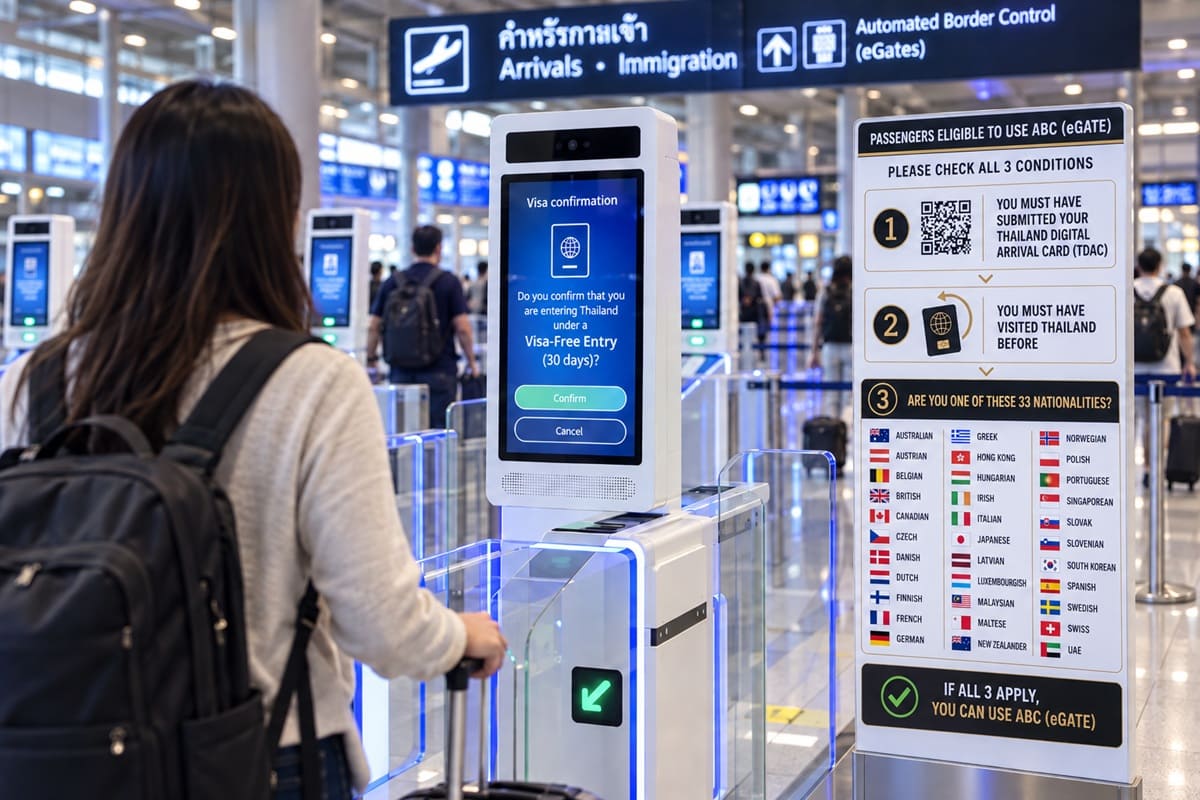
The visa reform does not change the Thailand Digital Arrival Card (TDAC).
All foreign travelers must continue to complete the electronic arrival card before entering Thailand, whether they are traveling visa-free, with an e-Visa or under another immigration status.
VisasNews Take
Starting September 15, 2026, visa-free travel to Thailand will remain straightforward for many tourists, including Americans, Britons, Australians and Canadians, but the conditions will change significantly. The initial stay will be reduced from 60 to 30 days, and the exemption will now be tied to tourism. The reform also redistributes nationalities between the 30-day visa exemption, the 15-day exemption, Visa on Arrival and bilateral agreements. For 21 countries whose nationals can currently enter visa-free, the change will be more significant, as travelers will need to obtain a visa before departure starting tomorrow. Travelers who enter Thailand no later than September 14 will, however, retain the period of stay granted under the previous rules.


![[Infographic] Thailand: New visa exemption rules from September 15, 2026](https://visasnews.com/wp-content/uploads/2026/09/free-visa-thailand-evisa-exemption-30-days-60-arrival-voa-tourism-travel.jpg)

I am coming to Thailand in November. My stay was 34days. I was 4 days over, but I booked in July. I tried filling the visa application but found it too difficult, so I have had to spend money on another flight out on my 30th day.
I have also bought a return flight for May 2027. Bought in July, before the rules changed. Do I need a visa for that trip as it is within the calendar year?
This whole thing is so difficult and worrying as I’m nearly 70yrs, and the technology is beyond me.
Thankyou.
Excellent way to kill a huge portion of your countries Tourism GDP.