
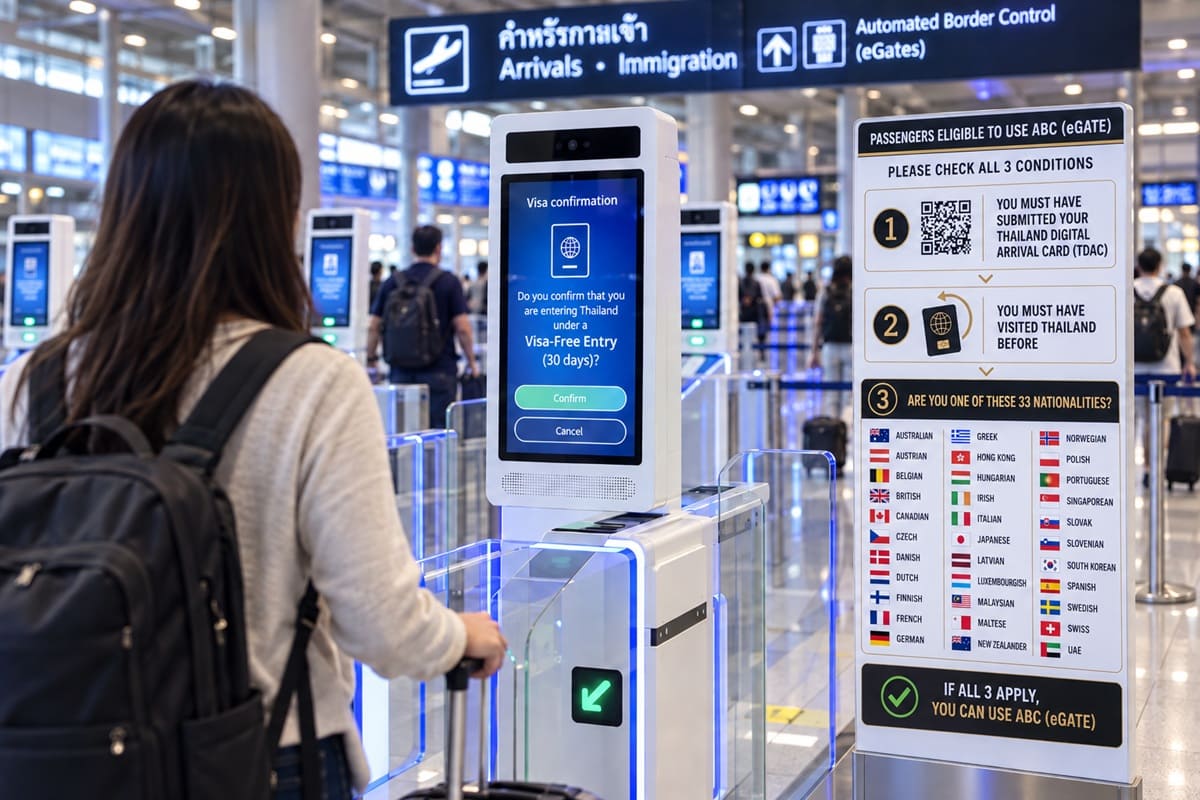
Since September 15, 2026, the new entry rules for Thailand have been fully in effect.
As VisasNews explained just before the changes took effect, the previous system allowing visa-free stays of up to 60 days for travelers from 93 countries and territories has ended.
US, UK, Canadian and Australian passport holders are among travelers from the 60 countries and territories now eligible for a 30-day visa exemption.
But the reduction from 60 to 30 days raised an important question for travelers planning to stay longer than a month: can the new visa exemption still be extended in Thailand?
The answer is yes.
Up to 30 additional days after the initial 30-day visa-free stay
The clearest confirmation appears in information recently updated by several Thai diplomatic missions since the new rules took effect.
The Royal Thai Embassy in Washington now states that travelers using the new 30-day visa exemption may apply for an extension for an additional period of no more than 30 days.
It also stresses that approval of the extension remains at the discretion of the immigration officer.
This provision applies to nationals of all 60 countries and territories covered by the visa exemption scheme, not only US travelers.
Official confirmation has also come from Europe.
The Royal Thai Embassy in Brussels, whose information was updated on September 15, states that Belgian and Luxembourg passport holders may stay visa-free for 30 days and may apply for an additional 30-day extension through Thai immigration.
The Royal Thai Embassy in London provides the same guidance, stating that travelers who wish to remain beyond their authorized period may request an extension of up to 30 days from the Immigration Bureau.
These confirmations provide an important clarification to the official measures reducing Thailand’s visa exemption from 60 to 30 days, which focused primarily on entry conditions and the initial length of stay.
30 days plus 30 days does not automatically mean 60 days
The distinction is important.
A traveler entering Thailand under the visa exemption scheme may be granted 30 days upon arrival. They can then apply for up to 30 additional days, potentially bringing the total stay to 60 days.
However, that second period is not automatically granted.
Thai authorities explicitly state that the extension remains at the discretion of the immigration officer.
The new system therefore differs from the one in place through September 14, 2026.
Since July 2024, travelers from eligible countries had been granted up to 60 days upon entry into Thailand. That period could itself be extended by up to another 30 days.
Since September 15, 2026, the new framework is therefore: 30 days granted on entry + up to 30 days of extension = up to 60 days without a visa.
Proof of onward travel within 30 days may be required
The ability to extend a visa-free stay after arrival does not necessarily exempt travelers from having to show proof of departure from Thailand within the initial 30-day period.
Several Thai diplomatic missions state that travelers using the visa exemption scheme should be able to provide a confirmed onward or return ticket showing departure from Thailand before the initial 30 days expire.
A traveler whose only return flight is scheduled 45 or 60 days after arrival could therefore encounter difficulties at airline check-in, even if they intend to apply for an extension once in Thailand.
At the time of departure, that extension has not yet been granted and remains subject to approval by Thai immigration.
For travelers who already know they will stay more than 30 days, the safest option is to apply for a Tourist Visa, category “TR,” which directly allows a stay of up to 60 days.
Travelers who still prefer to enter visa-free and apply for an extension later should consider holding a genuine onward or departure ticket within the first 30 days, ideally one that is changeable or refundable so travel dates can be adjusted if the extension is approved.
How to apply for an extension of Thailand’s visa exemption
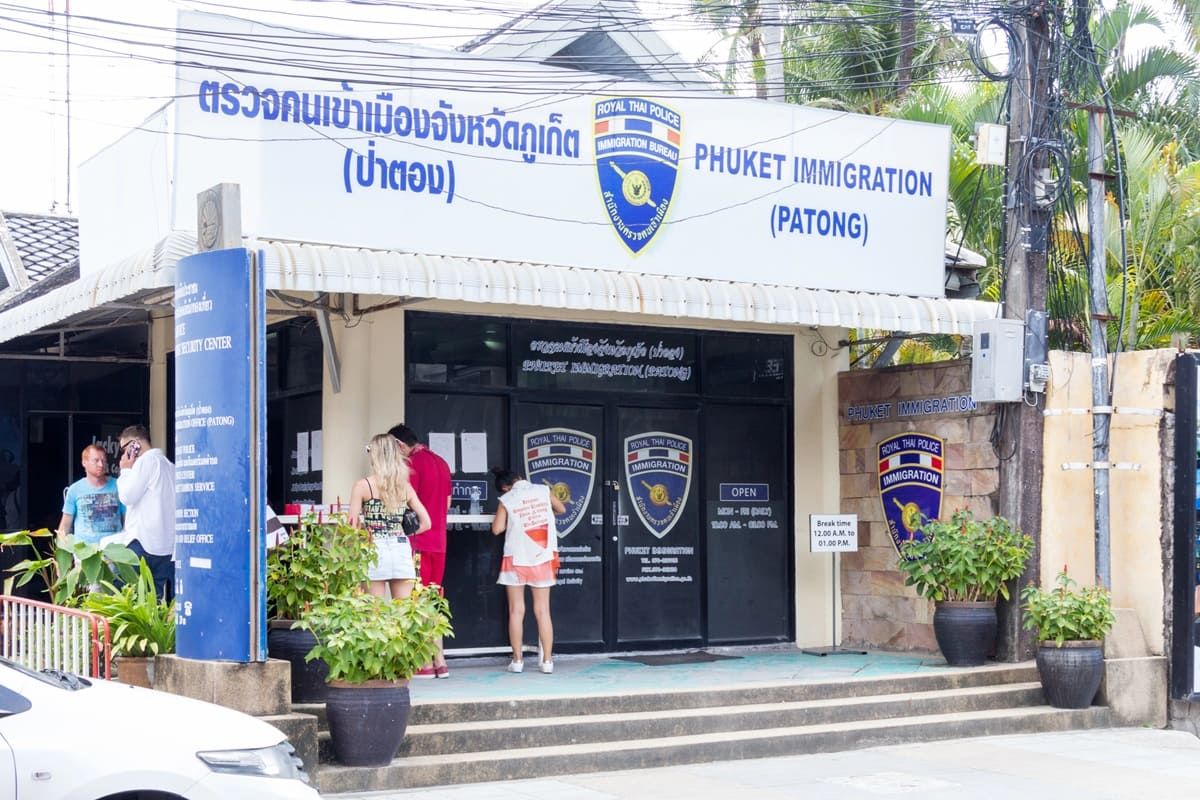
The extension is not requested from a Thai embassy before departure. It must be applied for through Thai immigration once the traveler is already in the country.
The Immigration Bureau uses the official TM.7 form, “Application for Extension of Temporary Stay in the Kingdom,” for applications to extend a temporary stay in Thailand.
Immigration procedures generally require:
- the TM.7 application form;
- the passport and copies of the required passport pages;
- a recent photograph;
- payment of a 1,900-baht administrative fee.
The application must be submitted to the appropriate immigration office, and authorities may request additional supporting documents depending on the traveler’s circumstances.
Payment of the fee and submission of the TM.7 form therefore do not guarantee an additional 30 days. It remains an application for an extension subject to approval by Thai immigration.
Visa exemption or Tourist e-Visa for stays longer than 30 days?
Since the visa exemption was reduced to 30 days, tourists eligible for visa-free entry generally have two main options for stays exceeding one month.
Under the visa exemption, travelers do not need to apply for a visa before departure. They receive 30 days upon entry and may then apply for up to another 30 days through immigration.
The other option is to apply before traveling for a Tourist e-Visa, category “TR.”
As the Royal Thai Embassy in Paris explains, a single-entry “TR” Tourist Visa allows a 60-day stay from the date of arrival in Thailand.
That visa may also be extended for an additional month through immigration for a fee of 1,900 bahts, potentially allowing a total stay of 90 days.
| Entry option | Initial stay | Possible extension | Potential total stay |
|---|---|---|---|
| Visa exemption | 30 days | Up to 30 days | 60 days |
| “TR” Tourist e-Visa | 60 days | Up to 30 days | 90 days |
In both cases, the extension remains subject to approval by Thai immigration.
For travelers whose plans already involve a stay of more than 30 days, the “TR” Tourist Visa offers an important advantage: the 60-day stay is granted as part of the visa itself, whereas under the visa exemption, days 31 through 60 depend on an extension application made after arrival.
Travelers can still stay for up to 60 days without applying for a visa before departure
For tourists from the US, UK, Canada, Australia and other eligible countries, the reform that took effect on September 15 does not completely eliminate the possibility of spending two months in Thailand without obtaining a visa beforehand.
It mainly changes how travelers reach that 60-day total.
Until September 14, eligible travelers could receive up to 60 days immediately upon entering Thailand.
Since September 15, the visa exemption initially grants only 30 days, and travelers must apply for an extension through immigration if they want to stay for up to 60 days.
This system is similar to the one Thailand used before introducing the temporary 60-day visa exemption in July 2024: eligible travelers received 30 days of visa-free entry and could then apply, subject to immigration approval, for an extension while in the country.
VisasNews Take
Thailand’s reduction of its visa exemption from 60 to 30 days does not necessarily mean eligible tourists need a visa for every stay longer than one month. Several official Thai diplomatic missions confirm that the initial 30-day stay can be extended by up to another 30 days through the Immigration Bureau. However, that extension remains subject to approval and should not be viewed as an automatic right to stay for 60 days. Travelers who want an initial stay of up to 60 days can instead apply for a “TR” Tourist e-Visa before departure.


![[Infographic] Thailand: New visa exemption rules from September 15, 2026](https://visasnews.com/wp-content/uploads/2026/09/free-visa-thailand-evisa-exemption-30-days-60-arrival-voa-tourism-travel.jpg)

Thai Government bloody mad, they will see the numbers drop off and reintroduce 60 days.