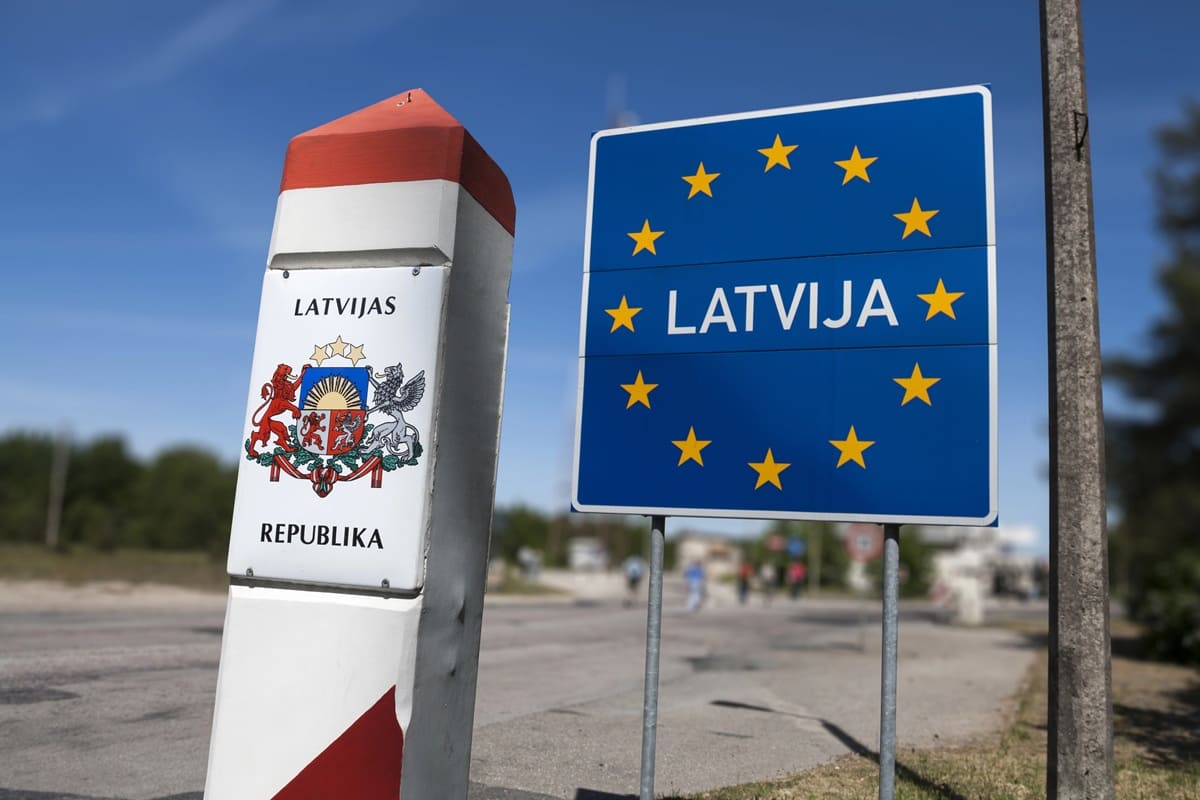
Latvia is preparing a major overhaul of its immigration system.
On Thursday, June 11, 2026, the Saeima, Latvia’s Parliament, adopted a new immigration law in its final reading. The legislation is designed to reorganize the rules applying to third-country nationals, people who are not citizens of the European Union, covering entry, residence, employment, integration and removal procedures.
The main provisions of the new law are due to enter into force on January 1, 2027.
For travelers, students, foreign workers and residence permit applicants, the reform confirms a trend already visible in Latvia: more checks before arrival, closer monitoring during a stay, and stricter criteria when public order or national security concerns are identified.
A reform tied to national security and the European framework
According to the Saeima, the new law is intended to make Latvia’s immigration system clearer, more transparent and more efficient. Its stated objectives are twofold: to strengthen national security and to reduce the risks of fictitious immigration, illegal employment and misuse of residence procedures.
The legislation also forms part of Latvia’s adaptation to the European Union’s new migration and asylum framework. The EU Pact on Migration and Asylum, applicable from June 2026, provides in particular for stronger controls at the EU’s external borders, screening procedures, wider use of European databases and accelerated procedures in certain cases.
For Latvia, an EU and Schengen Area member state, the reform is therefore not only about national immigration formalities. It is part of a broader shift in the way the European Union manages its external borders.
Tighter checks at the border and before arrival
One of the central elements of the new law concerns checks on third-country nationals at external borders.
The legislation provides for the introduction of border screening procedures, as well as a border return procedure, in line with the EU’s new migration framework. It also allows for broader use of biometric data and stronger information-sharing with European Union databases, with the aim of improving identity checks and helping authorities detect security risks more effectively.
Latvia had already begun tightening its pre-arrival controls. Since September 1, 2025, certain third-country nationals who do not hold a visa or residence permit issued by Latvia have been required to submit travel information at least 48 hours before arrival via the eta.gov.lv portal. The information requested may include the purpose of travel, the length and place of stay, the itinerary, the traveler’s contact details, as well as information related to public, military or security positions held by the traveler or close family members.
This Latvian procedure is not presented as a travel authorization comparable to the EU’s future ETIAS system: once the information has been submitted, the traveler receives an automatic confirmation and does not need to wait for a separate approval before entering. Still, it reflects the approach now favored by Riga: collecting more information before arrival in order to identify potential risks earlier.
Visas and residence permits: broader grounds for refusal or cancellation in risk cases
The new law also clarifies the rules for issuing visas and residence permits.
The Saeima says procedures and deadlines should become clearer, while the grounds for refusing or canceling visas and residence permits will be expanded when a threat to public order or security is identified. In practice, Latvian authorities will have a more explicit legal framework for refusing or withdrawing residence documents in sensitive cases.
Latvijas sabiedriskais medijs (LSM) also reported that parliamentary debates focused on temporary residence permits, commonly referred to in Latvia as TUAs. A more accessible proposal that would have allowed applicants to obtain a residence permit in exchange for a €10,000 payment to the state budget and a €50,000 investment in a small or medium-sized business was rejected.
Lawmakers instead backed a more tightly regulated option: a temporary residence permit valid for up to five years in cases where at least €150,000 is invested, for a minimum period of five years, in a state-created alternative investment fund manager, along with an additional €10,000 payment to the Latvian budget. The permit would remain tied to the actual maintenance of the investment throughout its validity period.
This part of the legislation shows that Latvia is not completely closing the door to investment-based immigration, but wants to channel it through more controlled mechanisms that are more directly connected to the national economy.
Study, work and integration: stronger obligations
The reform does not stop at the border.
The new law also strengthens oversight of employment and study by third-country nationals. The stated aim is to reduce the risks of fictitious employment, sham studies or the misuse of visas and residence permits for purposes that do not match the reason originally declared.
Employers and educational institutions are expected to face greater responsibility. Latvian authorities want to better verify that third-country nationals comply with the conditions of their stay, whether they involve an employment contract, a declared professional activity or a genuine course of study.
The legislation also reinforces integration requirements, including through an early integration program and knowledge of the national language. This confirms that Latvia’s reform is aimed not only at controlling entry into the country, but also at monitoring those who are authorized to settle there on a longer-term basis.