New health-related entry requirements for the U.S. are already drawing strong concerns from the international airline industry.
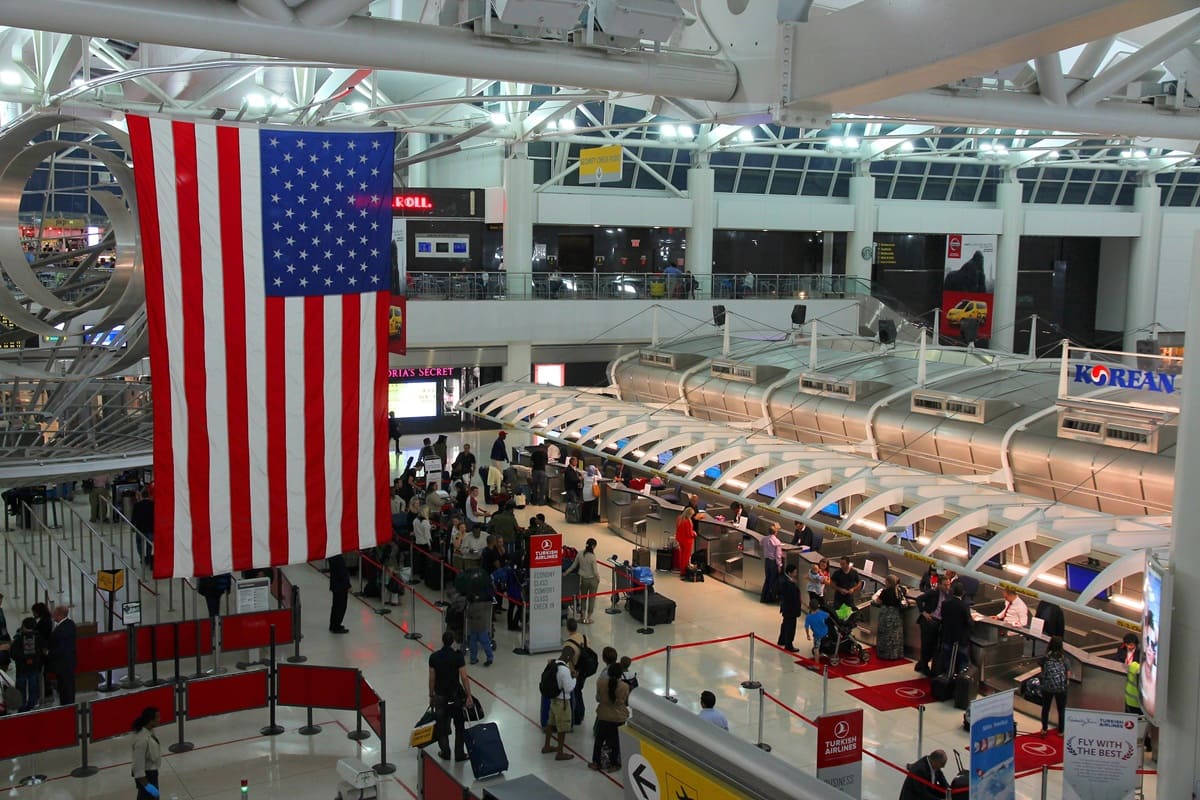
Starting November 3, 2026, the U.S. will require all passengers arriving on international flights to complete a health declaration. Two major aviation industry organizations are now calling on federal authorities to reconsider how the requirement will be enforced.
In separate letters dated October 26 and 27, 2026, and addressed to the Centers for Disease Control and Prevention (CDC), Airlines for America (A4A) and the International Air Transport Association (IATA) raised concerns about a process that will affect millions of travelers every month.
Excerpts from the letters, shared publicly by Reuters journalist David Shepardson, highlight particular frustration over the extremely short timeframe airlines have been given to adjust their procedures.
IATA calls the new health requirement disproportionate
In its October 27 letter to Dr. David Fitter, director of the CDC’s Division of Global Migration Health, IATA questioned the blanket nature of the new declaration requirement.
According to the association, requiring all passengers and crew members to certify that they have not been in the Democratic Republic of the Congo (DRC) during the previous 21 days is inconsistent with a sufficiently targeted, risk-based public health approach.
IATA noted that it had not been presented with any evidence showing that the existing restrictions on travelers who recently visited the DRC have been ineffective.
It is therefore urging U.S. authorities to work with the airline industry to develop a more targeted approach based on actual health risks.
The association also questioned the different treatment of transportation modes: why should all international air travelers be required to complete the declaration when no equivalent requirement applies to people entering the United States by land or sea?
However, the implementation timeline appears to be an especially significant concern.
In its letter, IATA described it as “unreasonable” to expect every airline serving the U.S. market to change its procedures to collect individual declarations from passengers and crew members in less than two weeks.
Airlines for America calls for a delay and simpler procedures
Airlines for America (A4A), whose members include American Airlines, Delta Air Lines, United Airlines and Southwest Airlines, shares many of these concerns.
In its October 26 letter, the organization urged the CDC to adopt a more proportionate response and extend the implementation deadline beyond November 3, 2026.
A4A stressed that the necessary changes affect several aspects of airline operations, including check-in systems, electronic signatures, airport procedures and employee training.
According to the association, these adjustments cannot reasonably be completed within the time available.
A4A also highlighted the particular challenges facing major connecting airports.
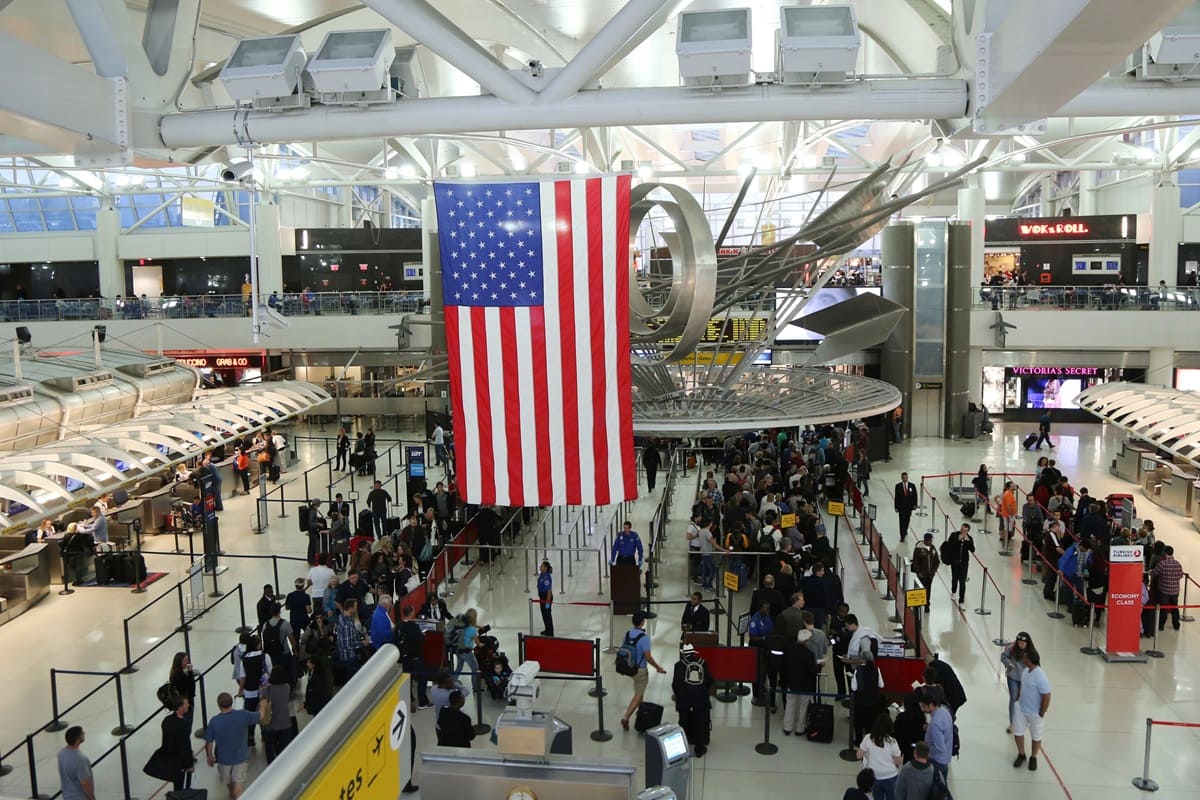
Some airline operations involve approximately 75% connecting passengers, sometimes leaving a boarding window of just one hour to collect the required attestations.
For carriers without suitable digital systems, collecting paper forms could create substantial processing and storage burdens.
To avoid operational disruptions, A4A proposed allowing verbal attestations in certain circumstances instead of requiring every traveler to submit a written or electronic declaration.
The organization also requested exemptions for certain categories of aviation personnel, including crew members, employees traveling in designated jumpseats and U.S. military charter flights.
A worldwide requirement affecting millions, despite limited travel from the DRC
Beyond the operational difficulties, Airlines for America is also challenging the global scope of the requirement.
According to figures cited by the association and reported by Reuters, U.S. Customs and Border Protection (CBP) screened approximately 130 million air passengers in 2025.
Of those travelers, fewer than 25,000 had a connection to the Democratic Republic of the Congo, according to the data cited by A4A.
The association argues that requiring declarations from every international traveler places a particularly heavy burden on airlines relative to the number of passengers who have recently visited the DRC.
It is calling on U.S. authorities to consider the approaches taken by other countries, including Canada and the United Kingdom, which, according to A4A, have favored measures more narrowly focused on affected areas and travelers’ recent travel history.
Neither organization is challenging the public health objectives behind the U.S. measures. Instead, they are asking for requirements that better reflect the actual level of risk and the operational realities of international air travel.
CDC has not postponed the November 3 deadline
Despite these requests, U.S. authorities have not announced any official delay.
The CDC updated its order on October 28, 2026, clarifying that the requirement also applies to crew members on passenger and cargo aircraft, including personnel traveling to a duty assignment without operating the flight.
However, the amendment does not constitute a formal response to the concerns raised by IATA and A4A.
Under the current rules, the health attestation requirement remains scheduled to take effect on November 3, 2026, at 11:59 p.m. Eastern Standard Time, equivalent to 5:59 a.m. on November 4 in Paris.
The requirement also applies to travelers who are simply connecting through a U.S. airport.
Denied boarding: U.S. authorities clarify passenger rights
In an official notice issued on October 28, 2026, the U.S. Department of Transportation (DOT) confirmed that airlines may deny boarding to any traveler unable to certify that they have not been in the Democratic Republic of the Congo during the previous 21 days. This also applies to U.S. citizens.
The department also reiterated that separate health-related restrictions already apply to people who have recently traveled to Uganda or South Sudan.
However, the DOT emphasized that airlines remain subject to federal consumer protection requirements.
Depending on the circumstances surrounding a travel restriction, affected passengers must be offered rebooking, a refund or a transferable travel credit valid for at least five years.
When an airline restricts a passenger’s travel because of a communicable disease, the traveler may also request a written explanation. The airline must provide that explanation within 10 days of receiving the request.
The department further stated that it will not take enforcement action against airlines that decline to accept a medical certificate when applying Ebola-related travel restrictions, given the risk of transmission aboard an aircraft.
What travelers must do before boarding a flight to the United States
For passengers, the requirements remain unchanged.
Every traveler must certify that they have not been present in the Democratic Republic of the Congo during the 21 days before their flight to the United States.
This requirement applies regardless of nationality, country of departure or whether the traveler has ever visited Africa.
The CDC allows declarations to be submitted in paper or electronic form. Airlines may also incorporate the attestation into their online check-in procedures.
Travelers who fail to provide a valid attestation will not be permitted to board unless an exemption has been granted by U.S. authorities.
The CDC has made an official attestation form available, although airlines may also offer their own digital solutions, provided they meet U.S. regulatory requirements.
The measure is currently scheduled to remain in effect through December 18, 2026, unless it is extended, amended or lifted earlier.
With the November 3 deadline approaching, travelers should pay close attention to communications from their airline, particularly if they are scheduled to fly during the first few days of implementation.
VisasNews Take
With just days remaining before the new U.S. health declaration requirement takes effect, airlines are facing significant operational challenges. While IATA and Airlines for America are calling for changes to the policy, U.S. authorities have not announced any postponement. Travelers should therefore plan to comply with the attestation requirement starting November 3, 2026, even if they have never visited the Democratic Republic of the Congo or are only transiting through the United States.