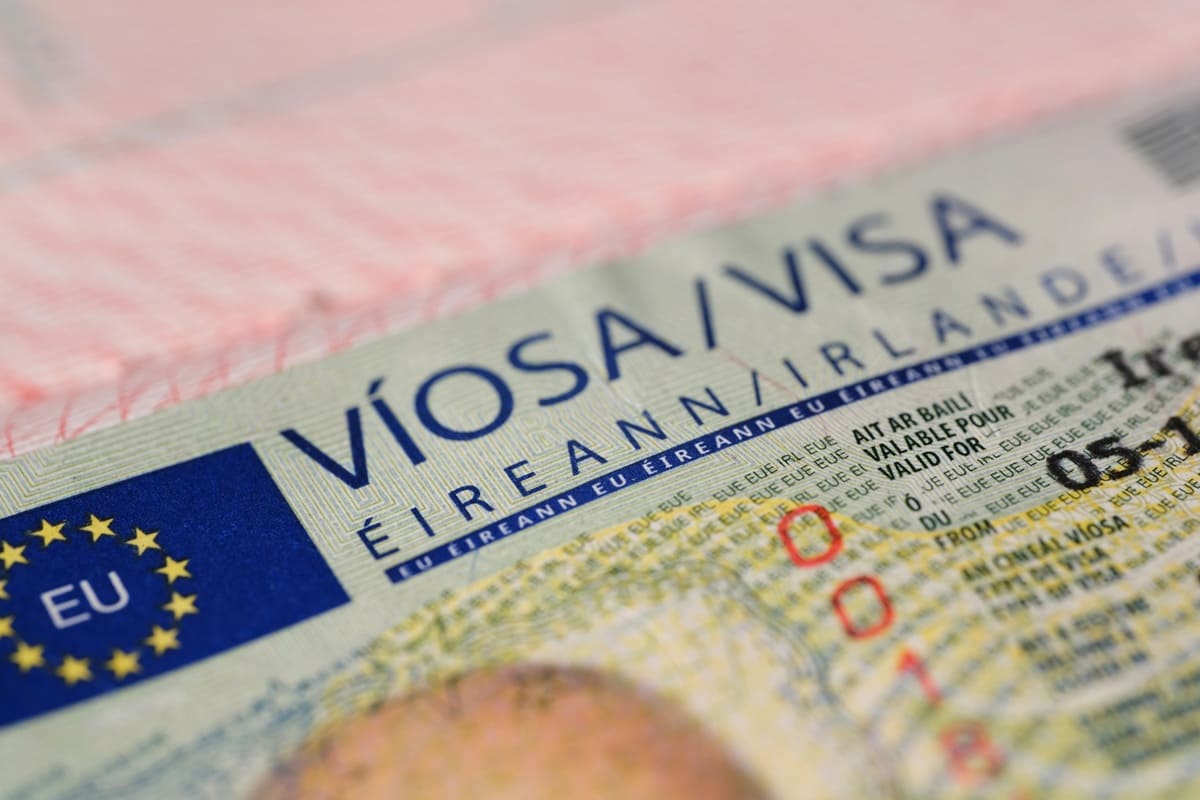
Ireland is tightening its entry rules for three additional nationalities.
Irish Minister for Immigration Colm Brophy has announced the introduction of a visa requirement for citizens of Nicaragua, St. Kitts and Nevis, and St. Lucia. The measure takes effect on Monday, June 15, 2026, and applies not only to travelers planning to visit Ireland, but also to those transiting through the country en route to another destination.
The new requirement also covers holders of diplomatic and service passports. Citizens of the three countries will therefore need to obtain an Irish visa before departure, unless they fall under the transitional arrangements announced by the authorities or already hold a valid Irish residence permit.
A move presented as closer alignment with the U.K. and Europe
The Irish government is framing the measure as part of an adjustment to its visa policy in line with the wider European environment.
According to Colm Brophy, the change is a “carefully considered decision” that brings Ireland more closely into line with the approach taken in the United Kingdom and across Europe. The minister also noted that Irish visa requirements are kept “under continuous review.”
Dublin says the aim is to strike a balance between maintaining effective immigration controls and allowing legitimate travel to continue. Brophy said the government wants to preserve “the right balance between maintaining effective immigration controls” and ensuring that people can continue to come to Ireland to visit, work, study or join family members.
The new requirement is part of a gradual shift in Ireland’s visa policy. Dublin says it wants to remain aligned with practices in place in the United Kingdom and the Schengen Area. In 2025, Ireland had already introduced visa requirements for citizens of Eswatini, Lesotho, Nauru, and Trinidad and Tobago.
The country has also recently removed the right of appeal for certain short-stay Type C visa refusals. By adding Nicaragua, St. Kitts and Nevis, and St. Lucia to the list of visa-required nationalities, Ireland is confirming a targeted tightening of its entry rules.
A visa also required for transit
The measure does not apply only to stays in Ireland.
Citizens of Nicaragua, St. Kitts and Nevis, and St. Lucia will also need to apply for a transit visa if they plan to pass through Ireland on their way to another country. This is an important point for travelers whose itinerary includes a connection at an Irish airport, even if they do not intend to stay in the country.
The requirement therefore applies both to travel to Ireland and to transit through Irish territory. Carriers may be required to check that affected passengers have the necessary documents before boarding.
Transitional arrangements for certain trips already booked
Irish authorities acknowledge that the new rule may affect travelers who have already made travel plans.
Brophy said changes of this kind could affect “some individuals who may already have travel plans in place.” He added that transitional arrangements would be introduced to help those travelers manage the change.
These arrangements apply from June 15 through July 14, 2026, but only to certain travelers. Passport holders from Nicaragua, St. Kitts and Nevis, or St. Lucia may still travel without an Irish visa if they booked their trip before June 15, 2026, and are traveling to Ireland before July 14, 2026.
To benefit from this temporary exemption, travelers must be able to present a valid passport and written proof from their carrier, not from a travel agency. The document must show the date the ticket was purchased, the passenger’s name, the flight number or numbers, and the date of travel.
These documents may be requested by the airline or by an immigration officer. Ireland’s standard immigration rules will continue to apply: being covered by the transitional arrangements does not automatically guarantee entry into the country.
Trips booked after June 15 are not covered
Irish authorities are emphasizing one key distinction.
Travelers who book a trip to Ireland after the new requirement takes effect cannot benefit from the transitional arrangements, even if they travel before July 14, 2026. They must obtain an Irish visa before departure.
However, people who already hold a valid Irish Residence Permit, or IRP, card do not need to apply for a separate Irish visa.
Affected nationals who have already planned a trip are advised to check the information published by Immigration Service Delivery, Ireland’s immigration authority, before traveling.