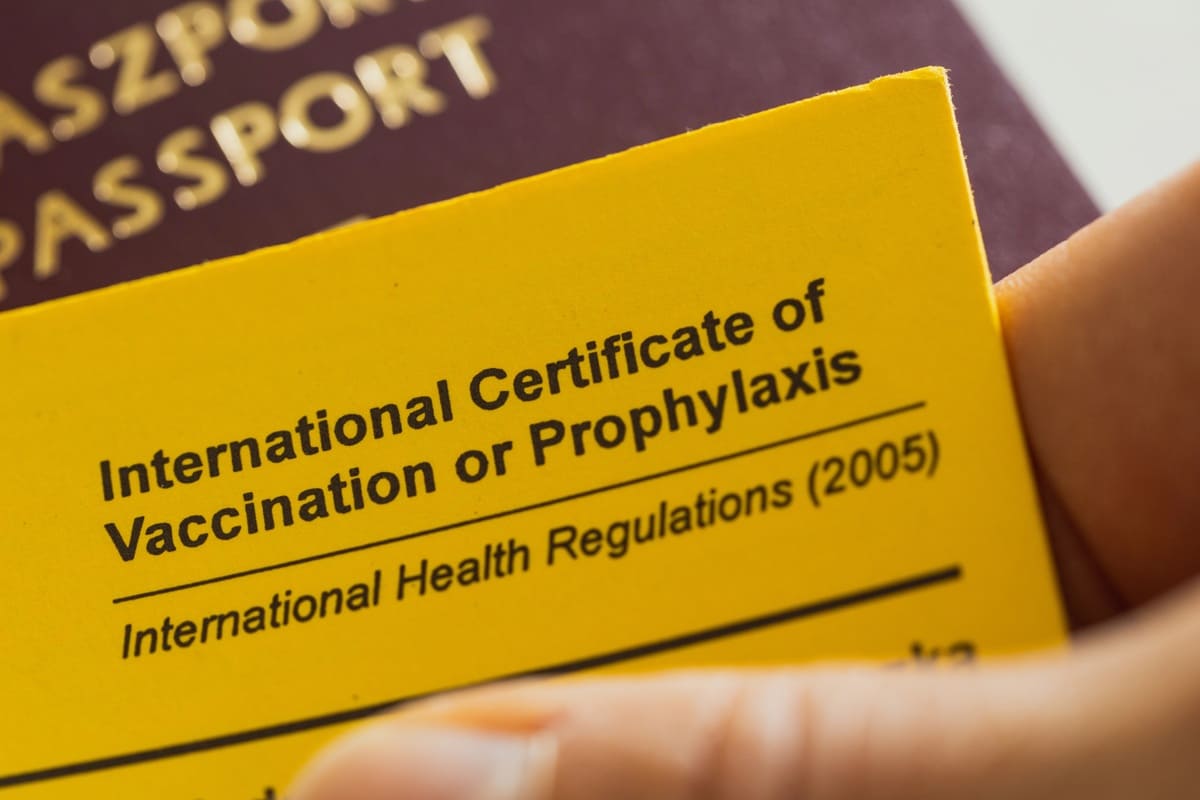
Following Benin, which recently confirmed that yellow fever vaccination certificates are no longer checked at its ports of entry, Uganda has now issued an important clarification of its own regarding this health-related entry requirement.
The announcement comes just over a month after the official end of the Bundibugyo Ebola virus outbreak in Uganda. The outbreak was declared over on August 27, 2026, following 42 days without a new case, although health authorities remain vigilant at the country’s borders because of the ongoing outbreak in neighboring Democratic Republic of the Congo.
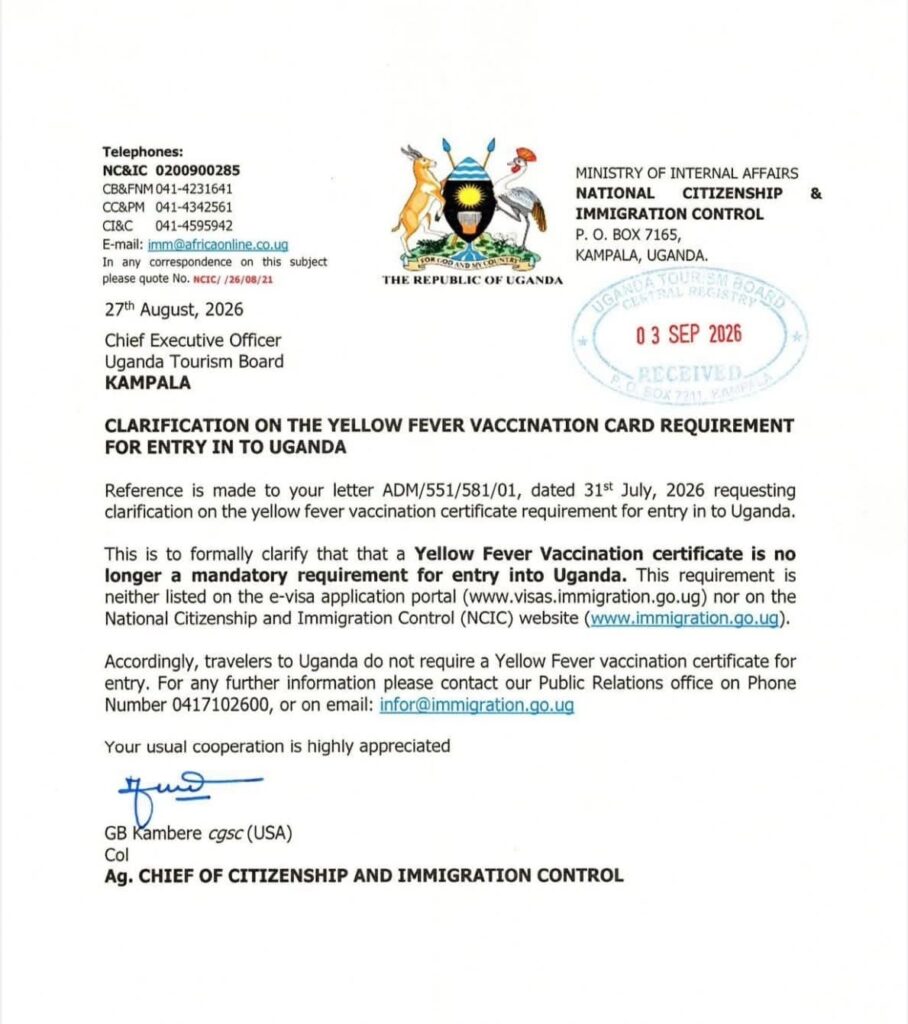
In an official notice published on October 2, 2026, the National Citizenship and Immigration Control (NCIC), which operates under Uganda’s Ministry of Internal Affairs, states that the yellow fever vaccination certificate “is no longer a mandatory requirement for entry into Uganda.”
Uganda confirms the end of the yellow fever certificate requirement
The clarification issued by the authorities leaves little room for doubt: travelers entering Uganda are no longer required to present a yellow fever vaccination certificate.
The NCIC also notes that the requirement has been removed from the official electronic visa portal and from the entry requirements published by Uganda’s immigration authorities.
The public announcement follows a clarification sent several weeks earlier to the Uganda Tourism Board.
In a letter dated August 27, 2026, and received by the tourism board on September 3, immigration authorities responded to a request for clarification submitted in late July and had already confirmed that the certificate was no longer mandatory for entering the country.
Yellow fever certificate no longer required for a tourist visa
The change is also reflected in the requirements for Uganda’s single-entry tourist visa.
The official page for the visa currently lists, depending on the purpose of travel, documents such as a passport, recent photograph, travel itinerary and accommodation booking. The yellow fever vaccination certificate is no longer listed among the supporting documents required for a tourist visa application and has in fact been absent from the requirements since last year.
Travelers who require a Ugandan tourist visa must still apply online. The visa costs US$50, and the approval must be used within 90 days of being issued.
Requirement removed, but vaccination still recommended
The removal of the certificate requirement at the border does not mean that the risk of yellow fever has disappeared.
In its updated 2026 recommendations, the World Health Organization (WHO) recommends vaccination for travelers aged 9 months and older visiting areas where there is a risk of yellow fever transmission, subject to any medical contraindications. Uganda is among the countries where a risk of transmission has been identified.
The distinction is therefore important: Uganda has removed the documentary requirement to present a yellow fever vaccination certificate at the border, but vaccination remains recommended from a public health standpoint.
VisasNews Take
The clarification issued by Ugandan immigration authorities puts an end to an entry requirement long associated with travel to the country: a yellow fever vaccination certificate is no longer mandatory. As in Benin, where authorities recently confirmed that vaccination certificates are no longer checked at the border, it remains important to distinguish between an administrative entry requirement and a health recommendation. Yellow fever vaccination continues to be recommended for travel to Uganda because of the risk of transmission.