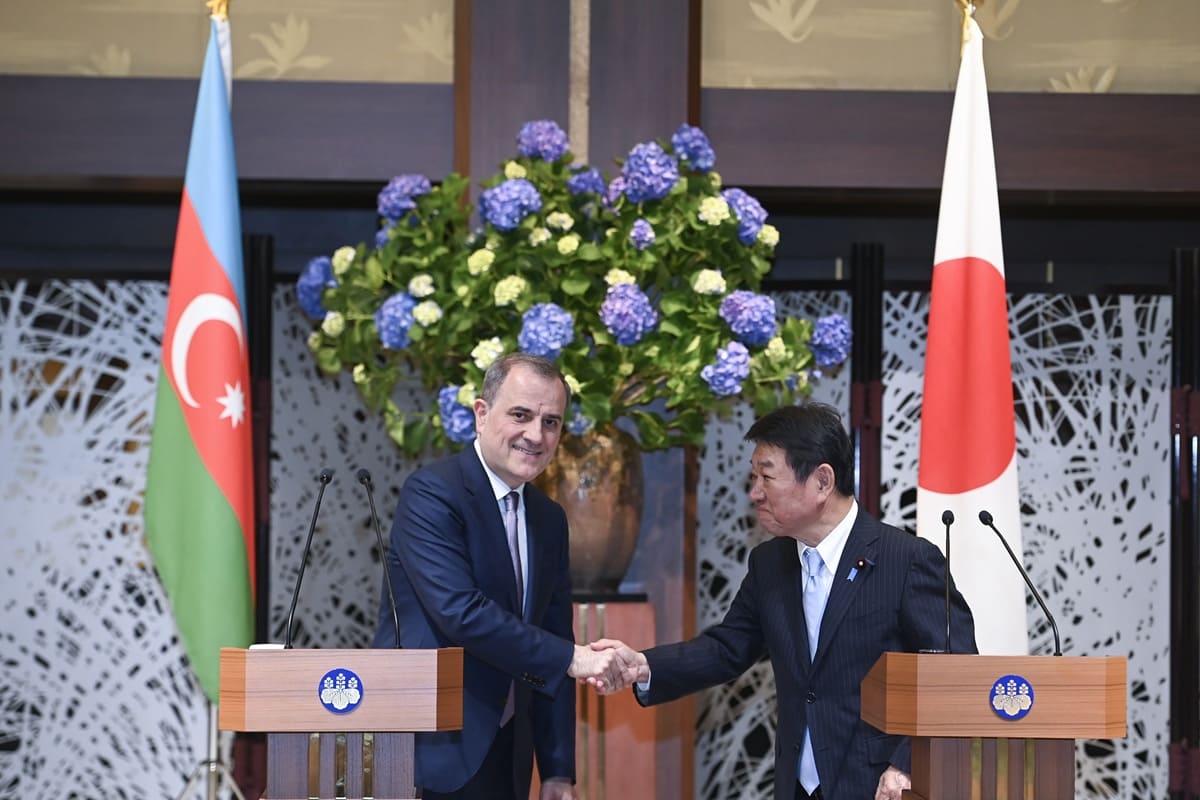
The discussions took place on April 17, 2026, at a meeting of the House of Representatives Judicial Affairs Committee, during deliberations on a bill amending Japan’s Immigration Control and Refugee Recognition Act.
During the session, several lawmakers questioned the government not only about fees tied to residence permits, but also about the creation of the future electronic travel authorization system, already referred to as “JESTA.” Most of the answers were provided by Shuichiro Naito, deputy commissioner of the Immigration Services Agency of Japan, as well as Justice Minister Hiroshi Hiraguchi.
Throughout the hearing, lawmakers from different political parties kept returning to the same point: Japan now wants to screen certain visa-exempt travelers earlier, without slowing the flow of arrivals at the border. Behind that goal, the exchanges also brought out very practical questions about the future scope of JESTA, the data travelers would be asked to provide, sensitive categories such as cruise and transit passengers, and the technical conditions for a launch planned in fiscal 2028.
Among the first to raise the issue was Daichi Yamamoto, a Liberal Democratic Party lawmaker elected from Wakayama, who backed the creation of JESTA while arguing that Japan was lagging behind other countries that already have similar systems. Keie Miki, a lawmaker from Nippon Ishin no Kai, emphasized the expected benefits in terms of security and shorter processing times on arrival. Masamune Wada of Sanseito said he had long advocated for a Japanese version of the U.S. ESTA, while Constitutional Democratic Party lawmaker Chinami Nishimura and Democratic Party for the People lawmaker Masae Ido pressed the government more forcefully on the future system’s limits, cost, error risks, and practical consequences for travelers.
In the end, the debate produced far more specific information than the broad outlines made public until now.
The government presents JESTA as a twofold tool
Before lawmakers, Shuichiro Naito, the No. 2 official at Japan’s Immigration Services Agency, summed up the logic behind the future system.
According to him, JESTA would allow authorities to request information online in advance, including the traveler’s identity, passport number, purpose of travel, and intended place of stay in Japan. The stated aim is to carry out pre-screening in order to block the entry of people who are in fact seeking to overstay or work in the country without authorization.
But the senior Japanese official also highlighted the other side of the plan.
For foreign nationals cleared through the system, new equipment would be used on arrival to speed up procedures. In his words, JESTA is meant to serve both the “strictness of immigration control” and the “streamlining of entry procedures.” Several lawmakers echoed that point as Japan continues to grapple with a sharp rise in international tourism.
Cruise and transit passengers included to prevent workarounds
One of the most noteworthy parts of the debate concerned the future system’s scope.
Asked by Daichi Yamamoto, the deputy commissioner of immigration said the government did not want to limit JESTA only to tourists entering under standard visa-waiver conditions. Cruise passengers were explicitly mentioned. The administration noted that under current law, some people can request special landing permission without undergoing advance screening comparable to that required for a visa.
The official even referred to cases in which people, after failing to obtain the permission they expected, allegedly tried to enter illegally after arriving by boat. For Tokyo, that gap needed to be closed.
The same logic applies to some transit passengers. The government believes certain individuals could try to present themselves as simple connecting travelers in order to avoid prior screening. Here again, the idea is to prevent a future stricter system for short-term tourist stays from leaving parallel entry routes untouched.
On that point, however, Japanese authorities said not all transit travelers would automatically be covered. Before lawmakers, the senior official said Japan was considering limiting the requirement to certain categories only, taking into account the migration-related situation tied to specific countries or territories. He referred to nationalities regarded as posing greater risks in terms of irregular stay or border control. In other words, for transit passengers, the future system could also rely on targeted selection based on travelers’ origin, in order to avoid unnecessarily slowing all international traffic.
More than 31 million people could be covered by JESTA, but the fee remains unknown (despite pressure from lawmakers)
Another concrete point raised during the session was the potential volume of travelers who would fall under the future system.
In response to Keie Miki, the administration said that in 2025, about 38.46 million foreign nationals entered Japan under short-stay status, including nearly 29.63 million under the visa-exemption regime. It added that around 1.58 million entries were recorded under special landing permissions.
Based on those figures, immigration authorities estimate that a little more than 31 million people would currently fall within JESTA’s scope. If Japan reaches its goal of 60 million foreign visitors per year by 2030, that number could rise to roughly 43.7 million. Authorities noted, however, that the exact contours of some categories, particularly part of the transit passenger group, have yet to be finalized.
As for the future JESTA fee, the government did not provide a figure. Chinami Nishimura pressed the issue, arguing that Parliament, which is being asked to approve the legal framework, should at least be given an order of magnitude. The deputy commissioner replied that the exact amount would be set later by ministerial ordinance, after the reform is passed.
He nonetheless cited several foreign benchmarks to illustrate Japan’s thinking, with amounts mentioned of about 2,000 yen for Australia’s ETA, 6,000 yen for the U.S. ESTA, 770 yen for Canada’s eTA, between 1,564 and 2,116 yen for New Zealand’s NZeTA depending on the application method, around 1,100 yen for South Korea’s K-ETA, and just over 3,000 yen for the UK ETA and the European Union’s upcoming ETIAS. The government says it wants to take into account the actual cost of the procedure, the benefits offered to travelers, and international practice. For now, no fee has been confirmed for Japan’s JESTA electronic travel authorization.
Languages, required data, and input errors at the center of the debate
Several lawmakers also sought details on how the system would work in practice.
In response to Keie Miki, the senior immigration official said the form would be available in multiple languages, although he could not yet say how many. He also outlined the data under consideration, including name, date of birth, nationality, passport number, reason for travel, place of stay in Japan, and intended length of visit.
To reduce input errors, the Japanese administration is considering OCR scanning of the passport identity page. It also expects that a facial photo could be requested and compared with the one shown on the passport.
Asked about the possibility of false positives or errors affecting travelers with no particular issue, immigration authorities acknowledged that additional checks could be carried out in the event of inconsistencies or doubts.
Outages, appeals, and travelers uncomfortable with digital tools
Masae Ido pressed the government on the risks of system failures, network outages, cyberattacks, or identification errors.
In response, the Japanese administration said the system should include backup mechanisms and that a contact point would be set up to handle certain requests or complaints. It also said that if a difficulty cannot be resolved within the JESTA process, travelers could still be directed to the visa procedure.
The lawmaker also raised the situation of elderly people, those who do not have a computer or smartphone, or those who are not comfortable using digital tools.
On that point, immigration authorities acknowledged the issue and said travel agencies or other intermediaries could, in some cases, complete the formalities on the traveler’s behalf. Here too, the details have yet to be finalized.
JESTA timeline still set for 2028 despite calls to move faster
The rollout schedule came up repeatedly.
Among the lawmakers who pressed hardest on that issue was Masae Ido, who questioned the government about Japan’s delay compared with other major destinations that already have electronic travel authorizations, such as the United States, Canada, and Australia, while the European Union is also preparing its own system.
The administration said it had been following the issue for several years and had already studied foreign models. But according to the deputy commissioner of the Immigration Services Agency, the Covid-19 pandemic hit just as those discussions were moving forward. With international arrivals collapsing and little visibility on the recovery, Tokyo concluded at the time that it was not appropriate to immediately launch a development project of that scale.
The senior official added that once the recovery had stabilized and the increase in visitor numbers became easier to assess, studies resumed, followed by an acceleration of technical work that made it possible to move the timeline forward. Masae Ido nonetheless noted that Covid had also, in some ways, created an opportunity that Japan “did not fully capitalize on.”
Lawmakers then asked whether an earlier launch could be considered. The administration replied that as of April 2026, the company in charge of development had already been selected and work had begun. It outlined a plan including at least 17 months of design and development, about eight months of testing with related systems, and another three months for staff training.
Japan’s justice minister, Hiroshi Hiraguchi, confirmed that the government is still aiming to introduce its electronic travel authorization during fiscal 2028. He stressed that the system must first be safe, stable, and fully operational. Asked whether the timeline could be shortened further, the deputy commissioner essentially said the administration wants to move “as quickly as possible,” but not at the expense of the system’s security or stability.