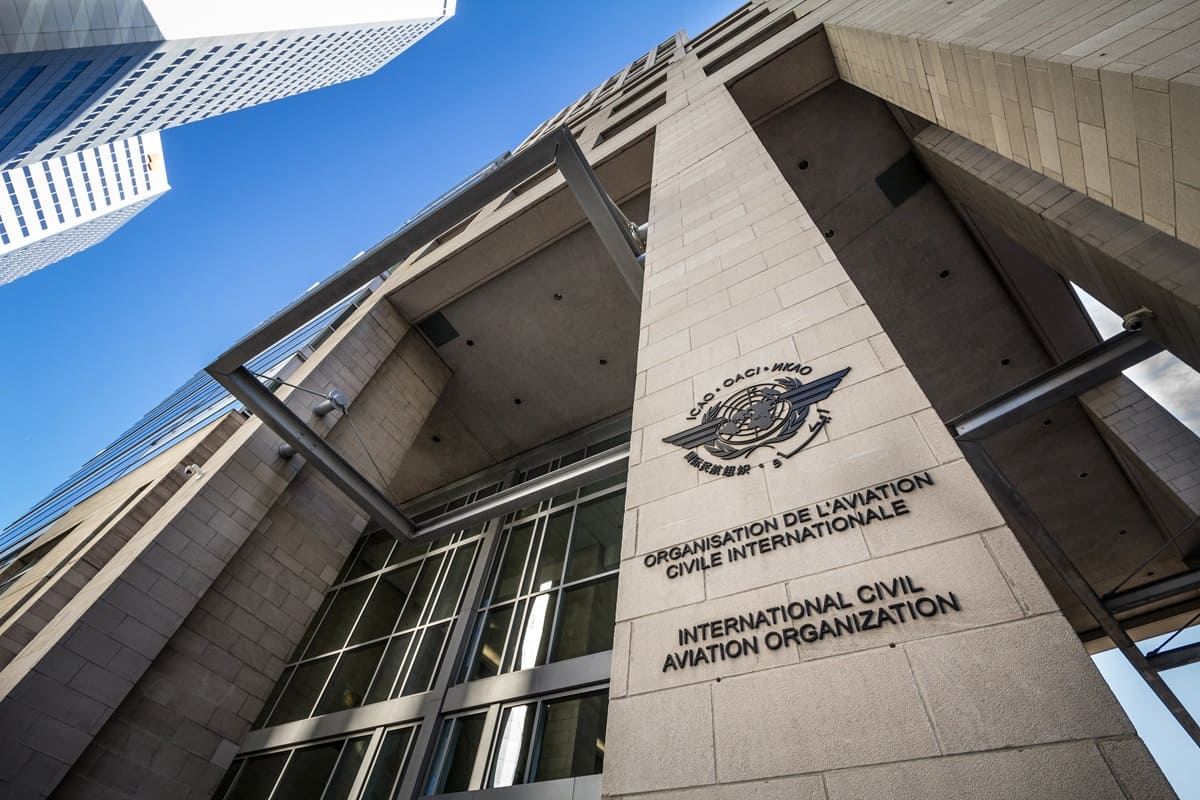
It’s an infrastructure largely unknown to the general public, yet it sits at the heart of modern border control. The International Civil Aviation Organization’s (ICAO) Public Key Directory (PKD) enables authorities, airlines, and airports to verify the authenticity of electronic passports through their digital signatures.
Every biometric passport contains a secure chip that stores data protected by a digital signature issued by the country that produced the document. The PKD’s role is precisely to allow countries to validate that signature, ensuring the document is genuine and has not been tampered with.
One key point: the system does not store any personal traveler data. It is limited to the exchange of digital certificates required for verification.
With the new version launched on March 27, 2026, ICAO is significantly expanding the system’s capabilities. The PKD is no longer limited to electronic passports alone.
It now opens the door to verifying a broader range of documents, including electronic visas (e-Visas), health certificates, and emerging forms of digital identity.
This evolution also paves the way for more advanced use cases, such as remote document authentication via smartphone, or even the ability to access verified biometric data ahead of a traveler’s arrival at the airport.
As these systems are rolled out, travelers could benefit from a much smoother journey: faster processing, more seamless boarding, and fewer checks.
A lever to absorb global traffic growth
The World Travel & Tourism Council (WTTC) is actively supporting this development, viewing it as essential to accommodating the sector’s growth.
In its analysis, the organization estimates that global tourism could reach $16.5 trillion in GDP by 2035, accounting for 12.5% of global employment. In this context, modernizing border processes is becoming a strategic priority.
According to the WTTC, smarter management of traveler flows could generate up to $401 billion in additional GDP and create 14 million jobs across major economies.
Its President & CEO, Gloria Guevara, emphasized that: “ICAO’s next-generation Public Key Directory is a transformative step towards the future of global travel. By enabling secure, real-time verification of digital travel credentials, this initiative strengthens both security and facilitation at borders. At WTTC, we fully endorse this advancement, which aligns with our vision for a seamless, traveller-centric journey and supports the continued growth and resilience of the Travel & Tourism sector.”
Beyond its technical dimension, the PKD is increasingly emerging as a foundational building block of the digital travel ecosystem.
In recent years, many countries have accelerated the digitalization of entry formalities, with the rapid expansion of e-Visas, electronic travel authorizations, and digital arrival cards.
But without an international system capable of guaranteeing document authenticity, these solutions would remain fragmented. The PKD provides that essential layer of trust, enabling countries to share and recognize digital certificates without multiplying bilateral exchanges.
Toward increasingly seamless and digital borders
To date, 107 of ICAO’s 193 member states participate in the system. The organization is now encouraging broader adoption to strengthen global interoperability.
In the coming months, a demonstration phase will allow private stakeholders, airlines, airports, and technology providers, to explore the new features. A broader program involving these actors is expected to launch in September 2026.
While the physical passport remains essential today, its role is rapidly evolving. Border controls are becoming more automated, more anticipatory, and increasingly integrated into digital travel journeys.
With tools like the PKD, the objective is clear: reduce friction while enhancing security. In the long term, the physical document may become just one component within an ecosystem dominated by digital identity and real-time verification.