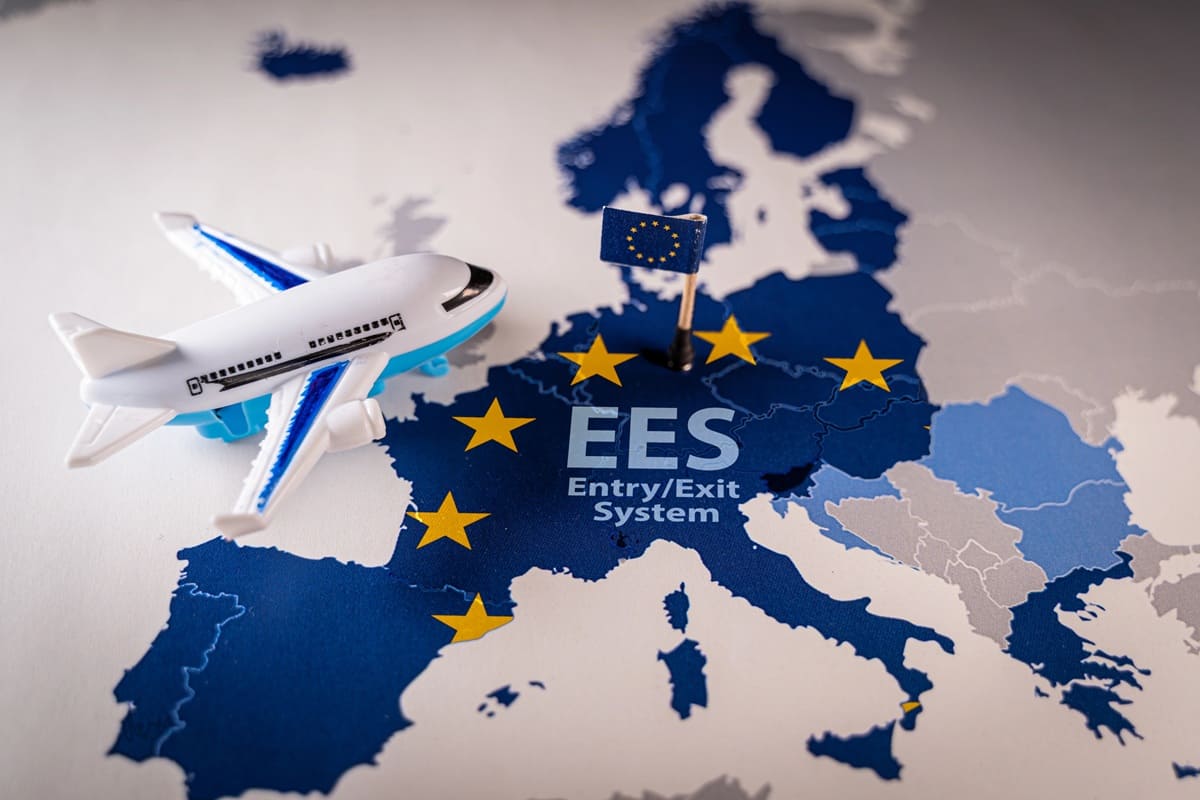
April 10, 2026 marks the culmination of a long-anticipated reform to modernize checks at the external borders of the Schengen area, after delays and a phased rollout. First launched on October 12, 2025 as part of a gradual deployment, the Entry/Exit System, more commonly referred to as the “EES,” is now fully up and running in the 29 European countries applying it.
In practical terms, the system replaces the manual stamping of passports for third-country nationals admitted for short stays. Every entry, every exit and, where applicable, every refusal of entry is now recorded digitally.
For the European Union, the goal is to improve tracking of authorized stays and strengthen the detection of identity fraud at the border.
Who the EES applies to
The system targets non-European travelers, whether they need a visa or are visa-exempt, when coming to the Schengen area for a short stay under the standard 90-days-in-180 rule.
That means it applies just as much to an American, British, Canadian or Japanese tourist as it does to a traveler required to present a short-stay Schengen visa.
By contrast, citizens of the European Union and the Schengen area are not covered by the system. Holders of a long-stay visa, an overseas-territory visa or a residence permit are also excluded. The same exception applies to nationals of Andorra, Monaco, San Marino and Vatican City.
What will now be recorded at the border
Under the EES, border authorities retain the data contained in the travel document, along with information related to the border crossing itself.
This includes the traveler’s first and last name, date and place of birth, nationality, travel document number, country of issuance and expiration date.
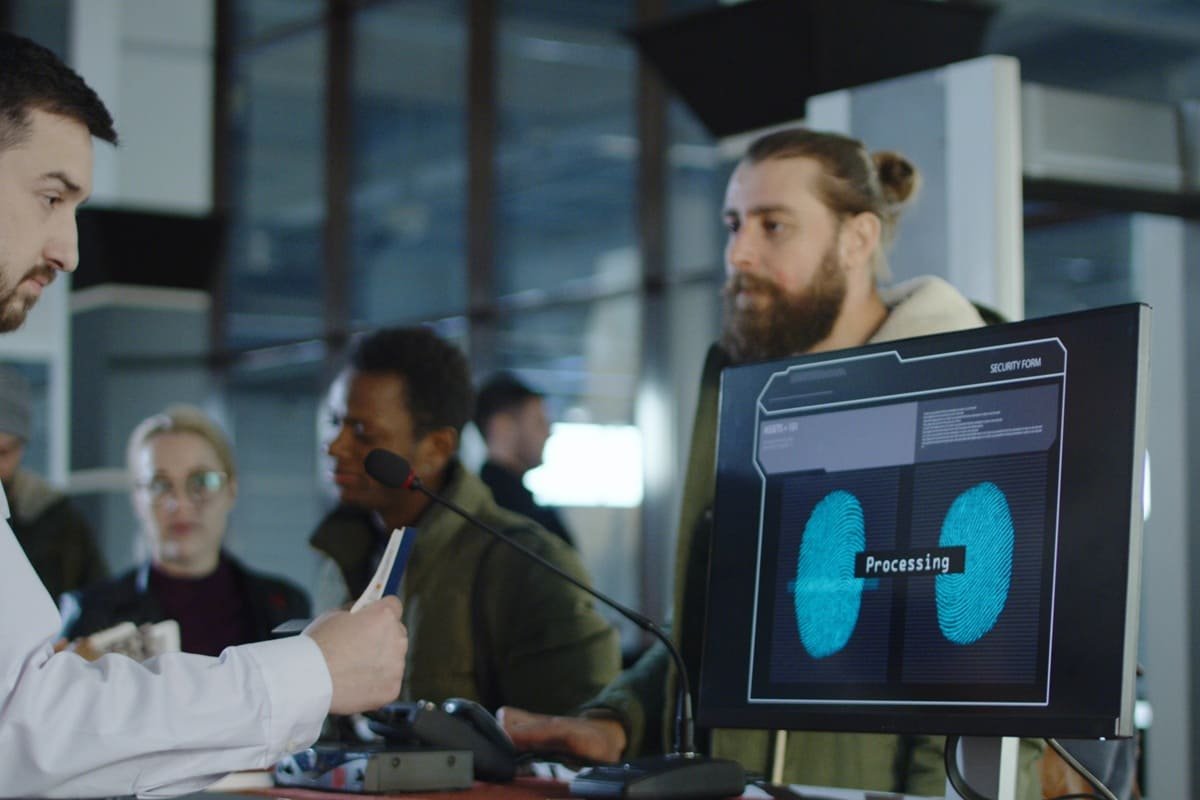
Also recorded are the date, time and place of entry or exit. The system also stores a facial image and, except for children under 12, fingerprints. If entry is refused for a short stay, that decision is also entered into the system.
The EES will also count days spent in Schengen more accurately
For travelers, the most visible change is easy to grasp. A passport is no longer simply checked and stamped. It now serves as the entry point into a digital travel record.
On a first trip under the EES, the process may therefore take longer, as biometric data must be collected and the file created. On later trips, the system is supposed to speed up checks by relying on data already on file. The European Commission has highlighted the first results of the phased rollout, with more than 45 million border crossings already recorded, more than 24,000 refusals of entry and more than 600 people identified as presenting a security risk.
This is one of the system’s most concrete effects. The EES is designed to electronically track the actual time spent in the Schengen area, where passport stamps were sometimes hard to read, incomplete or missing altogether. The European Union also provides an official tool allowing travelers to check how many days they have left before reaching the 90-days-in-180 limit.
For administrations, that automated monitoring should make it easier to identify overstays. For travelers, it reduces some of the gray area that still surrounded certain short-stay situations.
A tightly regulated biometric record
The EES is built on a much more centralized model than the old passport-stamp system. European authorities therefore stress the data-protection framework governing how it operates.
Travelers have the right to access and correct their data and, in certain cases allowed under the law, to request erasure or restriction of processing This aspect will be closely watched, because the system does more than log a border crossing. It also creates a biometric record of movements across the Schengen area’s external borders.
That digital record is not permanent, however. Data is generally kept in the EES for three years and one day after the last recorded exit or a refusal of entry, but the retention period can extend to five years if no exit has been recorded after the end of the authorized stay.
ETIAS is not here yet, but it is getting closer
The EES becoming fully operational does not mean ETIAS, the European Travel Information and Authorization System, is launching at the same time. The two systems are connected, but they are not the same thing.
The EES records entries and exits at the external borders of the Schengen area, while ETIAS will be a pre-travel electronic authorization for nationals of visa-exempt countries who want to visit 30 European countries for a short stay. It is not a visa, but an online pre-departure requirement, similar to the U.S. ESTA or the UK ETA, involving a form, a fee and, in most cases, a decision expected shortly after the application is submitted.
According to European authorities, ETIAS is due to begin in the last quarter of 2026. It is intended to complement the EES, which is already operating at the border to record crossings and better monitor compliance with maximum stay limits. One system comes before travel, the other at the moment of crossing the border.
Authorities also remind travelers that no website is currently issuing ETIAS authorizations and warn against fraudulent platforms claiming to sell one already. The official fee is now set at 20 euros, with exemptions for certain categories of travelers. ETIAS applications will be submitted directly through the official website or the dedicated mobile app.
An official launch, but still some adjustments on the ground
On paper, April 10, 2026 does mark the shift to full operational capacity. In practice, several reports published in recent days suggest that some crossing points, especially on cross-Channel routes involving French border checks in Dover, Folkestone and London St. Pancras, remain under pressure or are still adapting.
The Guardian reported as recently as April 4 that some biometric systems were not yet fully operational on those routes, while other outlets mentioned temporary arrangements and ongoing concerns about wait times.
In other words, the launch is official, but the real-world experience may still vary depending on the border crossing and the first days of full operation.
Beyond the technical side, the EES reflects a broader policy shift. The Schengen area no longer wants simply to note border crossings. It wants to track them with greater precision, interoperability and continuity.
For non-European travelers, that means a new routine at the border, one that is more digital, more tightly regulated and likely more intrusive than before. For member states, it is being presented as a more reliable tool for identifying overstays, previous refusals of entry and certain cases of document or identity fraud.