Bhutan, a small Himalayan kingdom known for its carefully managed, low-impact tourism model, could be preparing to join the growing shift toward digital entry procedures seen in many destinations.
According to Kuensel, Bhutan’s national newspaper, the country’s Ministry of Home Affairs has proposed developing a digital arrival card, the “Bhutan Digital Arrival Card,” as well as an electronic travel authorization.
The initiatives were presented during the Mid-Term Review (MTR) of the 13th Five-Year Plan, held on April 22, 2026, offering an initial indication of the direction Bhutanese authorities may take in digitizing entry formalities. At this stage, however, officials have not provided further details on the scope of these proposals. The projects are on the table, but no operational details have been released.
The Bhutanese outlet also noted improvements in entry conditions in the kingdom, driven in part by faster visa and permit services, which benefited 10,875 international tourists and 2,238 regional tourists, as well as by the introduction of a paperless visa system and automated immigration clearance.
Digitalization already visible at Bhutan’s borders
Bhutan already applies a prior electronic visa system for most nationalities. The Department of Immigration states that, except in specific cases, all foreign nationals must obtain an e-Visa before arriving in the country. In other words, Bhutan already has a largely digital framework for entry authorization.
That is why the future “ETA” mentioned by the authorities remains difficult to interpret for now. It could refer to a new standalone system, but it could also be an upgrade to the current framework, possibly simplified, modernized or renamed.
The authorities have also mentioned plans to develop a “Bhutan Digital Arrival Card.” If implemented, the initiative would place Bhutan alongside neighboring China and India, which have also introduced digital arrival card systems.
Bhutan therefore continues to require a prior visa for most travelers, as well as payment of the Sustainable Development Fee (SDF), currently set at $100 per adult per day under the regime now in force.
Bhutanese authorities have also extended the 50% reduction on the SDF for visitors paying in U.S. dollars until August 31, 2027. In April 2024, they also removed the travel insurance requirement for visa applications, while continuing to recommend that travelers have coverage.
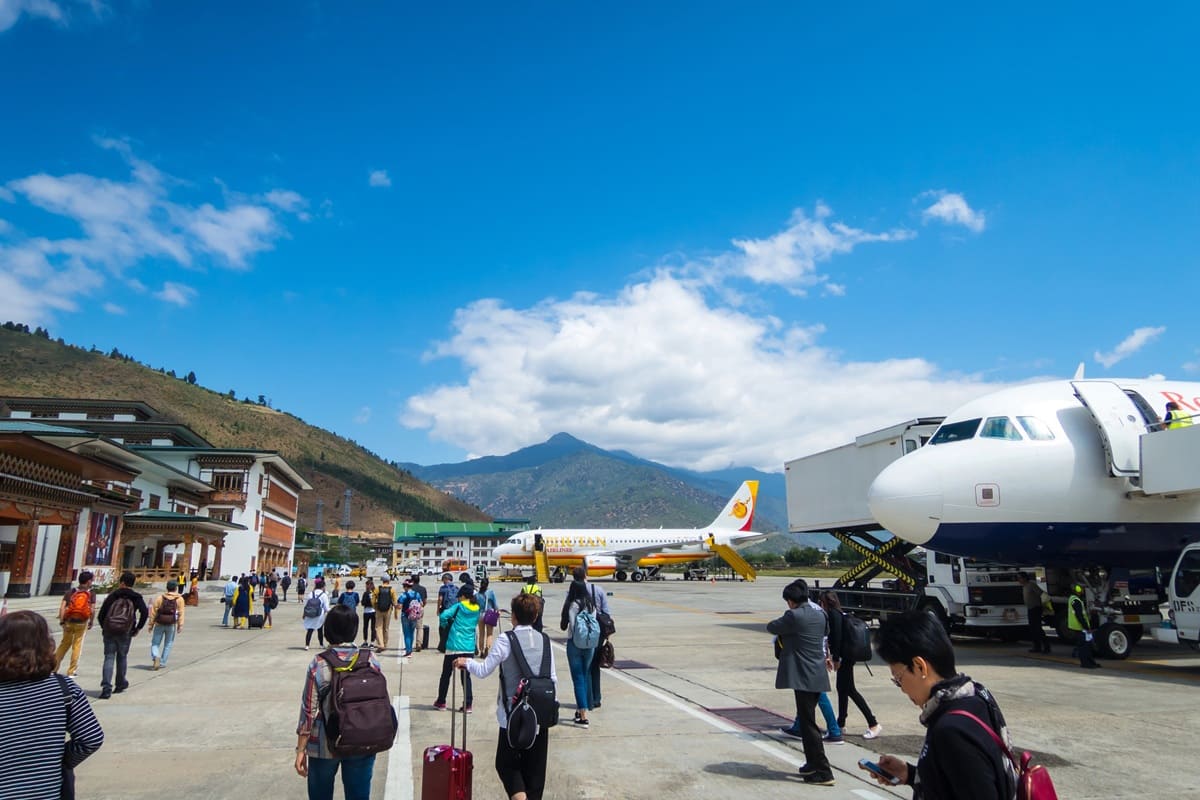
Even with few details available on these proposed developments, Bhutan is continuing to modernize its immigration controls. The country’s immigration services rolled out Automated Immigration Clearance Systems in Phuentsholing, a city on the Indian border, in 2025, and then at Paro International Airport in 2026. The system relies on biometrics, passport scanning and e-Gates.
The authorities have also highlighted a new online immigration system for several non-tourism procedures, offering end-to-end digital processing. These changes show that Bhutan is already moving toward increasingly paperless management of entry and stay procedures.