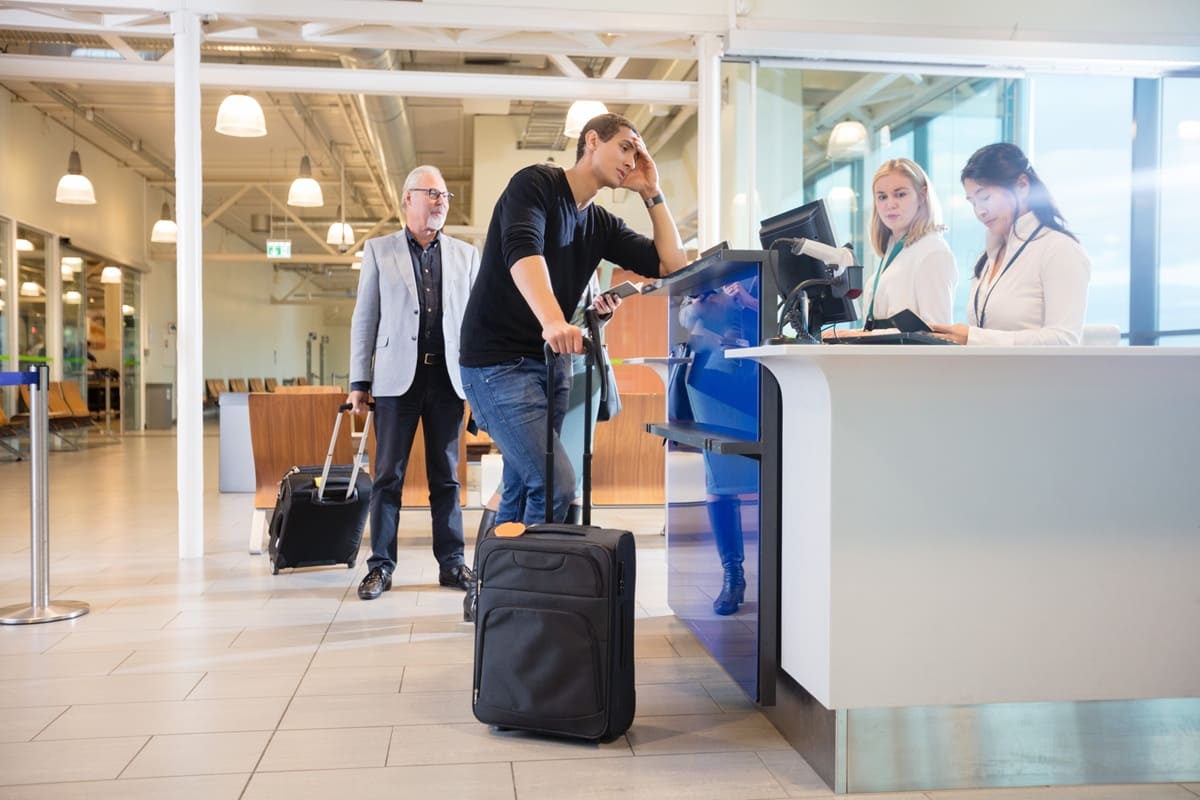
A valid passport, a confirmed airline ticket and an approved e-Visa: for the traveler, everything appears to be in order.
But for the airline responsible for carrying that passenger, one question remains: how can it be sure the electronic visa is authentic and valid?
That is the issue raised on September 16, 2026, by the International Air Transport Association (IATA) in a publication titled “Your Visa Is Digital. But Can the Airline Check It?”.
With more than 100 countries now issuing e-Visas, the way these documents are checked before departure remains far from standardized.
Email, PDF, QR code: not all e-Visas are verified the same way
Visa applications have become increasingly digital in recent years.
In many countries, travelers no longer need a physical visa sticker placed in their passport. Instead, they may receive their visa by email, download a PDF document or obtain a confirmation containing a QR code.
But behind the generic term e-Visa, the systems vary considerably.
According to IATA, proof that an electronic visa has been issued may take the form of:
- an email;
- a PDF document;
- a QR code;
- a confirmation that must be checked on an official website;
- information available directly through a government database;
- or a document that airline staff must simply inspect visually.
There is therefore no single global method today that allows an airline to verify every electronic visa.
For travelers, displaying an e-Visa on a phone may take only a few seconds. For an airline employee behind a check-in counter in New York, London, Toronto or Sydney, confirming that a document issued by a foreign government is authentic can be far less straightforward.
Why do airlines check visas before boarding?
These checks are not simply the result of excessive caution by airlines.
Before accepting a passenger on an international flight, a carrier must make sure that the traveler has the documents required to enter the destination country.
Passports, visas, electronic travel authorizations (ETAs) and transit requirements may therefore be checked at check-in or before boarding.
If an airline carries a passenger who does not have the required documentation and that traveler is refused entry upon arrival, the carrier may face penalties and may also have to cover the cost of returning the passenger.
IATA estimates that fines and return transportation costs can average around $9,000 per affected passenger.
That liability helps explain why airlines may apply particularly strict document checks when they cannot easily confirm the validity of a travel authorization.
Visa issuance has gone digital faster than visa verification
That is the paradox highlighted by IATA.
For both governments and travelers, e-Visas offer major advantages: remote applications, fewer trips to consulates, faster processing and the ability to screen travelers before they arrive.
But these systems have largely been developed independently at the national level.
IATA’s working group on control authorities recently published a best-practices document titled “Non-Physical Authorizations to Travel – Best Practices for Issuers and Verifiers”, focusing on electronic visas and other travel authorizations that are not physically placed in a passport.
Its conclusion is clear: verification is now one of the main challenges facing e-Visa and ETA programs.
The documents provided to travelers vary widely in appearance, content and security features. Some are difficult to authenticate, forcing airlines to rely on manual checks or destination-specific procedures.
iAPI allows governments to respond directly with “board” or “do not board”
For IATA, one solution already exists: Interactive Advance Passenger Information, or iAPI.
The principle is relatively simple.
At check-in, the airline electronically transmits certain passenger data to the authorities of the destination country.
Those authorities can then check their own systems to determine whether the traveler meets the necessary requirements and send a real-time response back to the airline, generally in the form of a boarding instruction.
The carrier therefore no longer has to determine on its own whether a PDF or electronic visa confirmation is authentic: the government that issued the authorization directly confirms the traveler’s status.
According to IATA, airlines report document-compliance rates that can be up to 20 times higher in countries with fully implemented iAPI systems compared with countries that rely mainly on manual checks.
But the technology is still far from universal.
IATA says that fewer than 30 countries currently use an iAPI system.
ICAO’s DTA aims to create a common format for electronic visas
The International Civil Aviation Organization (ICAO) is also working toward wider adoption of its Digital Travel Authorization (DTA), a standard specifically designed to harmonize electronic visas and other digital travel authorizations.
In a working paper on implementing the DTA, ICAO notes that proof of e-Visas currently provided to travelers, whether on paper or in digital form, is not standardized in either content or presentation, making verification more difficult.
The DTA is intended to address this problem through a standardized data set and a 2D barcode containing a verifiable digital signature. Designed in accordance with ICAO Doc 9303 specifications, the format is meant to enable more automated verification and greater international interoperability.
The authorization itself remains digital and is not physically placed in the passport, but proof of it may be presented on an electronic device or printed on paper.
In April 2026, ICAO’s Facilitation Panel approved the introduction of the DTA into the recommended practices of Annex 9, which covers facilitation in international air transport.
A digital visa that can still be printed
The introduction of the DTA does not necessarily mean that paper will disappear.
ICAO’s standard is designed so that the authorization can be presented digitally or in printed form.
In both cases, the digitally signed 2D barcode allows the integrity of the authorization data to be verified.
A traveler could therefore theoretically present the same proof on a phone or on a printed sheet without changing its ability to be authenticated.
This approach reflects a reality travelers still encounter frequently: despite the move toward digital visas, many authorities and airlines continue to ask or recommend that travelers print their e-Visa before departure.
iAPI and DTA can work together
The two systems are not competing solutions.
With iAPI, the airline communicates directly with the destination government and receives a real-time response concerning the passenger.
With the DTA, the airline has a standardized electronic document whose authenticity can be verified.
The two mechanisms can therefore complement each other: iAPI provides direct confirmation from the authorities, while the DTA offers standardized proof of authorization, particularly when real-time government verification is not available.
For countries that cannot yet deploy these technologies, IATA recommends at a minimum gradually harmonizing the appearance and information included on confirmations of visas and electronic travel authorizations.
Why are travelers still sometimes asked to print an e-Visa?
IATA’s analysis also helps explain a situation that can seem contradictory to travelers.
A visa may be described as “electronic” while travelers are still instructed to print it and present it during their trip.
That does not necessarily mean the visa itself exists on paper.
The authorization usually exists in the issuing government’s computer system. The printed document serves as proof that can help the traveler, airline or immigration officer locate or verify the authorization more easily.
Until verification systems become more interconnected and standardized, this type of supporting document is therefore likely to remain part of some e-Visa procedures.
No change to travel requirements for passengers at this stage
IATA’s recommendations do not introduce any new requirements for travelers.
There is no announcement that the e-Visas currently used around the world will soon be replaced by DTAs, nor that passengers will need to complete an additional step before flying.
The issue primarily concerns governments, airlines and international organizations working to develop common standards.
IATA is urging governments in particular to consider airline verification from the very beginning when designing e-Visa or electronic travel authorization systems, rather than focusing only on how applications are submitted and authorizations are issued.
The digital transformation of visas is already well underway. For the organization representing the world’s airlines, the next step is now to make verification as simple as issuance.
VisasNews Take
The rapid expansion of e-Visas has made travel formalities much easier for passengers, but it has also created a patchwork of documents, QR codes, PDFs and verification systems. IATA is now urging governments to further standardize these authorizations and make it easier for airlines to confirm their authenticity before departure. No new requirement is being introduced for travelers: the main challenge lies behind the scenes, in the way governments and carriers exchange and verify travel-document information.