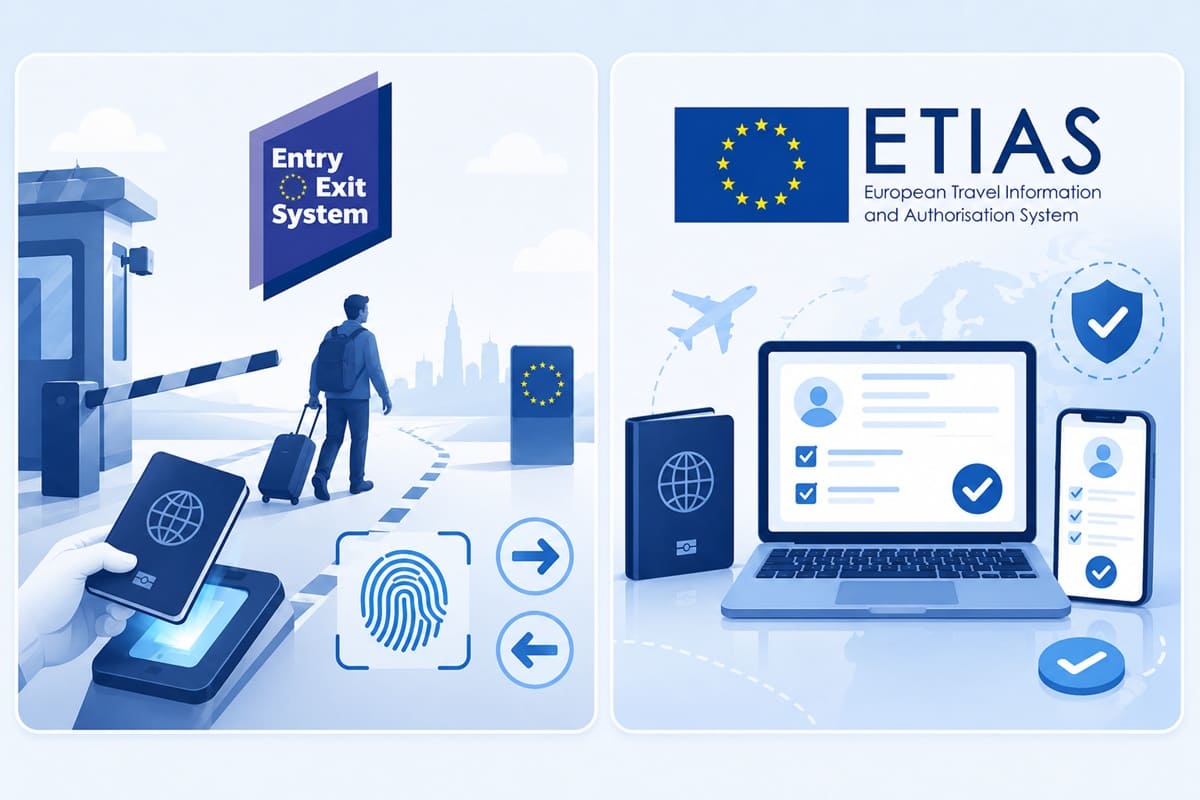
EES, ETIAS… for many travelers, these acronyms are just more letters added to an already long list, and they can easily be confusing.
Behind these technical names, however, are two very different systems that are set to fundamentally reshape the travel experience, as the European Union modernizes the management of its external borders, a momentum reaffirmed yesterday by the European Commission.
For decades, traveler controls relied on manual passport stamps, offering limited visibility into entries, exits, and lengths of stay.
With EES and ETIAS, Brussels is betting on digitalization, automation, and data interoperability. The stated goals are to strengthen security, better monitor compliance with short-stay rules, and ultimately make border crossings smoother, against the backdrop of a sustained recovery in tourism and business travel.
Although the two systems share common objectives, they do not apply at the same stage of the journey, nor to the same travelers.
The EES, already in place, is transforming border crossings
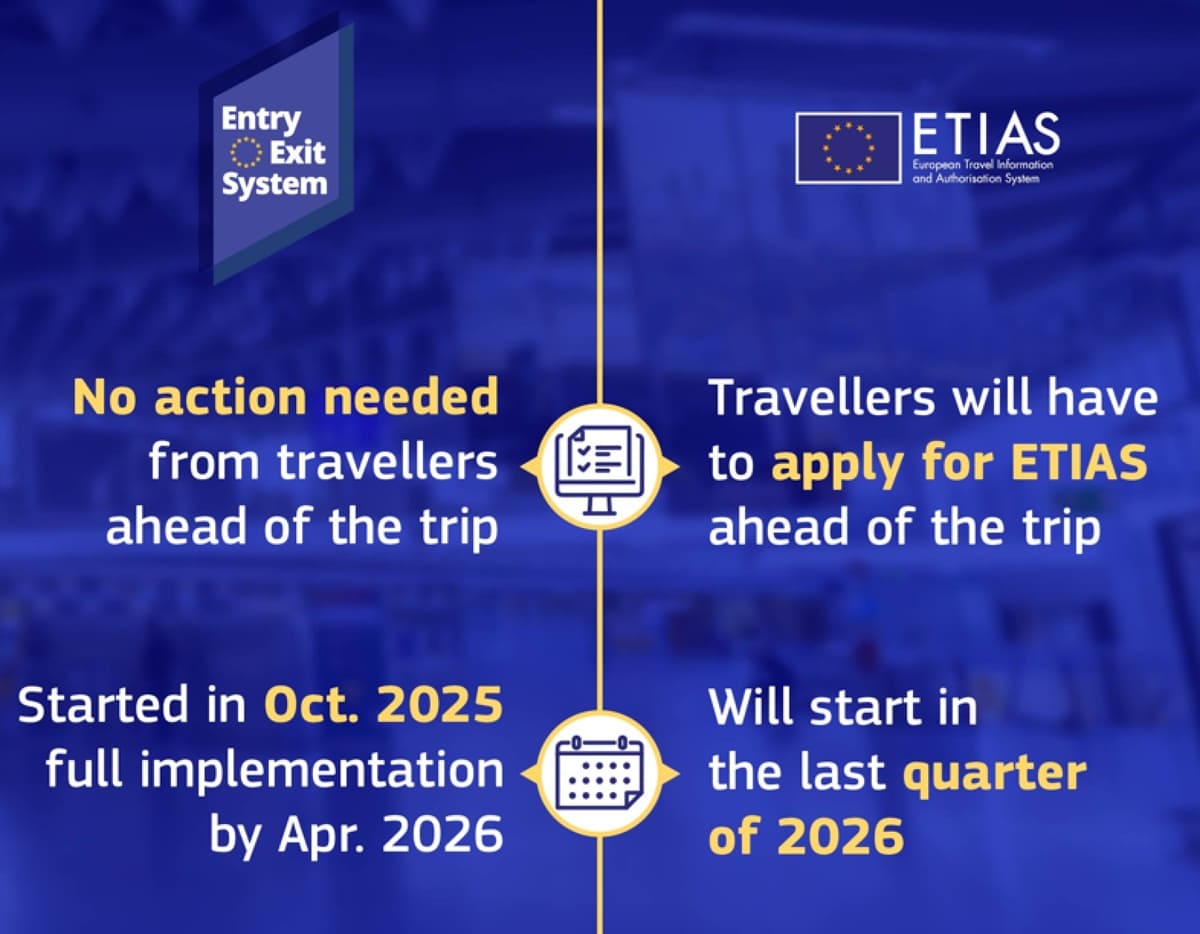
Launched on October 12, 2025, the Entry/Exit System (EES) is now a reality for travelers from third countries, meaning those outside the Schengen Area.
It applies to short stays of up to 90 days within any 180-day period in the following 29 European countries:
- Austria, Belgium, Bulgaria, Croatia, Czech Republic, Denmark, Estonia, Finland, France, Germany, Greece, Hungary, Iceland, Italy, Latvia, Liechtenstein, Lithuania, Luxembourg, Malta, Netherlands, Norway, Poland, Portugal, Romania, Slovakia, Slovenia, Spain, Sweden, and Switzerland.
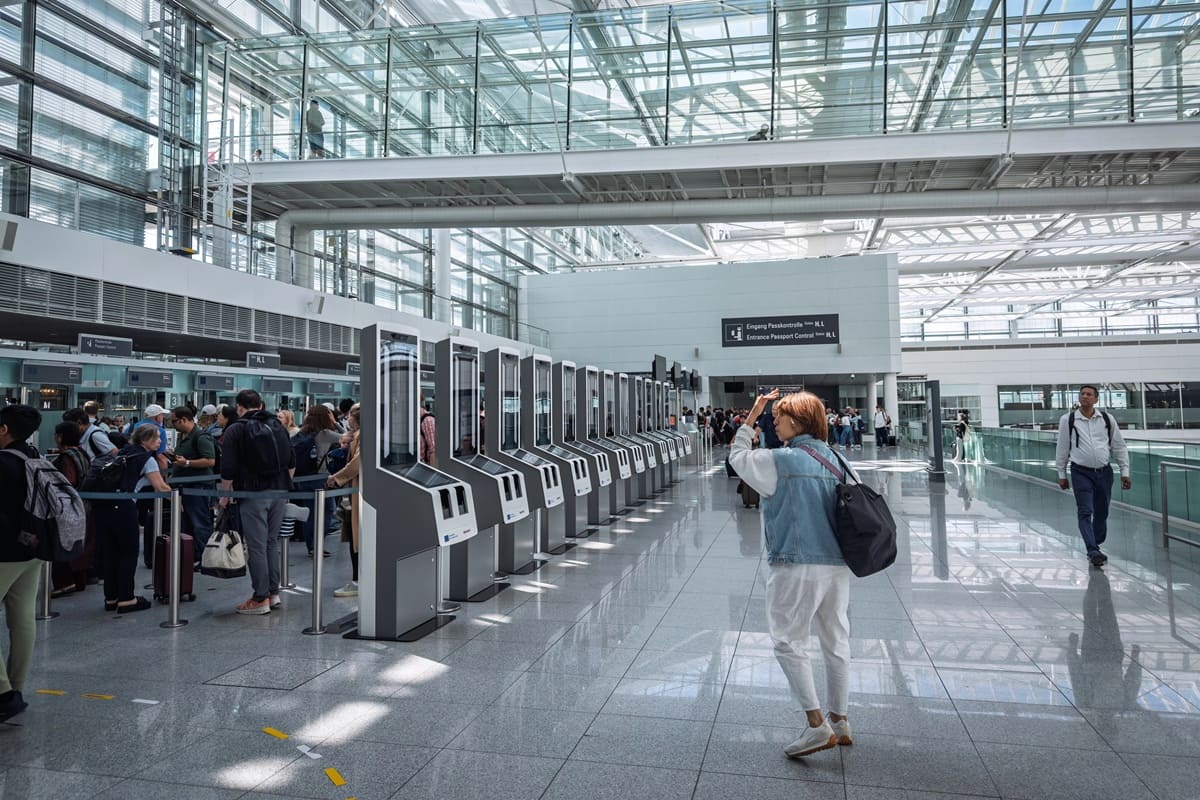
In practical terms, EES replaces manual passport stamping with a systematic digital registration when travelers cross an external EU border.
Authorities collect and record:
- the data shown on the passport;
- a facial image;
- fingerprints;
- the dates and places of entry and exit.
The system automatically calculates the authorized length of stay and makes it easier to detect overstays.
As of now, EES has not yet been rolled out uniformly. The participating member states are gradually introducing the system at their border crossing points, land, sea, and air.
This ramp-up phase must be completed no later than April 10, 2026, when all external borders using EES are expected to be fully operational. During this transitional period, some travelers may still encounter mixed procedures combining traditional checks with digital registration.
ETIAS: a new pre-departure step for visa-exempt travelers
Unlike EES, ETIAS (European Travel Information and Authorisation System) does not apply at the border, but before the trip begins.
This system concerns nationals of countries that are exempt from Schengen visa requirement who wish to travel for a short stay to the following 30 European countries:
- Austria, Belgium, Bulgaria, Croatia, Cyprus, Czech Republic, Denmark, Estonia, Finland, France, Germany, Greece, Hungary, Iceland, Italy, Latvia, Liechtenstein, Lithuania, Luxembourg, Malta, Netherlands, Norway, Poland, Portugal, Romania, Slovakia, Slovenia, Spain, Sweden, and Switzerland.
Who will need an ETIAS authorization to travel to Europe?
Scheduled to become operational in the fourth quarter of 2026, ETIAS will introduce a new requirement: obtaining an electronic travel authorization before departure for citizens of the following 59 countries and territories:
- Albania, Antigua and Barbuda, Argentina, Australia, Bahamas, Barbados, Bosnia and Herzegovina, Brazil, Brunei, Canada, Chile, Colombia, Costa Rica, Dominica, El Salvador, Georgia, Grenada, Guatemala, Honduras, Hong Kong, Israel, Japan, Kiribati, Kosovo, Macao, Malaysia, Marshall Islands, Mauritius, Mexico, Micronesia, Moldova, Montenegro, New Zealand, Nicaragua, North Macedonia, Palau, Panama, Paraguay, Peru, Saint Lucia, Saint Kitts and Nevis, Saint Vincent and the Grenadines, Samoa, Serbia, Seychelles, Singapore, Solomon Islands, South Korea, Taiwan, Timor-Leste, Tonga, Trinidad and Tobago, Tuvalu, Ukraine, United Arab Emirates, United Kingdom, United States, Uruguay, and Venezuela.
This authorization is not a visa, but a prior screening designed to assess potential migration, security, or health risks before arrival in Europe.
ETIAS applications will be submitted through the official website or a dedicated mobile app. Travelers will need to:
- complete an online form with their personal details and passport information;
- provide information related to their trip;
- pay an application fee of €20.
According to European authorities, most applications will be approved within minutes. Once granted, the authorization will be electronically linked to the passport, with no paper document required.
It will be valid for three years, or until the passport expires if that occurs sooner.
A key point to remember: ETIAS must be obtained before boarding. Airlines, maritime carriers, and land transport operators will be required to verify that travelers hold a valid authorization. If not, boarding may be denied.
This mechanism brings Europe closer to systems already in place in other parts of the world, such as the U.S. ESTA or Canada’s eTA.
EES and ETIAS: two complementary systems, not interchangeable
The Directorate-General for Migration and Home Affairs (DG HOME) offers two concrete examples to clarify the distinction:
- A U.S. citizen will, once ETIAS is in force, need to obtain an authorization before departure. Upon arrival in Europe, they will then be registered in the EES.
- An Indian citizen, who is subject to a visa requirement, will not need ETIAS (because a Schengen visa is required), but their data will be systematically recorded in the EES when crossing the border.
In other words, ETIAS conditions travel, while EES governs entry into and exit from the territory.
To support this transition, the European Union is also offering the “Travel to Europe” mobile app, which allows travelers to pre-register certain data up to 72 hours before arrival. This option, currently available depending on the country (only in Sweden for now), is intended to reduce waiting times at borders, an essential challenge in major tourist and airport hubs.
With EES already operational and ETIAS on the horizon, 2026 marks a key milestone in the transformation of Europe’s borders. For travelers, these changes mainly require more advance planning, but they also promise smoother and more transparent border controls in the long run.
In this new framework, staying well informed ahead of time becomes an essential habit to avoid unpleasant surprises and to travel through Europe with peace of mind.