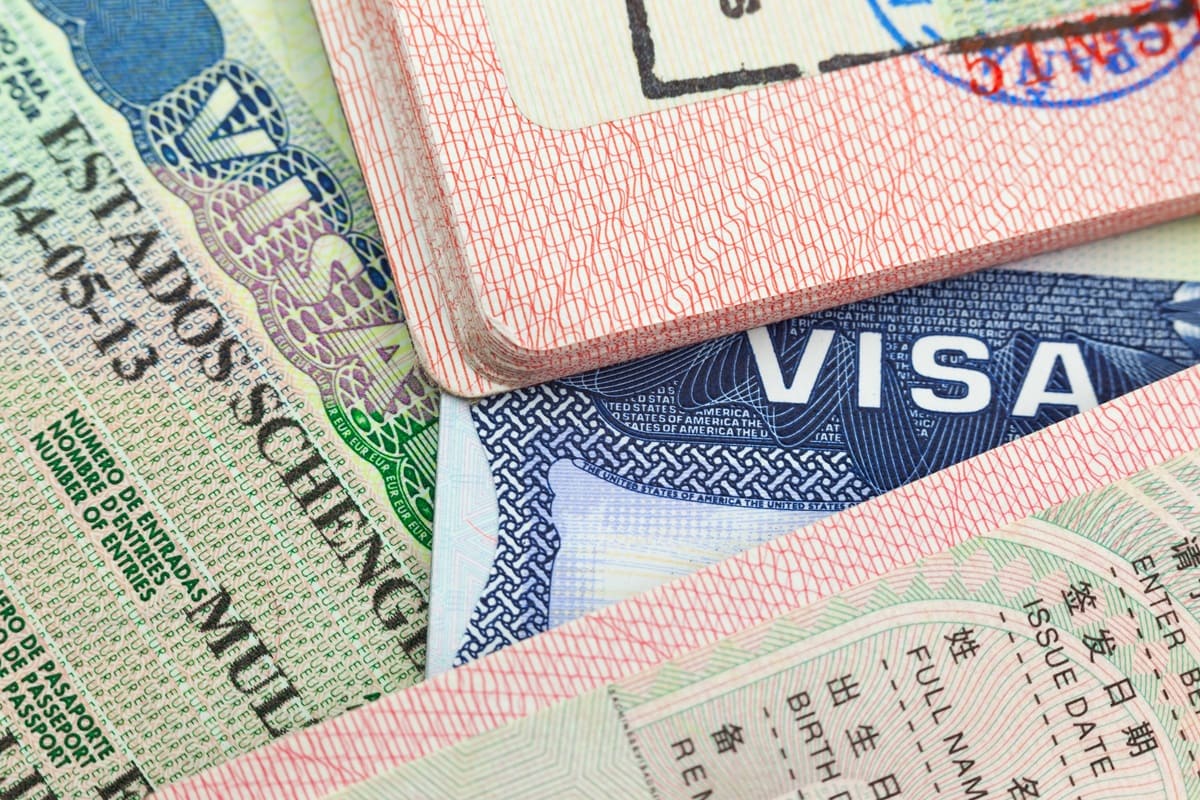
Before traveling to many countries, travelers must complete various administrative formalities.
Depending on the destination, this may involve a visa issued by an embassy or an electronic visa (e-Visa) obtained online.
In other cases, authorities require an electronic travel authorization (ETA), such as the U.S. ESTA, Canada’s eTA, or the U.K.’s ETA, or even an electronic arrival card that must be completed before departure.
These documents are often a prerequisite for boarding or entering the country. Airlines and immigration authorities verify their validity either before travel or upon arrival.
An administrative process considered “consumed”
Unlike a transportation or accommodation booking, a visa or travel authorization application immediately triggers an official administrative process.
As soon as the application is submitted, the traveler’s information is transmitted to the authorities of the destination country, which carry out administrative or security checks. This processing also involves the collection of government fees.
Even if the trip is ultimately canceled or postponed, the administrative procedure has already taken place.
In most cases, these formalities are therefore considered a service that has already been provided, comparable to an administrative procedure carried out with a public authority.
Fees set by the destination country’s authorities
Another important aspect concerns the nature of the fees paid when applying for a visa or travel authorization.
A large portion of the amount typically corresponds to official fees set by the authorities of the destination country. These fees are collected directly by governments for processing applications and reviewing cases.
For this reason, they generally cannot be refunded, even if the trip ultimately does not take place.
Service providers that assist travelers with their administrative procedures are themselves subject to these rules established by the relevant authorities.
Possible exceptions, but very rare
In certain exceptional situations, particularly during health crises, border closures, or major geopolitical events, governments may adopt special measures.
For example, this may include automatically extending the validity of certain visas, postponing their use, or, more rarely, temporarily suspending certain fees.
However, such decisions remain uncommon and depend entirely on the authorities of the country concerned.
During the COVID-19 pandemic, some destinations extended the validity of visas or travel authorizations that had already been issued in order to take international travel restrictions into account.
A different logic from other travel services
Entry formalities fall within an administrative framework that is very different from that of traditional tourism services.
An airline ticket, travel insurance policy, or hotel reservation may be refunded or modified according to the commercial terms set by airlines, insurers, or tourism providers.
Visas and travel authorizations, on the other hand, depend directly on the immigration authorities of the destination country. They are part of a sovereign administrative process that does not follow the same rules as commercial services in the tourism sector.
Procedures to anticipate in an uncertain international context
In an international environment sometimes marked by geopolitical crises, air travel disruptions, or unexpected events, entry formalities should be viewed as an essential administrative step in preparing for a trip.
For travelers, this means understanding that these procedures are generally non-refundable, even if the trip is canceled.
When they remain valid for several months or several years, as is often the case for certain electronic travel authorizations, they may still be used for a future trip to the same destination.

