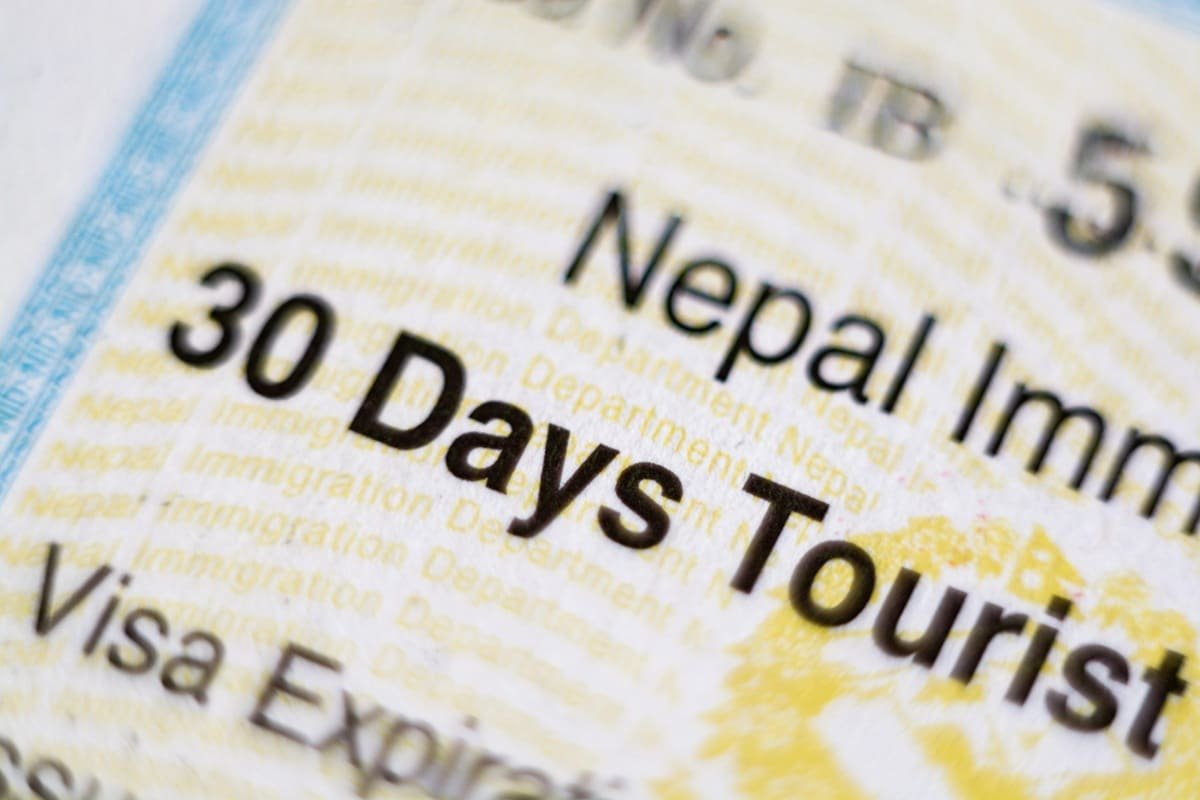
Nepal is preparing to take another step toward digitizing its entry procedures.
According to Tikaram Dhakal, spokesperson for Nepal’s Department of Immigration, the country’s e-Visa system is scheduled to become fully operational on August 17, 2026. Technical and administrative preparations are reportedly complete following a testing phase designed to identify and resolve potential issues.
The goal is to allow travelers to obtain their visas remotely, without having to wait for a visa sticker to be printed and placed in their passport upon arrival in Nepal or at a Nepalese diplomatic mission.
A visa delivered by email before travel
Under the new procedure, eligible travelers will be able to apply from outside Nepal through the official portal at nepaliport-new.immigration.gov.np.
Applicants will need to provide their personal details, passport information, intended travel dates and address in Nepal. They will also be required to upload a copy of their passport and a recent photograph.
Once the application has been reviewed and the fees paid online, the approved visa will be sent to the applicant’s email address. Travelers will then need to print the document and present it when departing for Nepal and again at immigration upon arrival.
According to Tikaram Dhakal, applications should generally be processed within 24 hours. He said the fully digital system should shorten processing times, reduce administrative costs and ease lines at the country’s immigration checkpoints.
Nepal Immigration now details the procedure online
On its website at immigration.gov.np/eta-visa-nepal, the Department of Immigration now outlines an “ETA/eVisa” procedure through which travelers can apply directly for an electronic travel authorization or e-Visa.
Travelers can select a multiple-entry tourist visa allowing a stay of:
- 15 days for $30;
- 30 days for $50;
- 90 days for $125.
Payment can be made online by credit or debit card. Once approved, the visa is sent by email and must be printed before travel. The document must be used within six months of its date of issue.
This direct application process through the Department of Immigration supplements the system already offered by Nepalese embassies and consulates, which have issued electronic authorizations in place of sticker or handwritten visas for several years.
The official portal also notes that several categories of travelers qualify for a free visa. Children under 10, except U.S. citizens, are eligible for a free visa for stays of up to 30 days, while standard fees continue to apply to 90-day visas.
Citizens of member countries of the South Asian Association for Regional Cooperation, or SAARC, may receive a free 30-day visa once per calendar year. For Afghan nationals, however, eligibility for a visa on arrival remains subject to a recommendation from the Department of Immigration.
Holders of a Non-Resident Nepali, or NRN, card issued by Nepal’s Ministry of Foreign Affairs are also exempt from visa fees.
Visas on arrival remain available
The rollout of the e-Visa system does not, at least for now, mean Nepal is ending its longstanding visa-on-arrival program.
The Department of Immigration’s official portal confirms that visas on arrival remain available to the vast majority of travelers. Nationals of only 12 countries are currently unable to obtain one at Nepalese immigration entry points: Afghanistan, Cameroon, Eswatini, Ethiopia, Ghana, Iraq, Liberia, Nigeria, Palestine, Somalia, Syria and Zimbabwe.
Travelers from those countries must apply before departure through a Nepalese embassy or diplomatic mission, or use the online portal dedicated to consular applications. All other visa-required travelers may continue to obtain a visa upon arrival at Tribhuvan International Airport in Kathmandu or at another authorized entry point.
Official information published by the Department of Immigration continues to distinguish between two procedures:
- a visa on arrival, for which the application form can be completed and the fee paid before departure;
- an Electronic Travel Authorization, or ETA, which is reviewed and approved before the traveler’s trip.
The official online payment guide, updated in early August 2026, states that travelers choosing a visa on arrival must still present their application form and payment receipt at the immigration counter, where the visa is issued.
These official instructions confirm that the e-Visa is not currently becoming mandatory for U.S., French or other European nationals. Those travelers are not among the nationalities excluded from the visa-on-arrival program and may therefore continue to use that option at authorized entry points.
Tikaram Dhakal has also said that the existing ETA system will continue to operate alongside the e-Visa during a transition period, giving travelers and tourism industry professionals time to adjust.
VisasNews Take
The rollout announced for August 17, 2026, primarily marks Nepal’s transition to a fully digital visa that travelers can receive before departure and print themselves. For now, Nepalese authorities continue to offer visas on arrival and ETAs issued through embassies. Travelers should therefore check the procedure displayed on NepaliPort shortly before departure, particularly while the country transitions between the different systems.