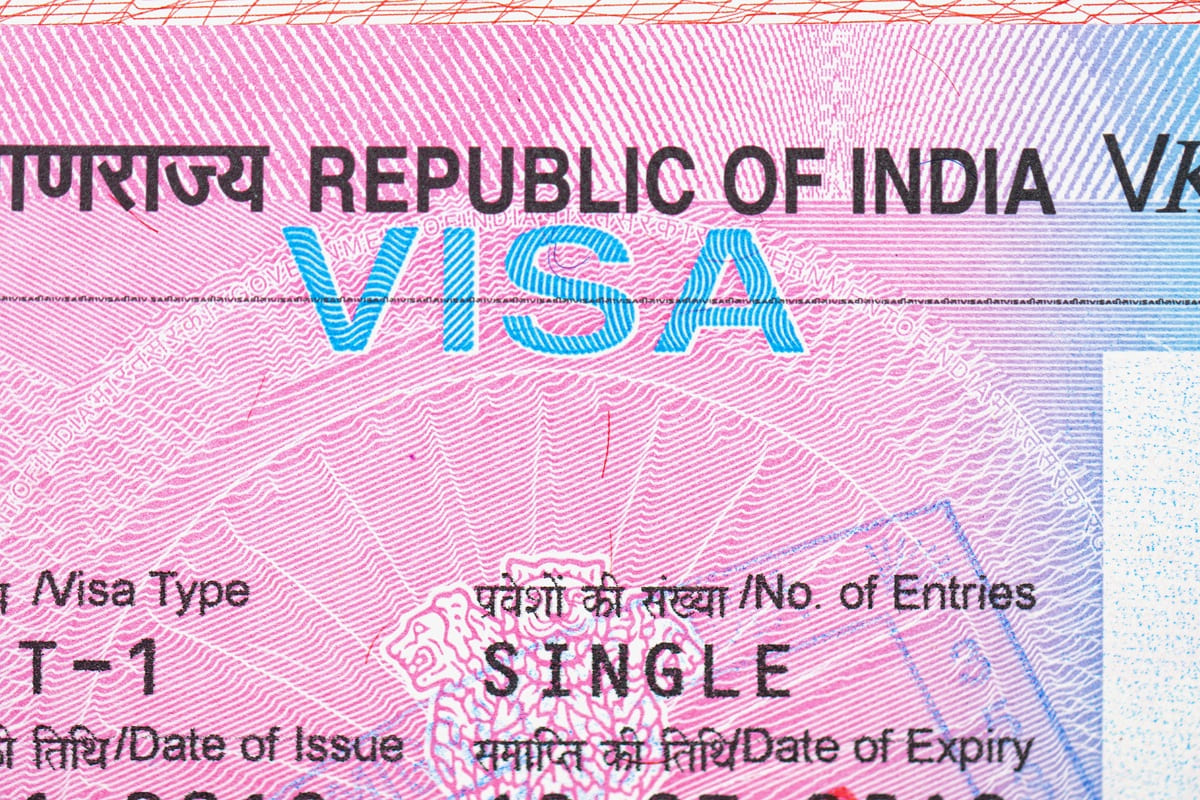
India has outlined a sweeping reorganization of its visa system aimed at making travel easier for international visitors and streamlining administrative procedures.
In a statement released on November 11, 2026, India’s Ministry of Home Affairs detailed the new visa categories that will gradually be introduced for tourism, business, medical treatment, and education.
The reform, approved on August 27, will reduce the number of main visa categories from 13 to 9, while cutting the number of subcategories from 49 to 23.
It builds on an earlier restructuring carried out in October 2025, when the number of main visa categories was already reduced from 22 to 13.
For international travelers, one of the most significant changes involves the traditional Tourist Visa, which is set to become a more versatile travel authorization.
India’s Tourist Visa Is Becoming the “Visitor Visa”
The Tourist Visa will be renamed the “Visitor Visa”, reflecting the broader range of activities travelers will be permitted to undertake during their stay in India.
The government aims to eliminate the need for travelers to apply for different visa types when their trips combine tourism with occasional business meetings or certain medical and cultural activities.
The new Visitor Visa will be divided into two categories: V-1 and V-2.
V-1 visa for 30-day visits
The V-1 Visitor Visa is designed for short-term visits.
Valid for 30 days and allowing multiple entries, it will cover several purposes of travel, including:
- Tourism and private visits;
- Short-term business meetings;
- Medical consultations and certain short-term treatments;
- Wellness retreats and short yoga programs;
- Short courses in Indian languages, music, art, or traditional crafts.
This approach is intended to give travelers greater flexibility to combine different activities during a single trip without having to navigate multiple visa procedures.
V-2 visa with one-, five-, or ten-year validity
The second category, V-2, is intended for visitors seeking a longer-validity travel authorization.
According to India’s Ministry of Home Affairs, this visa may be issued for one, five, or ten years, depending on the applicable requirements.
It will cover the activities permitted under the V-1 category, as well as mountaineering.
For mountaineering activities, authorities are introducing a specific six-month, multiple-entry authorization.
The possibility of obtaining a ten-year Visitor Visa represents a potentially significant development for travelers who visit India regularly.
However, visa validity should not be confused with the maximum period of stay permitted in the country. The government’s announcement does not yet specify all the conditions governing stays under the various V-2 options.
India’s e-Visa system already displays e-T1 V and e-T2 V categories
The reform also raises questions about India’s electronic visa system, which is currently available to nationals of 172 countries.
On the official Indian Visa Online portal, electronic tourist visas are already listed under two separate designations: e-Tourist Visa (e-T1 V) and e-Tourist Visa (e-T2 V).
The first category includes three types of electronic tourist visas:
- 30-day e-Tourist Visa, allowing multiple entries into India;
- One-year e-Tourist Visa, valid for 365 days from the date the Electronic Travel Authorization (ETA) is granted, with multiple entries;
- Five-year e-Tourist Visa, also allowing multiple entries, with validity beginning on the date the ETA is issued.
For one-year and five-year electronic tourist visas, Indian authorities state that the total time spent in the country must not exceed 180 days per calendar year, subject to the applicable conditions.
These designations are not entirely new. The e-T1 V code was already appearing on electronic travel authorizations in June 2026, when India relaxed the rules for its 30-day e-Tourist Visa by allowing multiple entries.
The official portal also lists an e-Tourist Visa (e-T2 V) category specifically intended for mountaineering and trekking expeditions (Mountaineering / Trekking Expedition). This electronic authorization is valid for six months from the date the ETA is granted and allows multiple entries into India.
However, the exact date when this designation was introduced has not been established.
The six-month validity period mirrors the provision announced for mountaineering under the new V-2 category. India’s e-Visa portal already provides a dedicated application option for mountaineering and trekking expeditions. However, authorities have not yet clarified how all existing electronic visa designations will correspond to the new classification announced on November 11.
An important distinction concerns the ten-year visa: although this validity period is now among the options announced for the V-2 Visitor Visa, it is not currently offered through the standard online e-Tourist Visa options.
Eligible travelers can still apply for electronic tourist visas valid for 30 days, one year, or five years, under the existing rules.
It therefore remains unclear whether the reform will lead to changes in the electronic visas themselves or simply to a new way of organizing and presenting the existing categories.
Medical, student, and business visas are also being reorganized
The overhaul extends well beyond tourism and affects several other types of travel.
For medical visits, two main categories will remain: the M-1 visa, intended for conventional medical treatment, and the M-3 visa, covering treatments under India’s traditional AYUSH healthcare systems.
These visas, including their electronic versions, will generally be issued for one year with multiple entries. Accompanying family members or attendants may qualify for the corresponding M-2 and M-4 categories.
Student visas will also be consolidated into two categories: S-1, covering school and university studies, and S-2, intended in particular for doctoral students, researchers, visiting faculty members, interns, and participants in certain exchange programs.
International students admitted to Indian institutions through the Study in India portal may qualify, subject to eligibility requirements, for an e-S1 student e-Visa valid for up to five years or the duration of their studies, whichever is shorter.
Business visa classifications are also being revised.
The B-1 visa will primarily cover long-term business activities, while B-2 will apply to a range of temporary activities, including conferences, certain artistic and sporting engagements, film productions, and technical assignments.
The ministry also plans to introduce an electronic visa arrangement for certain foreign engineers, specialists, and technical personnel working on industrial projects in India.
India to cut visa application fields by up to 70% by the end of 2026
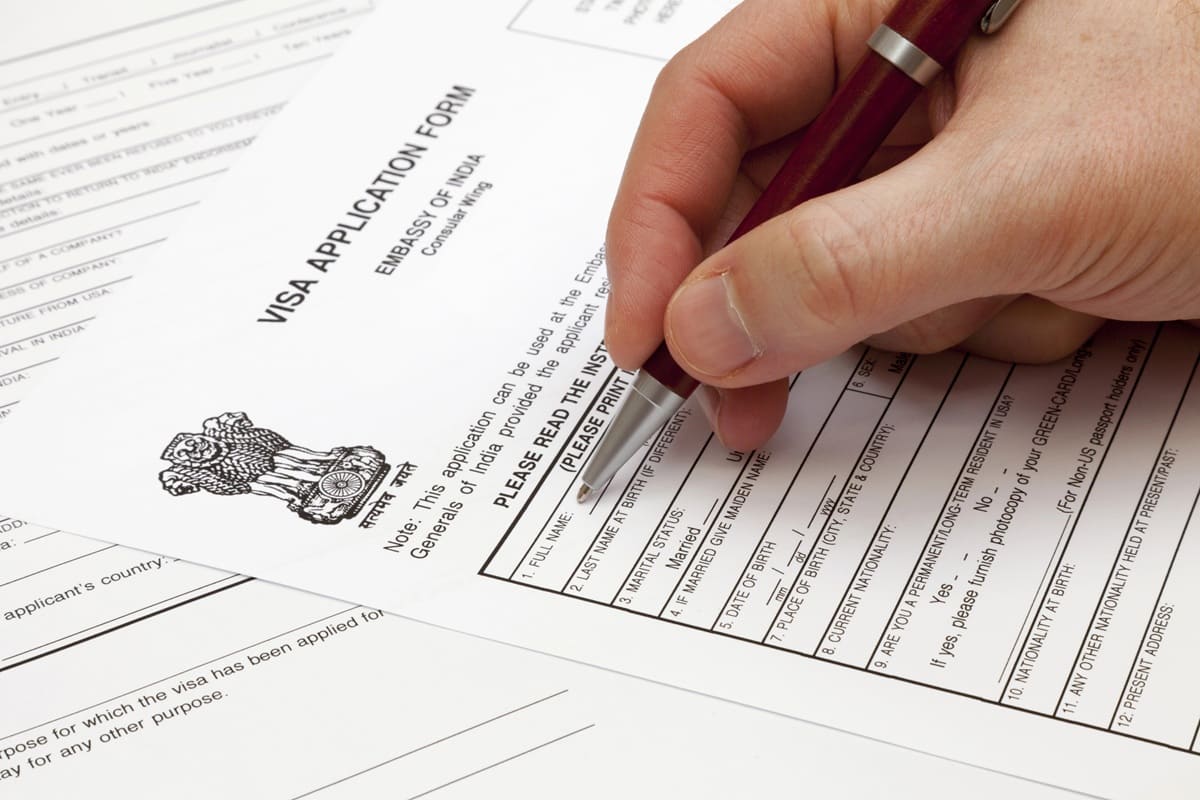
The reorganization of visa categories will be accompanied by a significant simplification of the application process.
As VisasNews reported on November 4, the Indian government had been considering a substantial reduction in the amount of information foreign travelers are required to provide when applying for a visa.
Local media had suggested that the number of fields on application forms could be reduced by around 70%, with implementation potentially taking place in 2027.
India’s Ministry of Home Affairs has now officially confirmed those plans.
According to the November 11 announcement, the number of fields applicants must complete will be reduced by 65% to 70% across all 23 visa subcategories.
The changes are intended to eliminate redundant information, make applications quicker to complete, and streamline administrative processing while retaining the details necessary to assess each application.
Another important development concerns the implementation timeline, which could be shorter than initially expected.
The government says its computer systems are currently being updated to allow visas to be issued under the new classification by the end of 2026.
However, no specific launch date for the revised procedures has been announced.
What changes for travelers visiting India right now?
Despite the announcement of these reforms, travelers must continue to apply for visas through the procedures currently in place.
Citizens of the United States, United Kingdom, Canada, Australia, and New Zealand, among others, are still required to obtain a visa before traveling to India. They can use the electronic visa system when they meet the applicable eligibility requirements.
The official Indian e-Visa portal indianvisaonline.gov.in remains the primary platform for submitting online applications.
Several changes have already made the process more flexible in recent months.
Since December 18, 2025, travelers have been able to apply for a 30-day e-Tourist Visa up to 120 days before their intended arrival, compared with the previous 30-day application window.
Since June 2026, the same authorization has also allowed multiple entries, whereas it was previously limited to two.
Separately, foreign travelers must still complete India’s e-Arrival Card within the 72 hours preceding their arrival, regardless of their visa status.
Any applicable health-related requirements, including the Air Suvidha declaration, also remain separate from the visa application process.
VisasNews Take
By confirming the transition from Tourist Visa to Visitor Visa, India is taking another step toward modernizing its entry requirements. The reform is significant not only because it broadens the range of activities travelers may undertake, but also because it promises to substantially reduce the information required when applying for a visa. The possibility of obtaining a visa valid for ten years could also appeal to frequent visitors, although it should not be confused with the current electronic visa options, which offer a maximum validity of five years for standard tourist e-Visas. While the government is targeting implementation by the end of 2026, the actual updates to official visa portals will be key to understanding how these changes will affect travelers in practice.