Europe’s borders are entering a major transition year.
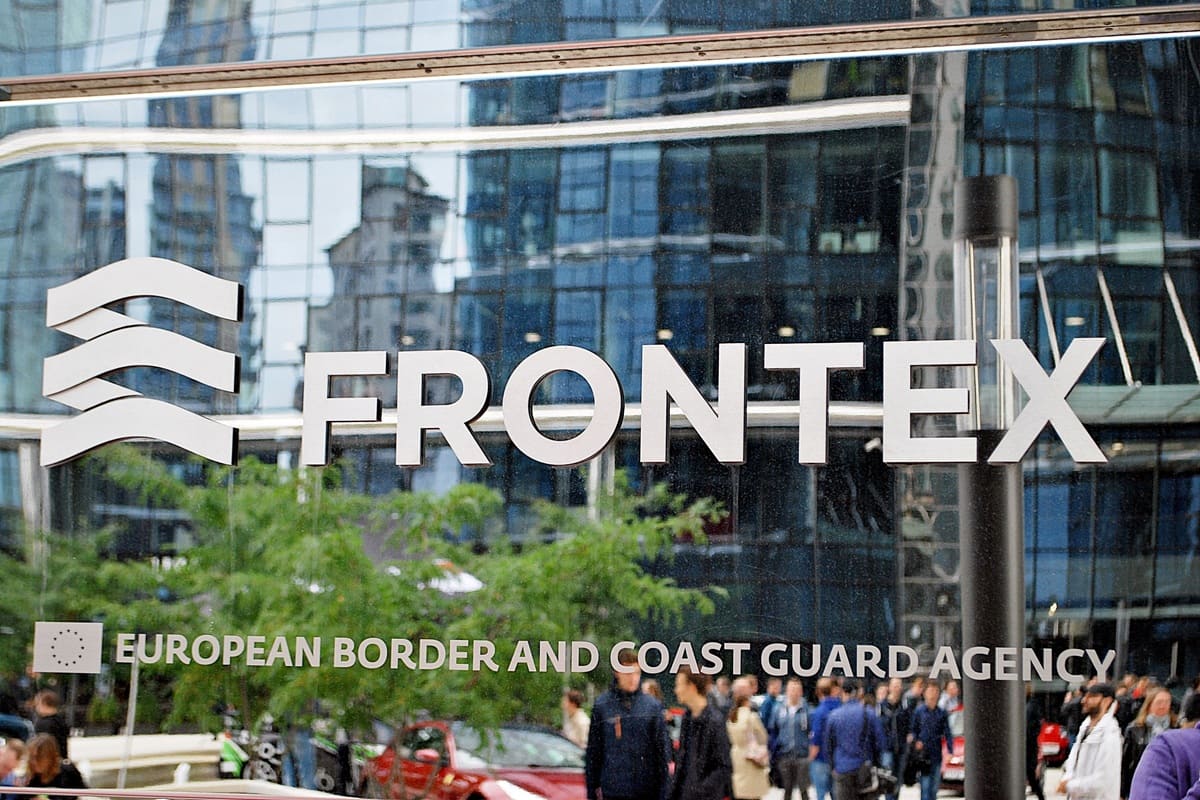
Frontex has published its Annual Risk Analysis 2026/2027, a strategic report on the main risks facing the European Union’s external borders from the third quarter of 2026 to the third quarter of 2027.
The agency notes that irregular border crossings into the EU have declined in recent years. In 2025, they reached their lowest level since 2021, while detections in the first quarter of 2026 were down by nearly 40% year over year.
But Frontex warns against reading the situation through that figure alone. Its executive director, Hans Leijtens, summed up the issue by saying that “the numbers and the risk are no longer telling the same story.”
In other words, the pressure is not disappearing. It is changing.
A less visible but more complex form of pressure
Frontex’s report shows that the EU’s external borders are no longer dealing only with the volume of arrivals. Border authorities must also contend with hybrid risks, better organized criminal networks, fast-moving geopolitical developments and a major overhaul of border control systems.
The agency points in particular to tensions in Europe’s neighborhood, the situation in the Middle East, instability in the Sahel, the consequences of the war in Ukraine and the hybrid risks Frontex associates with the security environment along the EU’s eastern borders.
For the general public, this kind of analysis may seem far removed from travel formalities. In reality, it has a direct link to border checks. As risks become more diverse, authorities are looking more closely at how travelers are identified, how documents are verified, how entries and exits are recorded, and how attempts to bypass the rules can be detected.
EES and ETIAS: a turning point for travelers
Frontex identifies the rollout of Europe’s new systems as one of the major issues to watch in 2026.
The report refers in particular to the Entry/Exit System (EES), the European system designed to record the movements of non-EU nationals at the external borders of the Schengen Area. It also mentions ETIAS, the electronic travel authorization that will apply to visa-exempt travelers before they enter the Schengen Area.
According to Frontex, this transformation represents one of the most significant changes to European border management in decades.
The agency does not present these tools as a simple administrative update. It also highlights the operational risks that may come with their implementation, including longer processing times, queues at some border crossing points, airline readiness, added pressure on secondary checks and possible disruption during peak travel periods.
For frequent travelers, European travel formalities are becoming more digital, but also more structured. A valid passport, a clear and consistent travel purpose, available supporting documents and early preparation for new procedures will become increasingly important.
Fake documents and identity fraud: an expected risk
Frontex also expects smuggling and document fraud networks to respond to the new controls.
With the EES, European authorities will have a more precise record of entries and exits. The report says some networks are likely to try to get around the system by using fake documents, fraudulently obtained documents or genuine documents used by impostors.
That last scenario is often less familiar to travelers. It involves a person traveling with an authentic document that belongs to someone else. For border guards, the challenge is not only to detect a fake passport, but also to confirm that the document presented really belongs to the person using it.
Frontex also points to the continued risk of identity document fraud, stolen vehicles, illicit goods trafficking and criminal networks able to adjust their methods quickly when controls change.
Visas, airport transit and misuse of certain procedures
The report pays particular attention to the EU’s air borders, where risks are less visible than on land or sea routes, but often more technical.
Frontex says misuse of airport transit visa exemptions is expected to remain a persistent tactic. Some travelers use transit through a European airport not to continue on to their ticketed destination, but to apply for asylum in the EU.
The agency also mentions travelers heading to the United Kingdom or Ireland with fake documents, fraudulently obtained passports or genuine documents used by another person.
Another notable point is that secondary movements do not only involve people who entered the European Union irregularly. Frontex notes that they may also involve people who entered legally with a short-stay visa, a student visa, a work visa or from a visa-exempt country, before later falling into irregular status.
The English Channel route, while outside the direct scope of this analysis on entries into the EU, is cited as the final stage of some secondary movements toward the United Kingdom.
More mobile and more tech-savvy criminal networks
Beyond migration issues, Frontex also focuses on cross-border crime.
Networks operating in the Western Balkans, the Western Mediterranean and along the EU’s eastern borders are described as more sophisticated, more mobile and quicker to adopt new technologies.
The report mentions drug trafficking, converted weapons, drones, autonomous vessels, semi-submersibles and other methods used by criminal groups to evade controls.
This trend directly concerns border authorities because the same routes, crossing points and, in some cases, networks can be used for several types of trafficking, including irregular migration, fake documents, weapons, drugs and illicit goods.
VisasNews Take
Frontex’s report should not be read as a warning meant to alarm travelers, but rather as a sign of how European border checks are evolving. Irregular arrivals may be falling, while checks are becoming more detailed, more digital and more focused on inconsistencies in travel patterns.
For travelers, the impact will be mostly practical. Having a valid passport may not always be enough to ensure a smooth border crossing. With the EES, followed by ETIAS, European authorities will have more information about entries, exits and travel authorizations. The purpose of the trip, supporting documents, planned length of stay and overall consistency of the travel file will carry even greater weight.
Europe is entering a period in which travel formalities will be less visible, but more structured. The best approach remains straightforward: check the rules before departure, prepare for new digital procedures and travel with documents that match the purpose of the stay. It will not necessarily be more complicated, but it will leave less room for improvisation.