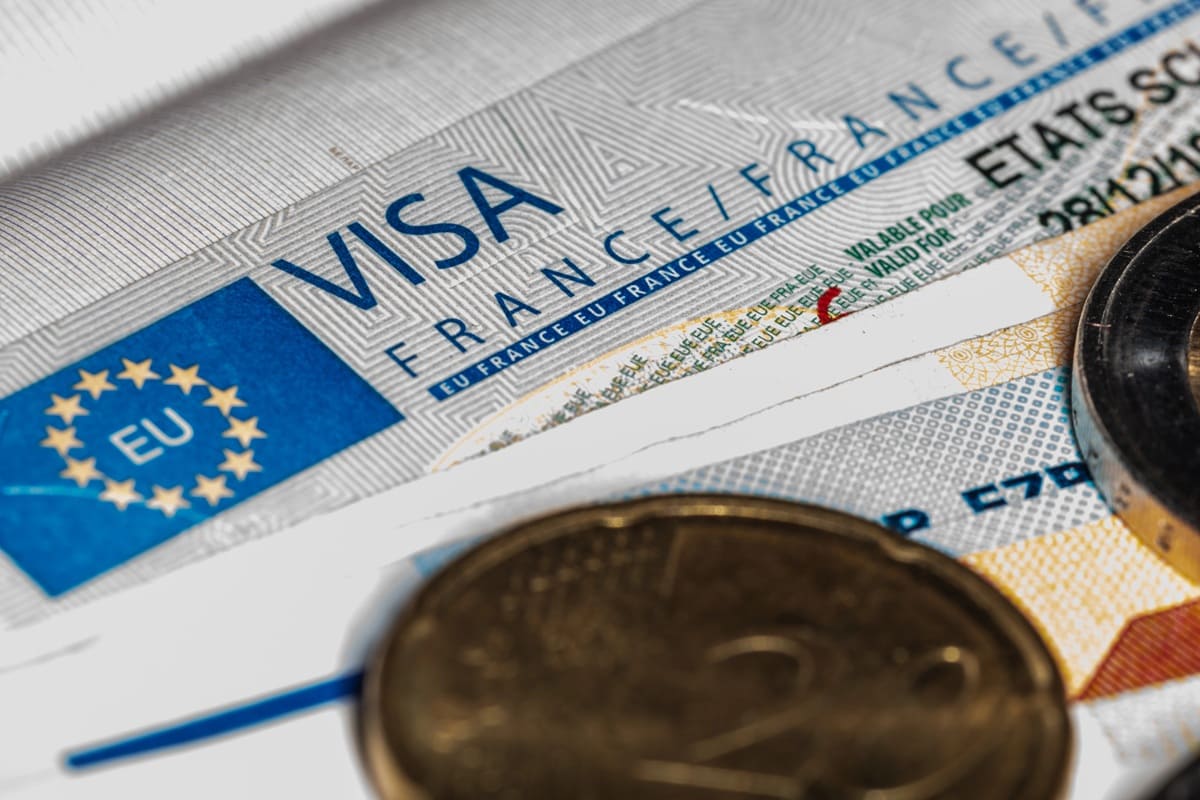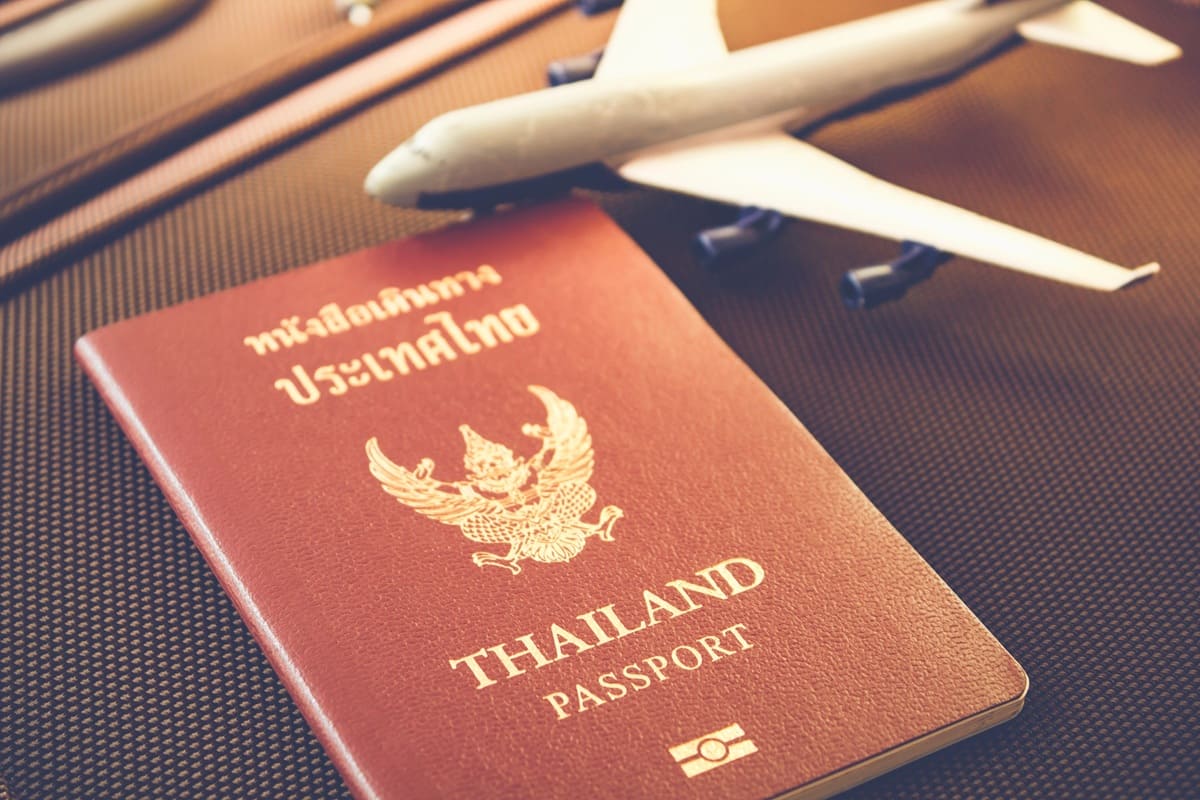
The European Union has adopted more favorable rules for issuing Schengen visas to Thai nationals residing in Thailand. Announced by the EU Delegation in Bangkok and confirmed by Thailand’s Ministry of Foreign Affairs, the measure is based on a “visa cascade” system, allowing regular travelers who comply with visa rules to progressively obtain multiple-entry visas valid for one year, two years and eventually five years.
The change applies to Thai nationals who apply for a short-stay Schengen visa at an embassy or consulate of a Schengen state in Thailand. It is primarily aimed at frequent travelers with a strong travel record, no overstays and no misuse of previous visas.
Schengen visas with progressively longer validity
According to Thailand’s Ministry of Foreign Affairs, the new scheme entered into force after it was approved by the European Commission on May 8, 2026. It allows eligible applicants to receive multiple-entry Schengen visas under a defined progression.
A one-year multiple-entry visa may be issued to travelers who have obtained and lawfully used a Schengen visa in the previous two years. A two-year visa may then be granted to holders who have already obtained and properly used a one-year multiple-entry visa in the previous three years. Finally, a five-year multiple-entry visa may be issued to travelers who have lawfully used a two-year multiple-entry visa in the previous four years.
In practice, the mechanism does not eliminate the visa application process. Thai travelers must still submit a Schengen visa application and meet the usual requirements. Regular applicants who are considered reliable, however, will be able to avoid renewing their visa before each trip, which should reduce paperwork, processing delays and the costs associated with repeated applications.
The scheme is not a visa exemption
Thai authorities have emphasized an important point: the visa cascade scheme is not a Schengen visa exemption. Thai passport holders remain subject to visa requirements when traveling to the Schengen Area. The standard criteria for assessing applications also continue to apply, including proof of stay, financial means, travel insurance, the purpose of the trip and the intention to leave the Schengen Area at the end of the authorized stay.
As with any short-stay Schengen visa, the authorization allows travel within the Schengen Area for up to 90 days in any 180-day period. The visa may be used for various short-stay purposes, but it does not grant the right to work.
The Schengen Area currently includes 29 European countries, including 25 EU member states as well as Iceland, Liechtenstein, Norway and Switzerland.
Thailand becomes the second Southeast Asian country to benefit from the scheme
For Bangkok, the decision marks another step forward in relations between Thailand and the European Union. Thailand’s Ministry of Foreign Affairs noted that the country is now among the few beneficiaries of the visa cascade system, following India, Saudi Arabia, Bahrain and Oman in 2024, and Turkey and Indonesia in 2025. Thailand therefore becomes the second ASEAN country to benefit from the scheme, after Indonesia.
The Thai ministry described the development as the result of diplomatic work with European institutions and Schengen states. It said it had highlighted the low migration and security risks associated with Thai travelers, as well as their economic contribution to European countries.
In this context, Bangkok also praised the role of Thai travelers themselves. The ministry said it “would like to express appreciation to Thai travelers for their responsible travel conduct,” adding that this behavior had enabled the government to “successfully advocate this initiative.” According to Thai authorities, the visa cascade system “reflects the EU’s confidence in Thailand and marks another important milestone in Thailand-EU relations.”
The measure also comes as Thailand and the European Union continue to strengthen their relationship, following the provisional application of their Partnership and Cooperation Agreement since October 20, 2024.
Thailand is still seeking Schengen visa-free travel
In the longer term, Bangkok says it will continue working toward a Schengen visa exemption for its nationals. The new scheme is therefore not the final objective for Thai authorities, but rather an intermediate step designed to facilitate travel, economic exchanges, business trips, studies and skilled mobility.
For Thai travelers, the change is nevertheless concrete: those who travel regularly to Europe and comply with the conditions of their previous visas will have easier access to long-validity multiple-entry Schengen visas. For first-time applicants or travelers who do not yet meet the criteria, the standard procedure remains unchanged.