Since August 1, 2026, Egypt has offered eligible international travelers a new digital option for completing visa formalities upon arrival at Cairo International Airport.
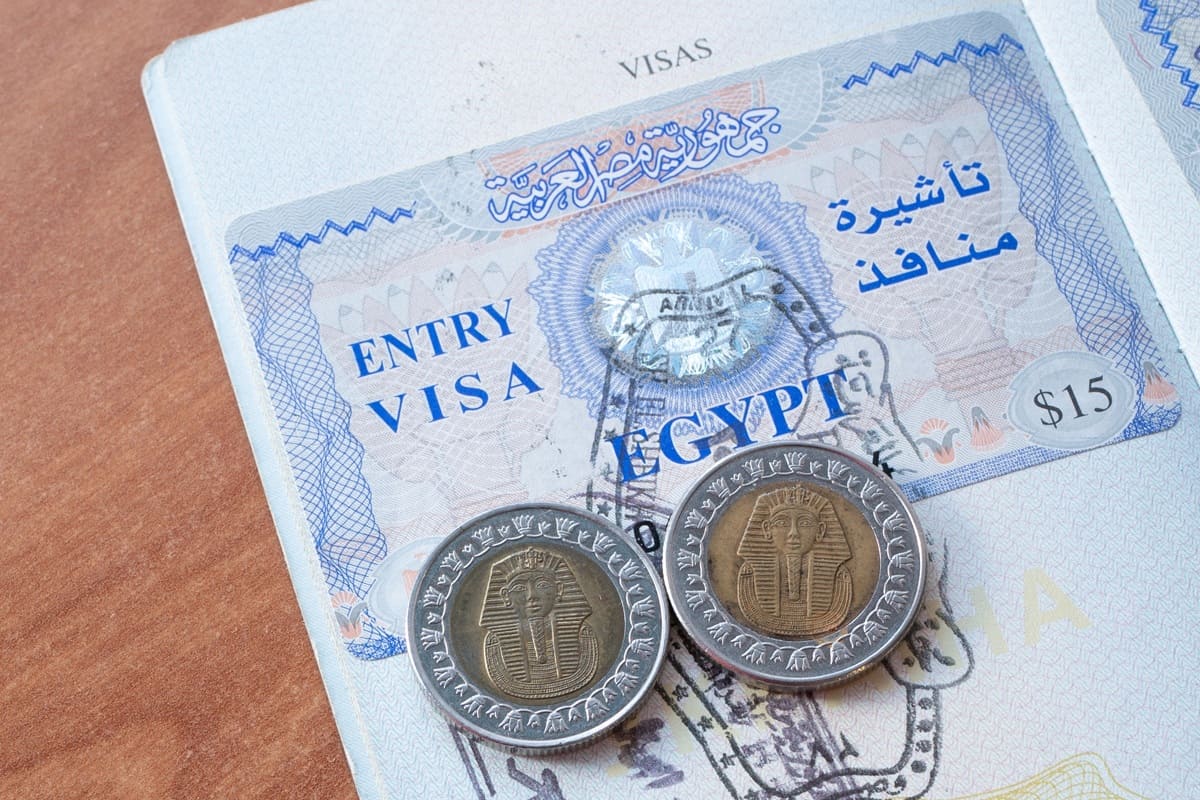
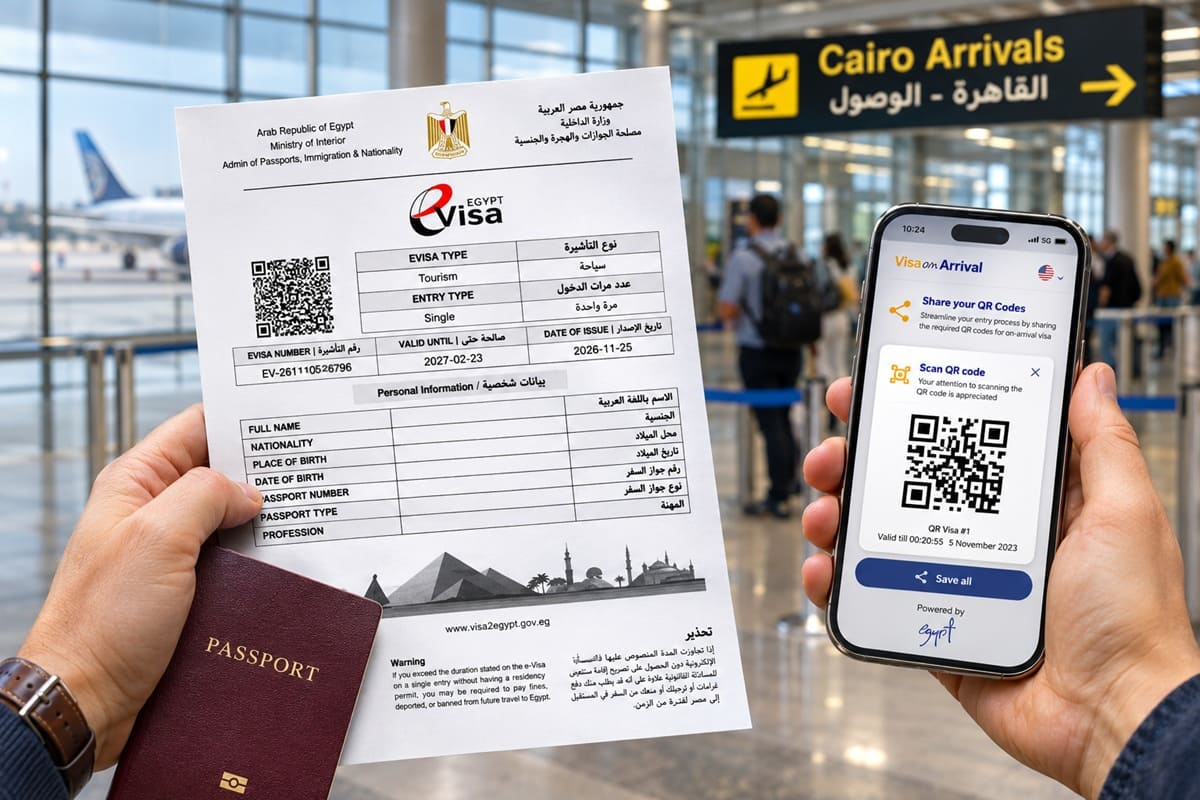
Known as the “Digital Visa on Arrival,” the system issues a QR code designed to replace the traditional visa sticker purchased at the airport.
As VisasNews reported on November 25, the system is expected to gradually expand to several other Egyptian airports starting in March 2027, including Hurghada, Marsa Alam, and Luxor.
However, its coexistence with the electronic visa (e-Visa), which Egyptian authorities have offered since December 2017, has raised a number of questions.
In recent weeks, travel documentation experts at Action-Visas and VisasNews have been contacted by several travel agencies seeking clarification on Egypt’s new entry procedures, particularly regarding the documents their clients must present upon arrival in Cairo. Some instructions issued by tour operators emphasize the need for a QR code without always making it clear that travelers who already hold a valid e-Visa are not subject to this new requirement.
Although both procedures can be completed online before traveling, they work in fundamentally different ways.
Egypt’s e-Visa: A visa approved before departure
Available through the Egyptian Ministry of Interior’s official portal, visa2egypt.gov.eg, the electronic visa allows citizens of eligible countries, including the United States, Canada, the United Kingdom, Australia, and New Zealand, to obtain their visas before traveling to Egypt.
Applicants must create an account, complete an application form, upload a copy of their passport, and pay the visa fee by credit or debit card.
The application is then reviewed by Egyptian authorities. Once approved, travelers receive a notification allowing them to download and print their electronic visa.
Two types of tourist e-Visas are currently available:
- Single-entry e-Visa: Generally valid for three months, allowing a stay of up to 30 days, at a cost of US$30.
- Multiple-entry e-Visa: Generally valid for six months, allowing multiple visits within the conditions specified on the issued visa, at a cost of US$65.
The main advantage of this procedure is that the visa application is reviewed and approved by Egyptian authorities before the trip.
Travelers therefore have their visas in hand before boarding their flights. Upon arrival in Egypt, they can proceed directly to passport control without having to complete additional visa application procedures or pay visa fees at the airport.
This advance approval is also beneficial for travel agencies and tour operators, allowing them to ensure before departure that their clients have obtained the visas required for their trips.
The e-Visa is not limited to Cairo International Airport. It can also be used when arriving in Hurghada, Sharm el-Sheikh, Luxor, Marsa Alam, or Alexandria, among other destinations.
However, this option requires some advance planning. Egyptian authorities instruct travelers to submit their applications at least seven days before departure, as e-Visas are not issued instantly.
Key advantages of Egypt’s e-Visa:
- Visa application reviewed and approved before travel;
- Visa application formalities completed before arrival;
- Currently less expensive than the digital visa on arrival;
- Longer validity period, allowing travelers to arrange their visas further in advance;
- Accepted at Egypt’s various international airports;
- Multiple-entry visa option available.
Main drawbacks of Egypt’s e-Visa:
- A more detailed application form;
- Processing time must be taken into account;
- Applications should be submitted at least seven days before departure;
- Travelers must print their e-Visas in accordance with official instructions.
Egypt’s digital visa on arrival: An instantly issued QR code
The new digital visa on arrival, available through the official visaonarrival.gov.eg portal, works differently.
Rather than offering a visa application review process comparable to that of the e-Visa, the system digitizes Egypt’s traditional visa-on-arrival procedure.
Eligible travelers have three ways to complete the process:
- The official online portal;
- A dedicated mobile app;
- Self-service kiosks installed in the arrivals halls of participating airports.
After entering their nationality, selecting their arrival airport, and paying the required fees with a Visa or Mastercard credit or debit card, travelers instantly receive a QR code that can be saved on their smartphone or printed.
It is also possible to complete the process for multiple travelers in a single transaction, although each person must have their own QR code.
Travel agencies can also complete the procedure on behalf of their clients, as outlined in the latest circular issued by Egypt’s Ministry of Tourism and Antiquities.
The QR code is valid for seven days from the date and time of issuance. It must be presented to a passport control officer, who verifies its validity and proceeds with the traveler’s entry formalities.
This seven-day period applies only to the validity of the QR code, not to the length of stay permitted in Egypt.
The main appeal of the system is its speed and flexibility. It may be particularly useful for travelers planning last-minute trips or those who have not applied for an e-Visa in advance.
When obtained before departure, the QR code also allows travelers to bypass the traditional visa purchase counters at the airport.
However, the issuance of a QR code does not mean that a visa application has been reviewed and approved in advance. Travelers must therefore ensure that they meet Egypt’s visa-on-arrival eligibility requirements.
Information submitted during the process cannot be changed after payment, and fees are nonrefundable, including in cases of data entry errors, changes to travel plans, or denied entry.
Key advantages of Egypt’s digital visa on arrival:
- A quick and streamlined procedure;
- QR code issued instantly after payment;
- Available before departure or upon arrival;
- No requirement to print the QR code;
- A convenient option for last-minute trips.
Main drawbacks of Egypt’s digital visa on arrival:
- No advance application review comparable to the e-Visa process;
- QR code valid for only seven days;
- An additional US$6 service fee;
- Available only at airports equipped with the system;
- No changes or refunds permitted after payment.
Two visa procedures, two very different seven-day windows
Although both procedures can be completed before traveling, they follow very different timelines.
For the e-Visa, Egyptian authorities instruct travelers to submit their applications at least seven days before departure to allow sufficient time for processing.
By contrast, travelers choosing the digital visa on arrival must obtain their QR codes within seven days of their arrival in Egypt, or directly at the airport.
Travelers should therefore avoid purchasing their QR codes too early, particularly to allow some flexibility in the event of flight delays or changes to their arrival dates.
This distinction is especially important for travel agencies that aim to provide clients with all their travel documents several weeks before departure.
Egypt’s digital visa on arrival will expand to more airports in 2027
While the e-Visa can already be used at Egypt’s various international airports, the digital visa on arrival is currently available only at Cairo International Airport.
That is set to change throughout 2027.
In a circular distributed to travel industry professionals, Egypt’s Ministry of Tourism and Antiquities outlined the following provisional rollout schedule:
| Airports | Scheduled launch date |
|---|---|
| Cairo | Operational since August 1, 2026 |
| Sphinx and Alexandria | March 1, 2027 |
| El Alamein and Marsa Matrouh | May 1, 2027 |
| Hurghada | July 1, 2027 |
| Marsa Alam | September 1, 2027 |
| Luxor and Aswan | October 1, 2027 |
| Sharm el-Sheikh and Taba | To be announced |
These dates are provisional and may be adjusted depending on the progress of the system’s technical and operational rollout.
The ministry also indicated that traditional visa-on-arrival stickers will gradually be phased out at airports equipped with the new system.
However, the planned phaseout of paper visa stickers applies specifically to the visa-on-arrival procedure. It does not affect the validity or use of e-Visas obtained before travel.
e-Visa vs. digital visa on arrival: How much does an Egyptian visa cost?
The two procedures also differ in price.
Following Egypt’s electronic visa fee increase in April 2026, the official e-Visa portal currently lists a fee of US$30 for a single-entry tourist visa and US$65 for a multiple-entry visa.
The digital visa on arrival currently costs US$36 per person, consisting of a US$30 visa fee and an additional US$6 digital service fee.
Visa fees are set to change on January 1, 2027.
As VisasNews first reported on September 24, Egypt’s standard single-entry visa fee will increase from US$30 to US$33.
The latest circular from the Ministry of Tourism and Antiquities confirms that the additional US$6 service fee for the digital visa on arrival will remain in place, bringing its total cost to US$39.
| Visa type | Through December 31, 2026 | Starting January 1, 2027 |
|---|---|---|
| Single-entry e-Visa | US$30 | To be confirmed |
| Multiple-entry e-Visa | US$65 | To be confirmed |
| Traditional visa on arrival | US$30 | US$33 |
| Digital visa on arrival (QR code) | US$36 | US$39 |
As of November 26, 2026, Egypt’s official electronic visa portal continues to display fees of US$30 and US$65. How the upcoming visa fee increase will apply to the different e-Visa categories has yet to be clarified.
Egypt’s e-Visa and digital visa on arrival: A side-by-side comparison
| Criteria | Electronic visa (e-Visa) | Digital visa on arrival |
|---|---|---|
| Official website | visa2egypt.gov.eg | visaonarrival.gov.eg |
| When to apply | At least 7 days before departure | Within 7 days of arrival or at the airport |
| Processing time | May take several days | Instant after payment |
| Advance application review | Yes | No comparable advance review |
| Visa approval before departure | Yes, following successful review | No |
| Document issued | Approved electronic visa | QR code to present at immigration |
| Document validity | Generally 3 or 6 months, depending on visa type | QR code valid for 7 days |
| Permitted tourist stay | Generally up to 30 days per visit | Up to 30 days |
| Multiple-entry option | Available | Not currently available |
| Current single-entry fee | US$30 | US$36 |
| Fee starting January 1, 2027 | To be confirmed | US$39 |
| Current multiple-entry fee | US$65 | Not available |
| Additional digital service fee | None | US$6 |
| Points of entry | Authorized Egyptian ports of entry | Cairo, with gradual expansion in 2027 |
| Printed copy required | Yes | No |
| Payment method | Credit or debit card | Visa or Mastercard credit or debit card |
| Payment before departure | Yes | Yes |
| Can be arranged by a travel agency | Yes | Yes |
Eligibility requirements for the e-Visa and visa on arrival are not necessarily identical. Travelers should therefore check which procedure is available to them based on their nationality and individual circumstances.
In both cases, travelers remain subject to immigration checks, and Egyptian authorities retain the right to deny entry into the country.
Do travelers with an Egyptian e-Visa need the new QR code?
No. This is one of the most important distinctions between the two procedures.
The new digital system is intended for travelers who wish to obtain their visas through the visa-on-arrival process. It is not designed to replace electronic visas issued before travel.
Travelers holding a valid e-Visa can therefore continue to use that document at Cairo International Airport without obtaining the QR code associated with the digital visa on arrival.
The same will apply at other Egyptian airports as the new system is introduced.
There is no need to complete both procedures or pay visa fees twice.
This distinction is particularly important for travel agencies and tour operators, especially when organizing group trips.
If their clients’ electronic visas have already been issued, there is no need to complete any additional visa application procedure through the digital visa-on-arrival portal.
It is also important to remember that the introduction of the QR code does not change Egypt’s visa-on-arrival eligibility requirements. Travelers who are required to obtain a visa before departure cannot bypass that requirement simply by purchasing a QR code.
Which visa should you choose when traveling to Egypt?
For travelers planning their trips well in advance, the e-Visa offers several advantages: an application reviewed by Egyptian authorities before departure, a currently lower fee, a longer validity period, and acceptance at various Egyptian airports.
It also allows travelers and travel industry professionals to have an approved visa in hand before the trip rather than waiting until arrival in Egypt to finalize the visa process.
The digital visa on arrival, meanwhile, offers a convenient alternative for eligible travelers looking for a quick and straightforward procedure, particularly when planning a last-minute trip.
Purchasing the QR code before departure also eliminates the need to pay visa fees at the airport.
Its gradual expansion in 2027 will make this option available to a growing number of visitors, including those traveling to popular Red Sea resorts and tourist destinations along the Nile Valley.
Ultimately, the choice between the two systems depends on the traveler’s nationality, point of entry into Egypt, time remaining before departure, and specific visa requirements.
VisasNews Take
Although Egypt’s e-Visa and its new digital visa on arrival both rely on online procedures, they serve two distinct administrative purposes. The former allows travelers to obtain an approved visa before their trip, while the latter primarily modernizes the traditional visa-on-arrival application and payment process. Their timelines, fees, and conditions of use also differ.
With the gradual expansion of the system to several Egyptian airports in 2027 and the planned phaseout of traditional visa-on-arrival stickers, understanding this distinction will become increasingly important for both travelers and travel industry professionals.
The existence of two official portals and the use of similar terminology can understandably cause confusion. Clearer communication from Egyptian authorities to travelers, airlines, travel agencies, and tour operators would be welcome, particularly to prevent existing e-Visa holders from completing unnecessary procedures and paying for a second visa.