India could soon extend its free tourist e-Visa policy to all members of the Association of Southeast Asian Nations (ASEAN).
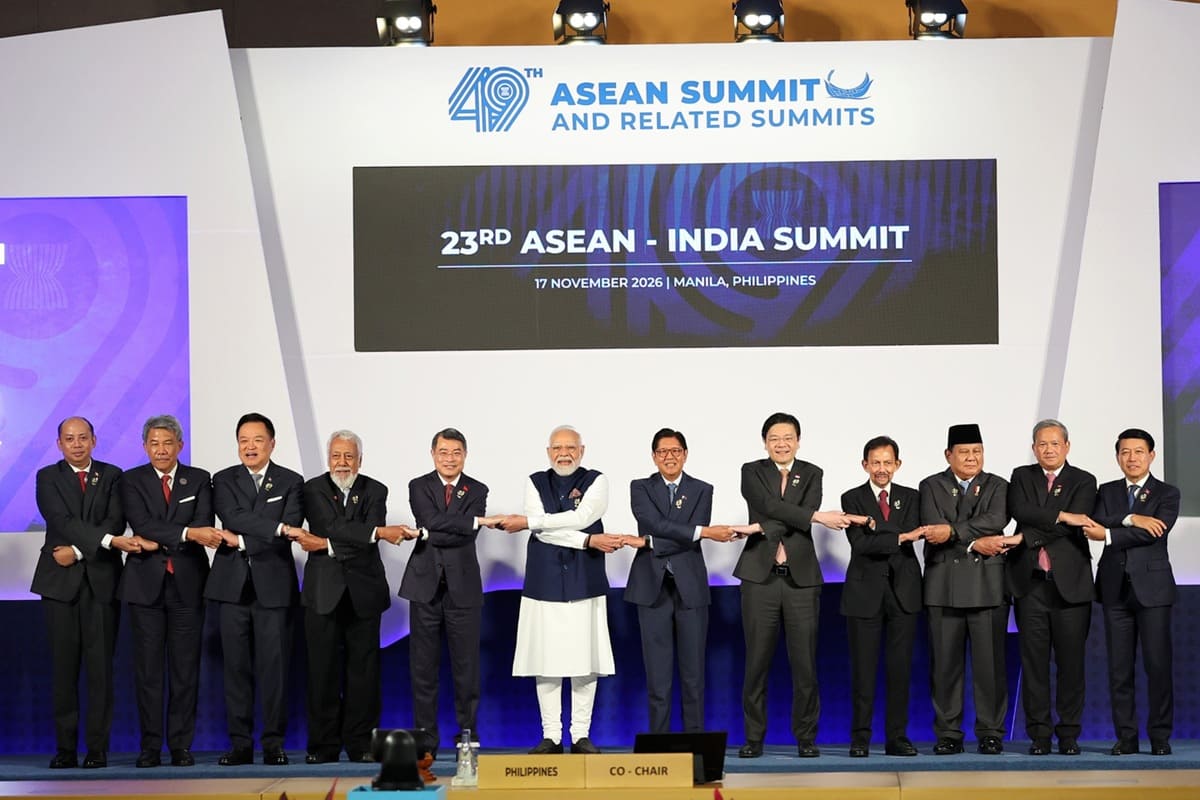
Speaking at the 23rd ASEAN-India Summit in Manila on November 17, 2026, Prime Minister Narendra Modi outlined several initiatives aimed at strengthening New Delhi’s relationship with its Southeast Asian partners.
Among the nine proposals announced was a plan to waive tourist e-Visa fees for citizens of ASEAN countries.
The initiative reflects India’s broader efforts to make international travel more accessible and attract more foreign visitors.
All 11 southeast asian countries would be covered by the proposal
If implemented, the initiative could benefit citizens of all 11 ASEAN member states:
- Brunei
- Cambodia
- Indonesia
- Laos
- Malaysia
- Myanmar (Burma)
- Philippines
- Singapore
- Thailand
- Timor-Leste (East Timor)
- Vietnam
ASEAN expanded to 11 members following Timor-Leste’s official admission on October 26, 2025.
India’s proposal would therefore cover a major regional bloc representing hundreds of millions of people and including some of Asia’s most important outbound tourism markets.
The goal is to reduce the administrative costs associated with visiting India while encouraging greater travel and people-to-people exchanges.
Importantly, the proposal would not introduce visa-free travel. Instead, it would eliminate the government fee for obtaining an electronic tourist visa. Eligible travelers would still need to apply for and receive their e-Visas before traveling to India.
India already offers free tourist e-Visas to 27 countries and territories, including five ASEAN members
Modi’s announcement would build on an existing feature of India’s visa policy rather than introduce an entirely new benefit.
According to India’s current official tourist e-Visa fee schedule, citizens of 27 countries and territories are already eligible for a free 30-day tourist e-Visa, regardless of the time of year.
Five ASEAN members are among them:
- Indonesia and Myanmar: Citizens are eligible for free tourist e-Visas valid for 30 days, one year, or five years.
- Malaysia, the Philippines, and Thailand: Only the 30-day tourist e-Visa is free. The one-year and five-year versions remain subject to fees of $40 and $200, respectively.
Outside ASEAN, India also waives the 30-day tourist e-Visa fee for citizens of the following 22 countries and territories:
- Argentina, Cook Islands, Fiji, Jamaica, Kiribati, Marshall Islands, Mauritius, Micronesia, Mongolia, Nauru, Niue, Palau, Papua New Guinea, Russia, Samoa, Seychelles, Solomon Islands, South Africa, Tonga, Tuvalu, Uruguay, and Vanuatu.
For most of these nationalities, the fee waiver also applies to the one-year and five-year tourist e-Visas. Russia and South Africa are exceptions, as their citizens must still pay for both longer-validity visa categories.
That leaves six ASEAN countries whose citizens currently pay for a 30-day Indian tourist e-Visa: Brunei, Cambodia, Laos, Singapore, Timor-Leste, and Vietnam.
Under the current fee schedule, applicants from these countries pay $10 between April and June or $25 between July and March, excluding applicable bank processing charges.
The proposal unveiled in Manila could therefore extend an existing benefit to these six countries while bringing greater consistency to the visa arrangements available across all 11 ASEAN member states.
No implementation date announced for the proposed free e-Visas
Indian authorities have not yet provided a timeline for implementing the proposal.
The official announcements released on November 17 explicitly mention free tourist e-Visas for ASEAN countries but do not specify how the new arrangements would work.
Several important questions remain unanswered, including which visa validity periods would be covered, how many entries would be permitted, and whether any nationality-specific restrictions would apply.
It also remains unclear whether the fee waiver would apply only to 30-day tourist e-Visas, as is already the case for certain nationalities, or whether it could extend to the one-year and five-year options.
Until further details are announced, existing visa requirements and nationality-based fees remain in effect.
Travelers can review current requirements and submit their applications through the Indian government’s official e-Visa portal.
India continues to ease its visa rules
The latest proposal comes just days after India unveiled a major overhaul of its visa system.
On November 11, 2026, India’s Ministry of Home Affairs announced changes to its visa categories, along with plans to reduce the number of fields applicants must complete on visa application forms by 65% to 70%.
The changes are intended to make visa procedures more user-friendly and facilitate international travel for tourism, business, medical treatment, and education.
Strengthening ties with ASEAN is also a key diplomatic priority for New Delhi.
The year 2027 will mark the 35th anniversary of India-ASEAN relations and the fifth anniversary of their Comprehensive Strategic Partnership.
Against this backdrop, free tourist e-Visas could become another tool for closer cooperation, complementing initiatives announced in Manila covering maritime connectivity, training, technology, and education.
VisasNews Take
India’s proposal is primarily aimed at harmonizing a visa fee policy that already offers preferential treatment to certain Southeast Asian nationalities. According to the official fee schedule dated September 8, 2026, citizens of five of ASEAN’s 11 member states already qualify for a free 30-day tourist e-Visa, while travelers from the other six countries must still pay a fee. Extending the waiver to all ASEAN members would represent another step toward easing travel requirements for visitors to India. The key question is whether New Delhi intends to eliminate fees only for short-term tourist visas or also for the one-year and five-year options. No implementation date has been announced.