Since October 5, 2026, foreign travelers covered by the measure must hold a specific travel health insurance policy to enter Kenya.
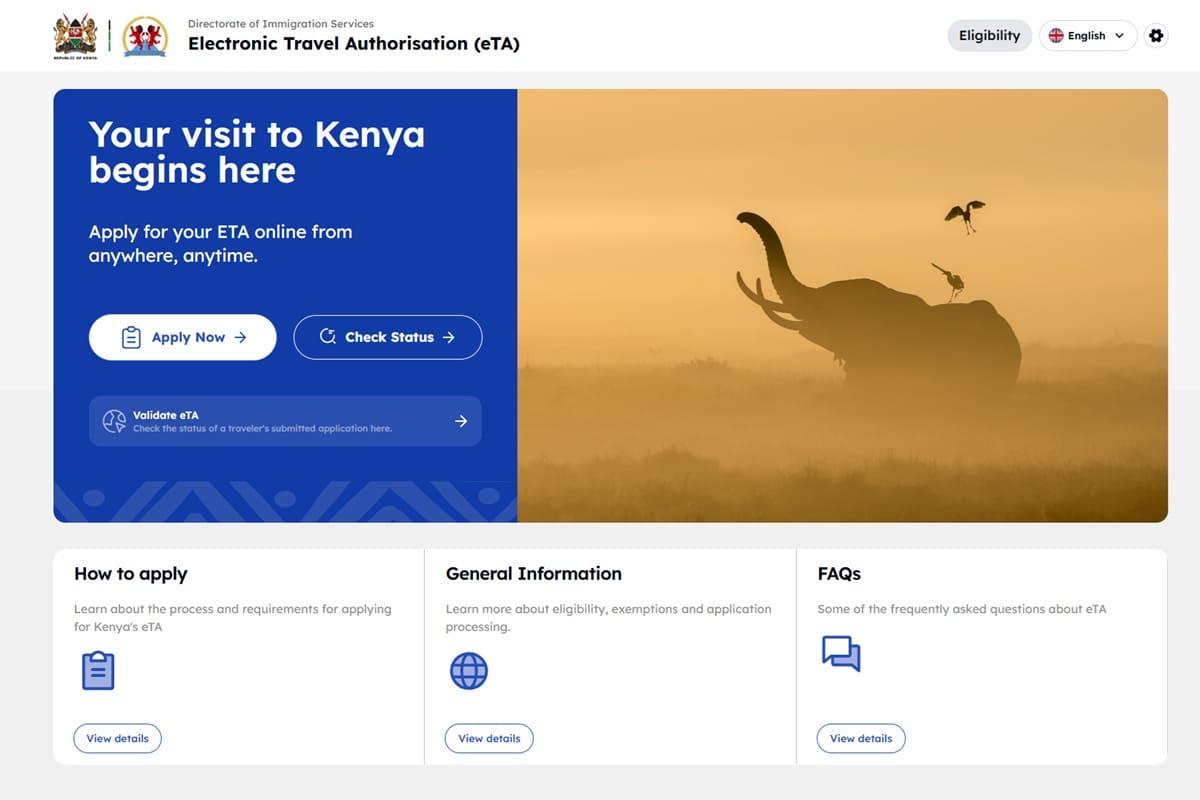
The requirement is now integrated into the Electronic Travel Authorization (ETA) process, but it does not apply only to travelers who need an ETA. Some travelers who are exempt from the ETA requirement are still required to obtain the insurance.
In a circular published on October 9, 2026, the Kenya Civil Aviation Authority (KCAA) sets out the categories of travelers concerned, exemptions, policy benefits and the checks airlines are expected to carry out.
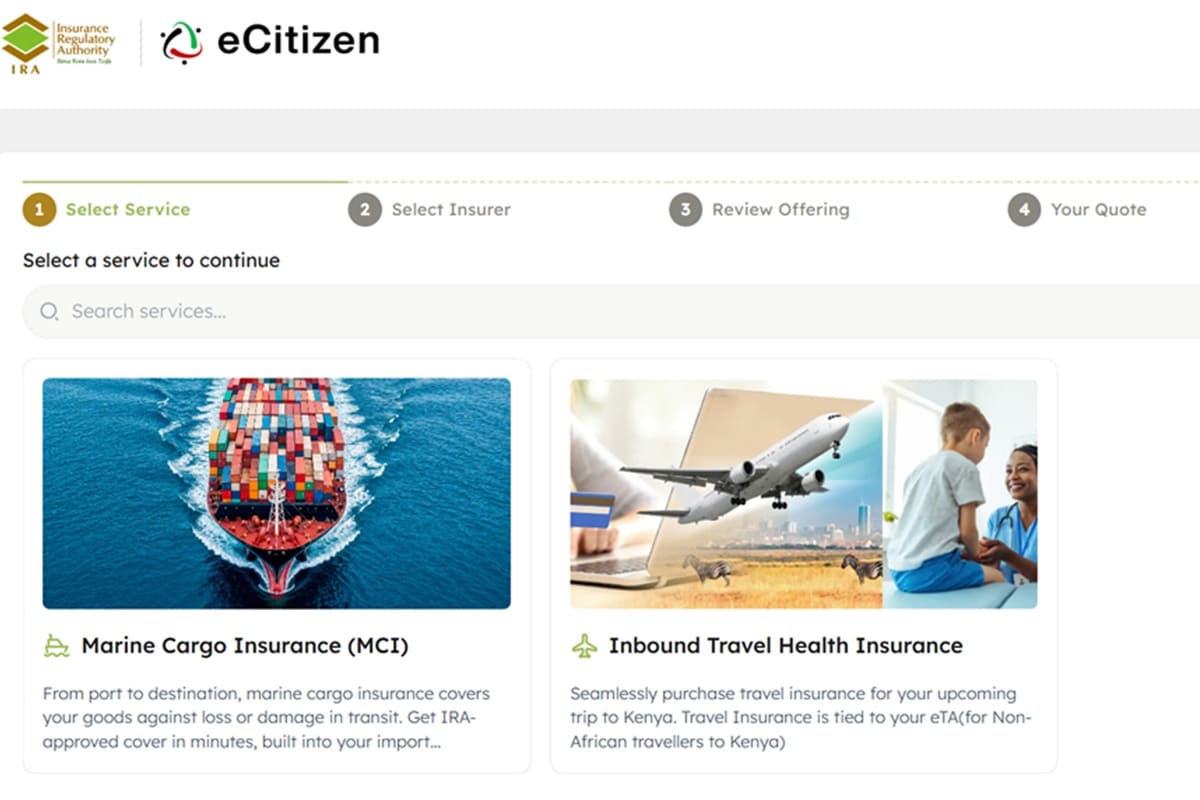
The government’s eCitizen portal also offers a dedicated service, called “Inbound Travel Health Insurance,” which is directly linked to the ETA process for travelers who are subject to the requirement.
VisasNews answers the main questions travelers may have about this new entry requirement for Kenya.
When did travel health insurance become mandatory for Kenya?
The insurance requirement applies to travelers arriving in Kenya from October 5, 2026.
The KCAA states that this date applies regardless of when the airline ticket was purchased or the travel arrangements were made.
As early as October 6, VisasNews and Action-Visas observed the insurance appearing in the ETA application process. When no insurance coverage was associated with a traveler, the portal added a step requiring the applicant to obtain the policy before proceeding.
Who must obtain the mandatory insurance?
As a general rule, the requirement applies to non-Kenyan nationals entering Kenya for a stay of less than 12 months, subject to exemptions established by the authorities.
The KCAA cites Section 26(6) of the Social Health Insurance Act, 2023 and Regulation 70 of the Social Health Insurance Regulations, 2024 as the legal basis for the requirement.
Each non-exempt traveler must have individual coverage, including minors.
One important distinction is that being exempt from the ETA does not automatically mean being exempt from the insurance requirement.
The KCAA specifically refers to nationals of African countries outside the East African Community who may be exempt from the ETA. They must still obtain the insurance unless they qualify for a separate exemption.
Who is exempt from the insurance requirement?
The Kenyan civil aviation circular sets out the main categories of travelers who are exempt.
These include Kenyan citizens, holders of valid Kenyan residence status, citizens of East African Community (EAC) Partner States, asylum seekers, holders of diplomatic, official or service passports, certain crew members, and transit passengers who do not seek entry into Kenya.
The KCAA also states that refugee status or statelessness alone does not qualify a traveler for an exemption. Those travelers must therefore obtain coverage unless they fall under another exempt category.
How much does Kenya’s mandatory travel insurance cost?
The prices charged through the official platforms have changed since the first days of implementation.
Recent tests carried out by VisasNews and Action-Visas, both during an ETA application and through a separate insurance purchase on eCitizen, currently show the following final costs: Markdown collé
| Traveler | Insurance premium shown | Access fee | Final amount paid |
|---|---|---|---|
| Adult | US$44 | US$1 | US$48 |
| Minor subject to the requirement | US$22 | US$1 | US$25 |
For an adult, the quote shows an insurance premium of US$44, plus a US$1 access fee, bringing the subtotal to US$45 before the final payment step. The payment platform then displays a Service Amount of US$45.75 and a Gateway Fee of US$2.25, for a final amount payable of US$48.
For a minor subject to the requirement, the premium is reduced to US$22. With the US$1 access fee, the quote totals US$23. At the payment stage, the service amount rises to US$23.85, with a US$1.15 gateway fee, bringing the final total to US$25.
Travelers should therefore distinguish between the insurance premium itself, which is currently displayed as US$44 for an adult, and the total amount actually charged, which is currently US$48.
For minors, the system applies a premium equal to half the adult rate.
These are the amounts currently observed on the official application and payment platforms and could change if the Kenyan authorities adjust the premiums or related fees.
Can US or other foreign travel insurance replace the Kenyan policy?
No, under the rules currently being applied.
The KCAA explicitly states that the mandatory coverage must be obtained from local insurers approved and licensed in Kenya, and that foreign travel health insurance is not accepted for compliance with the requirement.
The circular goes further by stating that there is no procedure for verifying or accepting foreign travel insurance certificates for this purpose.
A US, UK, Canadian, Australian or other foreign traveler who already has travel medical insurance, credit card coverage or a private travel insurance policy must therefore still obtain the Kenyan policy if subject to the requirement.
Travelers may of course keep their existing insurance, which may offer higher benefit limits or cover risks that are not included in the Kenyan program.
How do travelers purchase the mandatory insurance?
There are currently two ways to obtain the coverage.
For travelers who need an ETA, insurance is built directly into the application process on the official etakenya.go.ke portal. If no valid policy is associated with the traveler, the applicant is prompted to purchase coverage before completing the process.
The KCAA confirms that, since October 5, ETA applicants have been directed to purchase the insurance and that an electronic policy document is issued once payment has been confirmed on eCitizen.
The insurance can also be purchased separately from the ETA through the Inbound Travel Health Insurance service on eCitizen.
Tests carried out by VisasNews and Action-Visas show that both routes currently apply the same prices: US$48 in total for an adult and US$25 for a minor subject to the requirement.
The quote also states that the policy benefits are standardized. The local insurer carrying the risk may appear in the policy summary before payment.
How long is the insurance valid?
The coverage is valid for 90 days, or three months.
The KCAA circular specifically states that one policy can be used for multiple entries into Kenya during its 90-day validity period, provided that the policy remains valid at the time of each entry. A new policy must be obtained once the 90 days have expired.
This duration is also shown in quotes generated by the official portal, which now clearly state “Cover Period (Months): 3.”
This is particularly relevant for travelers making several trips to Kenya within a short period: they do not necessarily need to purchase a new policy for every entry as long as their existing 90-day policy remains valid.
Can the insurance be purchased on arrival in Kenya?
Kenyan regulations provide for the possibility of obtaining coverage at the point of entry.
In practice, however, travelers are strongly advised to have the insurance before departure, particularly because airlines have been instructed to check passengers’ compliance before boarding.
Purchasing the policy on arrival should therefore not be regarded as the normal process for travelers who are subject to the requirement.
Can airlines check the insurance before boarding?
Yes.
The KCAA instructs airlines operating flights to Kenya to inform passengers about the requirement and to request proof of coverage at check-in.
This also applies to passengers who do not require an ETA but are still subject to the insurance requirement.
Airlines are instructed to direct uninsured passengers to obtain the policy online before departure and to remind travelers to keep proof of coverage for immigration checks on arrival.
The insurance is therefore not simply an administrative step within the ETA process. It may also be checked at the departure airport.
How is the insurance checked on arrival in Kenya?
Kenyan immigration officers have access to a dedicated system known as the “Validator App”.
According to the KCAA, the tool allows officers to confirm the existence of the policy, whether it is still valid and the type of coverage held.
An airline’s check before departure does not replace the verification carried out by Kenyan authorities. The final decision on admission to the country remains with immigration officials at the port of entry.
Travelers are therefore advised to keep their electronic policy document easily accessible throughout the journey.
What does Kenya’s mandatory insurance cover?
The policy provides total cumulative benefits of up to US$50,000 per insured traveler. Markdown collé
The KCAA lists five main benefit categories:
| Benefit | Maximum coverage |
|---|---|
| Medical expenses | US$20,000 |
| Emergency medical transportation | US$25,000 |
| Prescribed medicines | US$300 |
| Mental health treatment | US$1,000 |
| Repatriation of mortal remains | US$5,000 |
These figures are coverage limits and do not represent amounts automatically paid or reimbursed to travelers.
The policy is primarily intended to cover healthcare costs and medical emergencies that may occur during a stay in Kenya.
Does Kenya’s mandatory policy replace regular travel insurance?
Not necessarily.
The insurance required by Kenya is primarily designed to satisfy a health coverage requirement during the stay.
A standard travel insurance policy may include additional benefits such as trip cancellation or interruption, baggage coverage, delays, liability protection, or higher medical and repatriation limits.
Travelers may therefore still find it worthwhile to keep their existing travel insurance in addition to the mandatory Kenyan policy.
The key point is that a US or other foreign insurance policy does not currently replace the Kenyan coverage required for entry.
What is Minet Kenya’s role?
Minet Kenya, an insurance broker and risk advisory firm, acts as the program administrator. It does not itself underwrite the insurance risk. Its role includes coordinating assistance for travelers, liaising with healthcare providers, handling pre-authorization requests, arranging evacuations and assisting with claims.
The KCAA states that insured travelers who need medical care in Kenya can contact Minet and provide their policy number. Markdown collé
The 24/7 assistance number is +254 719 044 777. The same number is listed for treatment pre-authorization requests and for travelers who cannot locate their policy confirmation. The contact email is inbound.travel@minet.co.ke.
Should travelers keep proof of insurance?
Yes.
Even though the authorities have electronic tools to verify coverage, travelers are advised to keep the policy document or policy reference issued after payment.
Proof may be requested by the airline at check-in and then checked again by immigration officers upon arrival in Kenya.
Keeping the document on a phone, along with a copy that can be accessed without an internet connection, can make these checks easier.
What should travelers remember before going to Kenya?
Since October 5, 2026, travel health insurance has become an entry requirement that many foreign visitors to Kenya need to plan for in advance.
The final cost currently observed is US$48 for an adult and US$25 for a minor subject to the requirement. The coverage is valid for three months and can be used for multiple entries into Kenya during that period.
It is separate from the ETA: some travelers may be exempt from the electronic travel authorization while still being required to obtain insurance. Conversely, several categories benefit from specific insurance exemptions, including Kenyan citizens, residents, nationals of EAC Partner States and passengers remaining in international transit.
Finally, travel insurance purchased in the United States, the UK, Canada, Australia or another country does not currently replace the coverage required by Kenyan authorities, even when it provides higher medical benefits.
VisasNews Take
Travel health insurance is now a standalone entry requirement for many visitors to Kenya. The final cost currently stands at US$48 for an adult and US$25 for a minor subject to the requirement, including payment fees. It should not be confused with the ETA: being exempt from the electronic travel authorization does not necessarily mean being exempt from the insurance requirement. Another key point is that a US or other foreign insurance policy, even a comprehensive one, does not currently satisfy this requirement. The Kenyan policy is valid for 90 days, and proof of coverage may be checked both before boarding and upon arrival.