Kazakhstan is gradually moving toward broader use of its “QazETA” electronic travel authorization, which is intended for foreign nationals who currently benefit from visa-free entry.
But contrary to what some recent reports may suggest, the ETA is not yet mandatory at this stage.
On September 1, 2026, Kazakhstan’s national news agency Qazinform confirmed that the qazeta.kz platform is still operating in pilot mode and that obtaining an ETA remains voluntary during this phase for nationals of visa-exempt countries.
That reading is also consistent with guidance from the French Embassy in Kazakhstan, which states that the country is “gradually introducing, from August 24, 2026,” an electronic authorization to enter its territory.
The requirement is then expected to be introduced progressively.
The requirement could begin at airports on November 1
The most detailed rollout schedule currently available has been published by the Serbian Ministry of Foreign Affairs.
It provides for a transition period from August 25 to November 1, 2026, during which travelers may still enter Kazakhstan without an ETA.
The requirement would then be phased in as follows:
| Expected date | Entry points concerned |
|---|---|
| November 1, 2026 | International airports |
| November 15, 2026 | Road border crossings with countries outside the Eurasian Economic Union (EAEU) |
| November 30, 2026 | Road border crossings between EAEU member states |
| December 15, 2026 | Rail and maritime border crossings |
From November 1, airlines are also expected to deny boarding to affected travelers who do not hold a valid ETA.
VisasNews has not yet identified the final Kazakh regulation formally establishing this schedule. These dates should therefore still be viewed as highly plausible, but not yet fully confirmed in law.
Travelers are still entering without “QazETA”
Recent traveler reports are consistent with this transition phase.
One traveler reported on X that they were able to enter Kazakhstan without “QazETA”. The photo posted with the message shows an entry stamp dated August 29, 2026.
An individual traveler report is obviously not a regulatory source, but it does confirm that, in practice, not having an ETA is not currently preventing entry at the border.
Who is affected and how does “QazETA” work?
The “QazETA” system is aimed at nationals of countries that benefit from visa-free entry to Kazakhstan.
French, Belgian, Swiss and Canadian travelers are therefore among those likely to be affected once the authorization becomes fully mandatory.
The ETA does not replace visa-free entry. It adds a prior travel authorization requirement, while the maximum visa-free stay allowed for each nationality remains unchanged.
Several categories are expected to be exempt, including holders of a valid Kazakh visa, a temporary residence permit or a permanent residence permit, certain diplomatic and official travelers, and transit passengers who do not formally enter Kazakhstan.
Age-based exemptions are also planned, but one point still needs clarification.
The official “QazETA” FAQ states in one answer about minors that children under 16 are exempt from the ETA. Yet the same FAQ, in its detailed list of exempt categories, refers to people under 18 as well as those aged 65 and over. Until authorities clarify the issue or publish the final implementing rules, the exact age threshold for minors remains uncertain.
Processing time, validity and cost
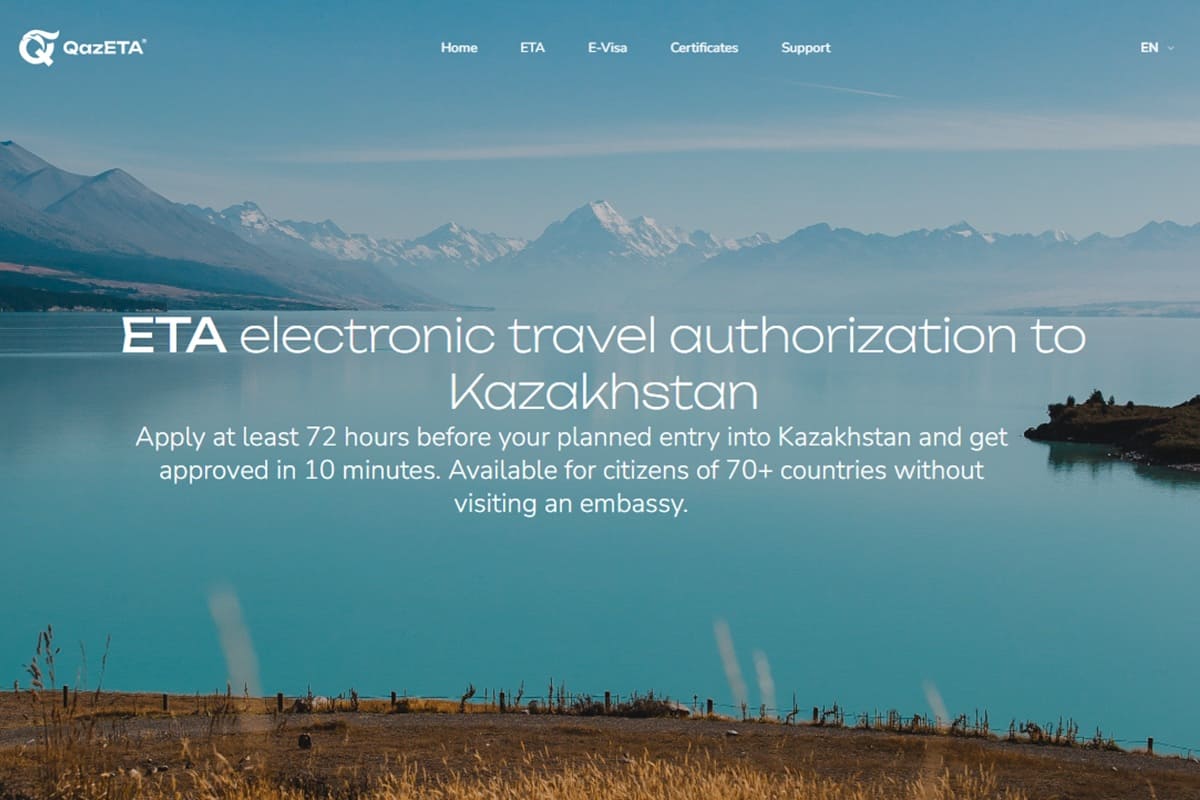
Applications must be submitted at least 72 hours before entry into Kazakhstan.
The authorization is expected to be valid for 180 days and usable for multiple entries during that period.
On pricing, Qazinform says an advance application is expected to cost around KZT 3,900, or roughly $8.
The Kazakh news agency also reports that a traveler arriving without an ETA may be able to obtain one directly at the border for around KZT 7,600, or about $16.
The Serbian Ministry of Foreign Affairs, for its part, cites a border-issued fee of around KZT 7,800.
These amounts should still be treated as indicative until they are clearly set out in Kazakhstan’s final implementing regulation.
There is also some uncertainty over the arrival option. The rollout schedule currently being circulated says that, from November 1, airlines will have to verify that travelers hold a valid ETA before boarding, while other sources say an authorization may still be obtained directly at the border for a higher fee. It therefore remains unclear in which situations an ETA on arrival will actually be available, especially for travelers arriving by air.
A smartphone-based process
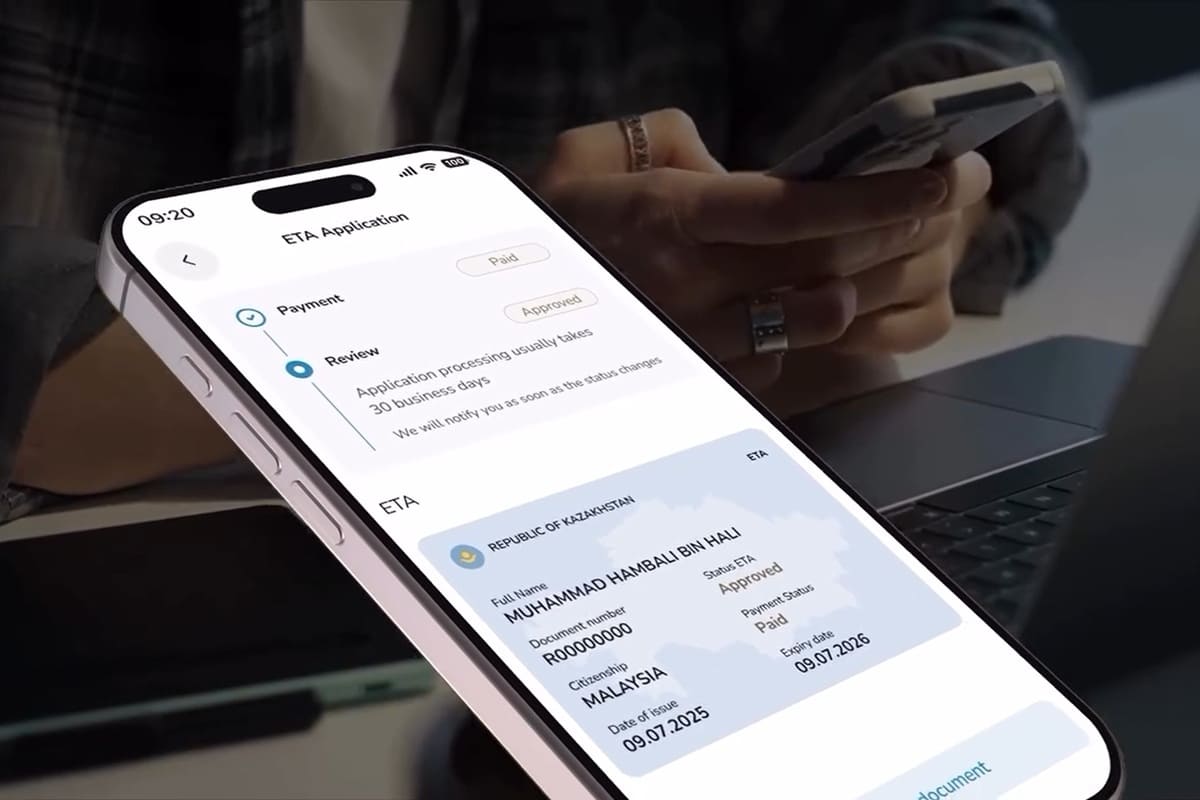
“QazETA” also operates through a mobile app, available on the App Store and Google Play Store, which is used to register a passport and complete the required identity checks.
Tests carried out in late August show that, after photographing the identity page of a biometric passport, the app currently requires the passport chip to be scanned using RFID/NFC before the document can be linked to the account.
The “QazETA” FAQ also suggests that a document may previously have been registered by an intermediary, travel agency or service provider, although the exact rules for managing multiple travelers or submitting applications on someone else’s behalf still need to be clarified.
“QazETA” is live, but the requirement is still being phased in
The key point is now fairly clear: “QazETA” is being rolled out, but the ETA is not mandatory today. Kazakh authorities continue to describe the system as a pilot.
A detailed schedule points to a first mandatory phase at airports from November 1, 2026, followed by a gradual extension to other entry points through December 15.
Kazakhstan’s final implementing regulation is still needed before those dates and fees can be treated as fully settled.
VisasNews Take
“QazETA” is already operational, but the requirement is still being phased in. Kazakh authorities continue to confirm that applying for an ETA remains voluntary during the pilot phase, while recent travelers also report entering the country without the authorization. A schedule published by Serbia’s Ministry of Foreign Affairs points to a first mandatory phase at airports on November 1, followed by an extension to other entry points through December 15. Those dates now appear increasingly credible, but VisasNews is still waiting for Kazakhstan’s final implementing regulation before treating them as legally confirmed.