

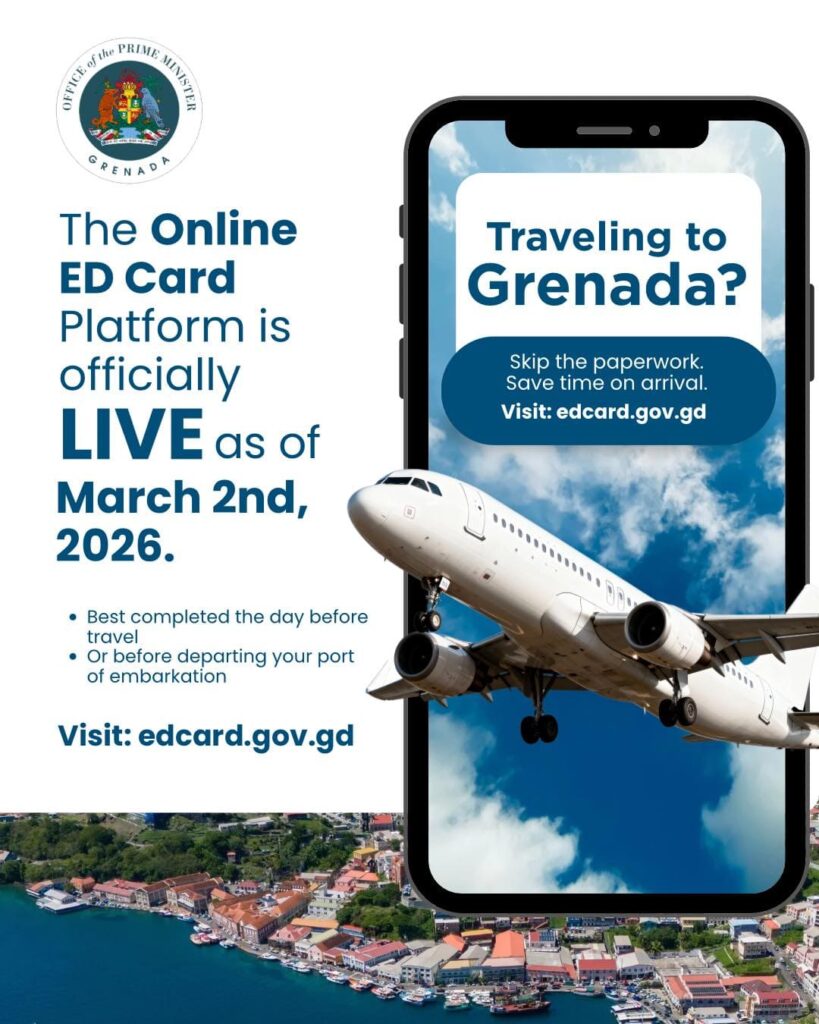
Grenada has officially announced the launch of its new online Embarkation/Disembarkation (E/D) Card, marking a major milestone in the modernization of public services.
Described as a first for the country, this digital transition “represents a significant step in the Government’s broader digital transformation agenda to enhance the delivery of public services,” according to Government Information Service of Grenada (GIS).
Effective March 2, 2026, the system now allows travelers to submit their required information to immigration and customs authorities in advance. Until now, visitors had to complete a paper form upon arrival or prior to landing. From now on, the entire process can be completed online before traveling.
According to the GIS, this upgrade is expected to significantly reduce wait times at ports of entry, streamline inspections, and provide a faster, more consistent traveler experience.
The platform is built around three clearly stated principles:
- A simple and intuitive interface
- Enhanced security through advanced encryption technologies and robust data protection measures
- Compliance with international standards, positioning Grenada as a modern destination committed to security and the protection of travelers’ personal information
“We encourage all travelers to visit edcard.gov.gd and submit their card one day before travel or before departing their port of embarkation,” recommended Prime Minister Dickon Mitchell.
How to complete Grenada’s electronic arrival card
Within 72 hours prior to travel, visit the official portal at edcard.gov.gd.
The process is structured into several clearly organized steps:
1. Arrival port or flight information
The first page concerns your entry into the country. You will need to provide:
- Your status (returning resident/national or non-resident/visitor)
- Mode of entry (air or sea)
- Airline or vessel name
- Flight number
- Country and port of embarkation
- Expected arrival date and departure date
This section allows authorities to anticipate passenger flow at entry points.
2. Personal information
The second step collects your identity details:
- Full name
- Gender
- Date and country of birth
- Nationality
- Marital status and occupation
You must also provide your full residential address, email address, and phone number. You will need to check a consent box authorizing the processing of your personal data before proceeding.
3. Travel document information
You will then be asked to provide:
- Type of document (passport, etc.)
- Document number
- Country of issuance
- Issue and expiration dates
- A photo of your travel document (uploaded in .PNG or .JPEG format)
The platform also asks about countries visited within the previous 21 days.
4. Information about your stay in Grenada
This section relates to your stay on the island:
- Purpose of visit (vacation, business, residence, study, transit, etc.)
- Type of accommodation (hotel, private residence, etc.)
- Name and address of accommodation
- Parish
- Length of stay (number of nights)
5. Customs declaration
The final step concerns your customs declaration. You must indicate:
- Total number of pieces of luggage
- Any unaccompanied baggage
- Whether you are carrying food products, animals, regulated substances, weapons, commercial goods, or currency exceeding USD 10,000
The platform also reminds travelers of duty-free passenger allowances (tobacco, alcohol, and goods up to a specified value).
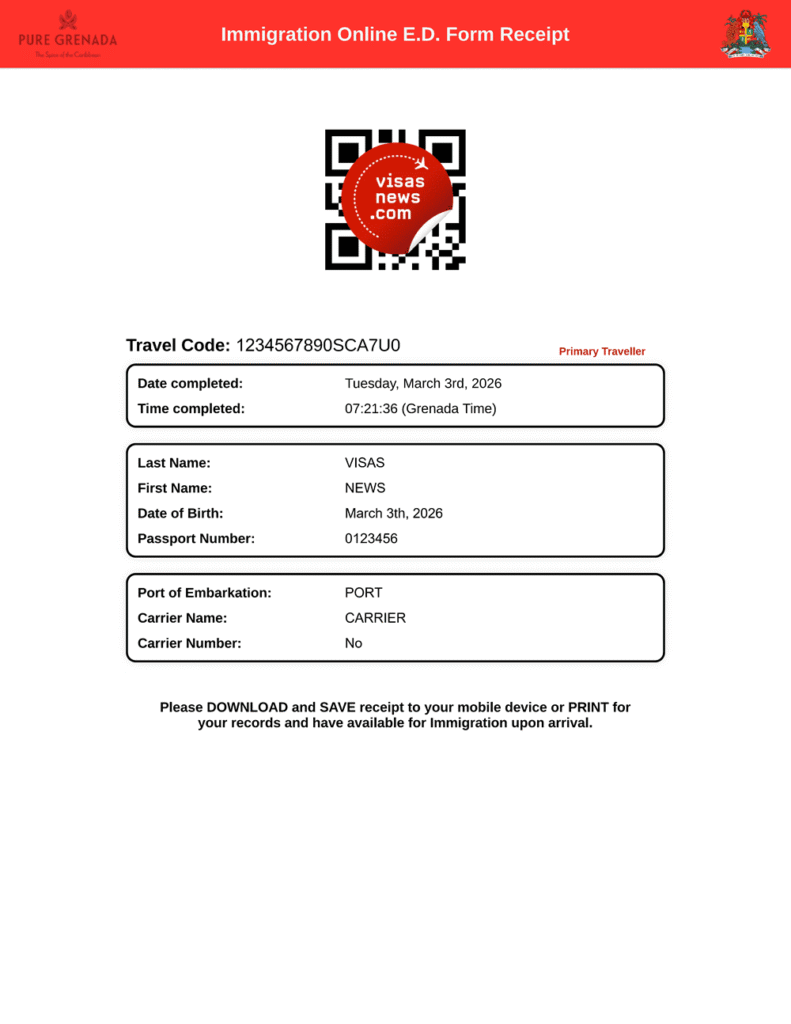
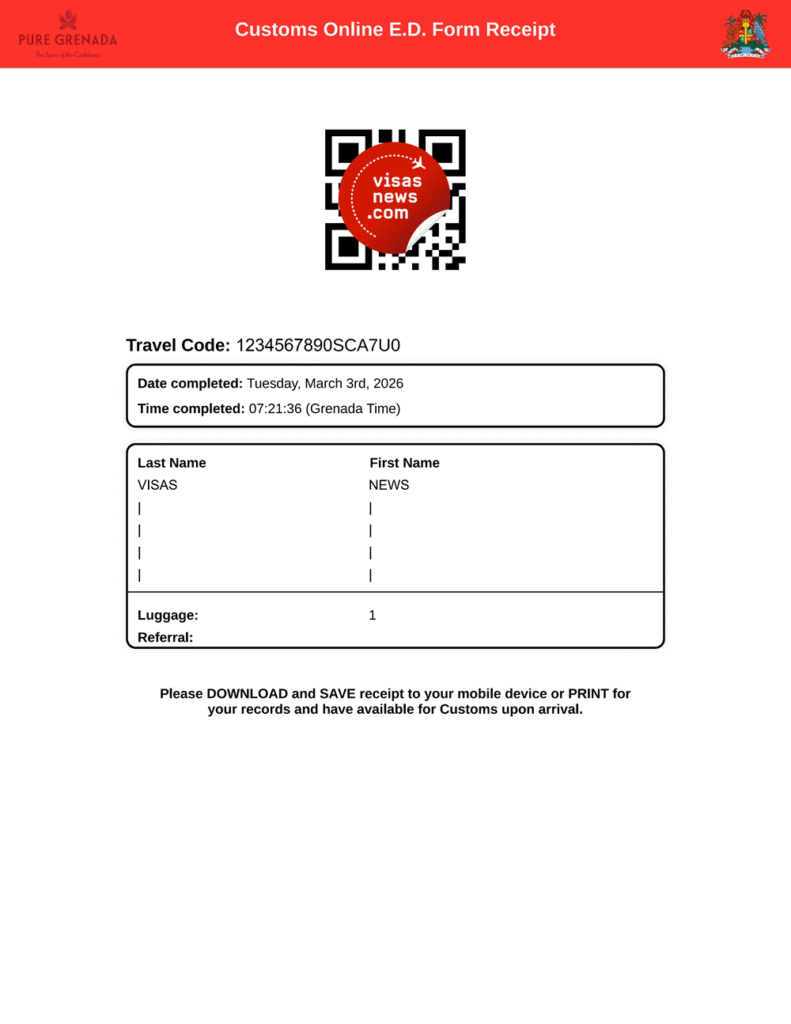
Once the declaration is completed, you must save or print the two receipts (customs and immigration), which must be presented upon arrival.
Entry requirements for Grenada: what you need to know
Beyond the electronic arrival card, certain entry requirements remain essential for travel to Grenada.
You must have:
- A passport valid for at least six (6) months from the date of arrival
- A return or onward ticket
Citizens of the United States, Canada, the United Kingdom, Commonwealth countries, South Korea, Japan, as well as most Caribbean and European nationals, do not require a visa for tourist stays.
However, travelers are advised to consult the official list of visa-required and visa-exempt nationalities before departure.
With the introduction of this electronic arrival card, Grenada joins a regional trend already embraced by several Caribbean territories, including Antigua and Barbuda, Aruba, Dominica, Haiti, and the British Virgin Islands, that have digitized their entry forms in order to streamline border controls and modernize their infrastructure.







The single glaring issue is the requirement to upload the biometric passport page! this will be a major concern to those who do not have the tech, the ability or knowledge on how to save or upload images onto the form! And will put a rather large section of both return and potential visitors off!
Needs a rethink or other option!!!