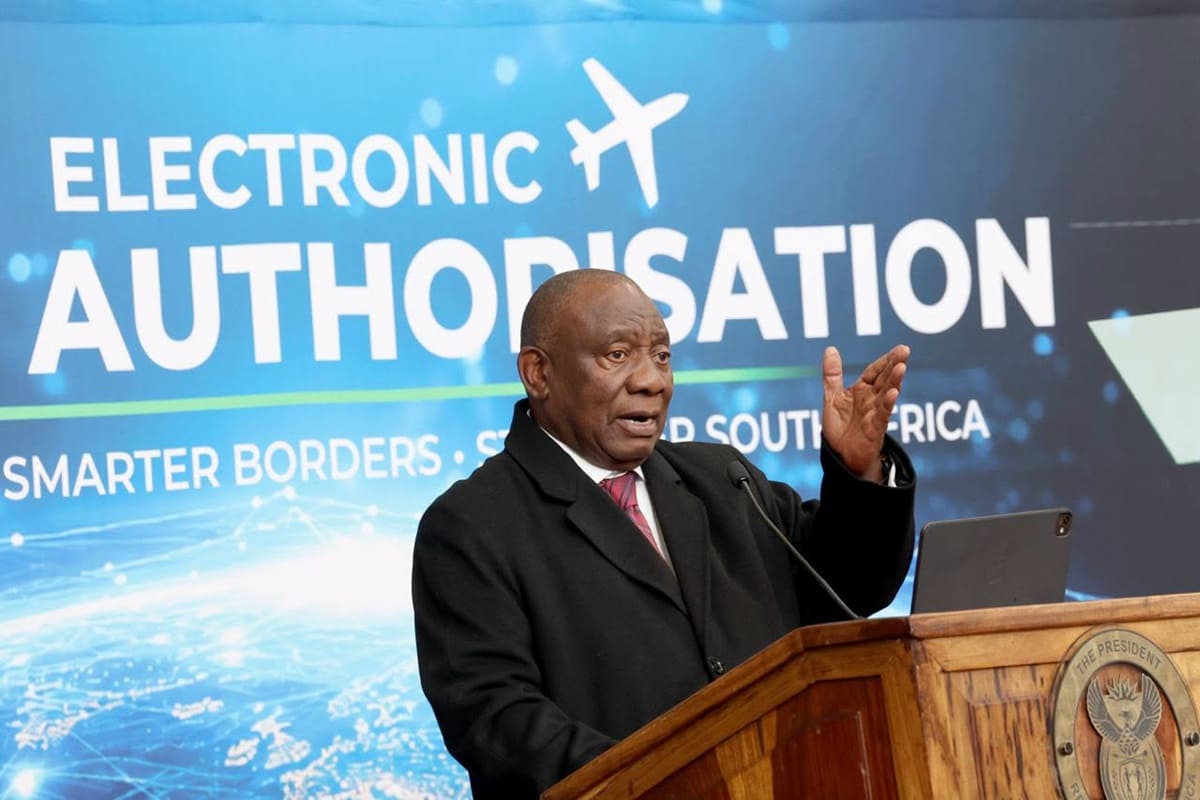
The findings are unequivocal… Tasked with investigating administrative irregularities related to visas in South Africa between 2004 and February 2024, the Special Investigating Unit (SIU) uncovered what the minister characterized as the product of “up to twenty years of maladministration and malfeasance.”
According to Leon Schreiber, South Africa’s Minister of Home Affairs, corruption flourished in the gaps of a largely manual, paper-based system that left significant room for discretion. A “handful of officials,” exploiting procedural weaknesses, were able to inflict substantial damage on the integrity of South Africa’s immigration system.
Disciplinary proceedings are underway, dismissals have already been carried out, and thousands of fraudulent student visas are in the process of being revoked. But for the minister, sanctions alone are not enough, the response must be structural.
ETA: South Africa’s technological response to visa fraud
At the heart of this reform is the Electronic Travel Authorisation (ETA), positioned as the Department’s key strategic tool.
Launched in an initial phase ahead of last year’s G20 Leaders’ Summit, the digital platform marks a clear break from traditional procedures.
According to official figures, the system has already rejected more than 30,000 applications that failed to meet tourist visa requirements.
The ETA relies on several technological components:
- Machine learning to verify the authenticity of documents such as passports;
- Facial recognition, comparing the applicant’s face in real time with their official photo;
- Rules-based automated decision-making, eliminating human interference in the approval process.
For Leon Schreiber, automation is precisely what changes the equation. “Paper-based and manual processes that have long created space for crooked officials to overlook fraudulent documents or approve applications that do not meet the relevant regulatory requirements,” he explained.
By removing discretionary human intervention at critical stages, the Department aims to eliminate opportunities for corruption.
Toward the end of visa applications at diplomatic missions
The government’s ambition extends well beyond a simple screening tool.
The Department of Home Affairs plans to expand the ETA into the central gateway for all tourist visas. Ultimately, this would mean the end of parallel processing channels, including those at South African diplomatic missions abroad.
Once that stage is completed, the system will gradually be extended to other visa categories, particularly student visas, the very category at the center of the SIU’s findings.
The objective is clear: shift all visa processing onto a secure, biometrically enabled digital platform. By the end of the government’s term, “every visa to enter South Africa, from every visa category, must be processed only through the automated and biometrically-secured technology of the ETA,” Schreiber stated.
The rollout of the ETA is also being accompanied by expanded facial recognition capabilities at international airports and major land border posts, in collaboration with the Border Management Authority (BMA) and the South African Revenue Service (SARS).
But the reform goes beyond visa processing. The Department intends to connect the ETA to a smart population register and to a future biometric-based digital identity system. The concept is straightforward: every registered identity should be reliably verifiable, reducing identity fraud and securing the entire migration journey, from online application to border entry.
The ETA is already operational for certain travelers
In practical terms, the ETA can be requested online via the government portal eta.dha.gov.za.
At this stage, the system applies to citizens of China, India, Indonesia, and Mexico aged 18 or older, traveling on a valid ordinary passport (with at least six months’ validity remaining) and entering through OR Tambo International Airport in Johannesburg, Cape Town International Airport, or Lanseria International Airport.
The process is completed entirely on a smart device: applicants must scan their passport and take a selfie for biometric verification. For eligible categories, the system is designed to process applications within 24 hours, with automatic notification of approval or rejection.
The ETA serves as a travel pre-authorization: it allows the holder to present themselves at a South African port of entry, but admission remains subject to inspection by the Border Management Authority (BMA).
Valid for twelve months from issuance, it permits stays of up to 90 days per visit. Once entry is approved, a Section 11(1) visitor visa is issued upon arrival.
A political and administrative turning point
By placing the ETA at the center of his strategy, Leon Schreiber is doing more than announcing a technical reform. He is positioning digital transformation as a pillar in restoring the rule of law in the migration system.
The publication of the SIU’s interim report serves as a wake-up call: corruption was not merely the result of individual misconduct, but the product of a vulnerable system.
By automating and centralizing procedures, the Government of National Unity says it intends to permanently close those gaps.
The challenge now lies in implementation. The minister himself acknowledged the urgency of accelerating the rollout “to ensure that the next twenty years of Home Affairs are better than the previous twenty.” After two decades marked by suspicion and irregularities, South Africa is staking part of its international credibility on the success of its transition to a fully digital, biometric visa system.