
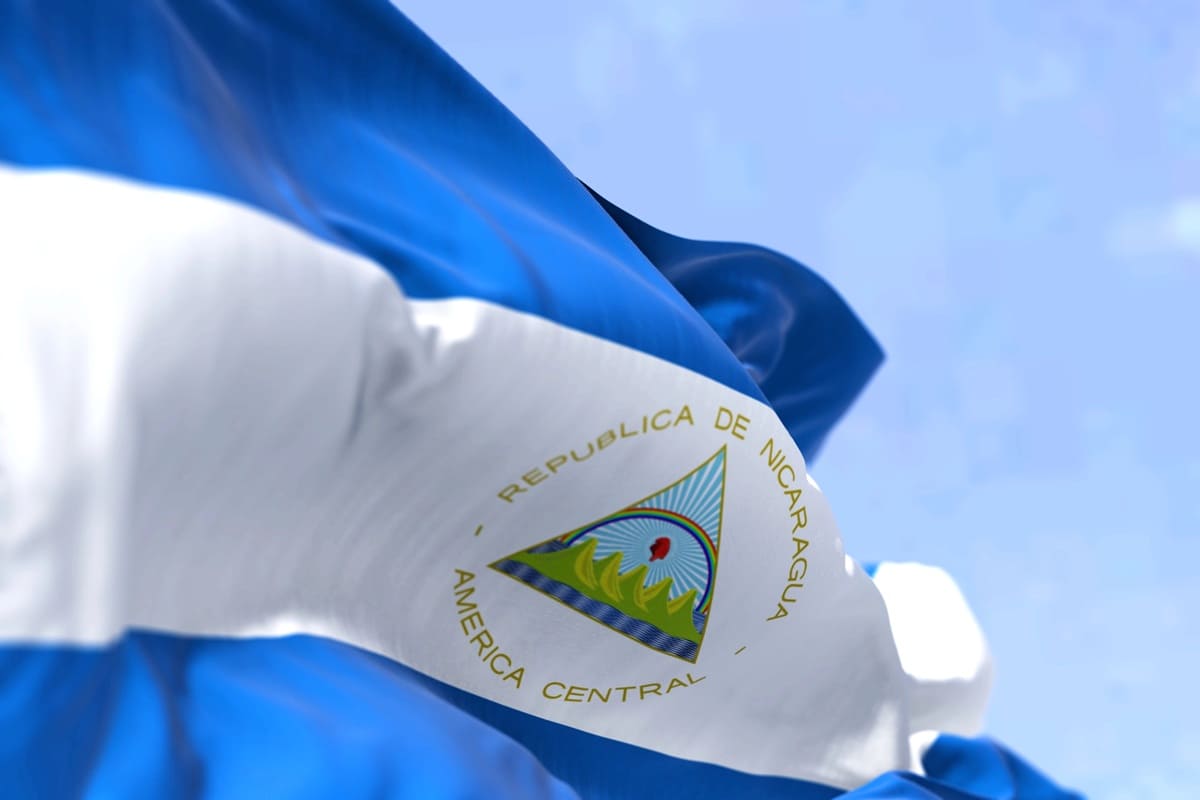
New immigration provision 002-2026, adopted by Nicaragua’s Ministry of the Interior, took effect on February 16, 2026. The measure significantly reshapes the visa categories applicable to foreign nationals seeking to enter Nicaragua.
The regulation, published by the General Directorate of Migration and Foreign Affairs, largely eliminates the visa-on-arrival system and expands the list of countries now subject to a “consulted visa,” known as Category C. This category requires prior authorization issued by immigration authorities in Managua before departure.
At the same time, nationals of the European Union, the United States, Canada, the United Kingdom, Switzerland, Japan, and Australia remain visa-exempt.
Nicaragua ends visa exemptions for several countries; eliminates visa on arrival for others
Until now, Nicaragua maintained a relatively flexible policy, allowing visa-free entry or visas on arrival for a broad range of nationalities, particularly from Africa, Asia, and the Caribbean.
The reform that entered into force on February 16, 2026 effectively puts an end to the full visa exemptions previously granted to certain countries. Several nations are shifting from visa-free status to a requirement to obtain a consulted visa prior to departure.
This notably applies to Cuba, Antigua and Barbuda, the Bahamas, Barbados, Madagascar, Ukraine, San Marino, and Trinidad and Tobago, which were previously among the visa-exempt nationalities.
The reform also ends the visa-on-arrival regime for a large majority of countries that had benefited from it.
Countries affected include Colombia, Morocco, India, Indonesia, Senegal, Thailand, Serbia, Peru, the Central African Republic, and Zimbabwe, all of which must now secure prior authorization before traveling.
In total, more than 120 nationalities (full list below), primarily from Africa, Asia, and the Caribbean, are now required to obtain a consulted visa before departing for Nicaragua.
A sensitive regional migration context
This reform comes amid heightened regional migration tensions. Since 2021, Nicaragua had become a key entry point for migrants from Cuba, Haiti, as well as several African and Asian countries.
Charter flights regularly landed in Managua, allowing travelers to legally enter Nicaragua before undertaking an overland journey through Central America toward the U.S.–Mexico border.
The previous U.S. administration under Joe Biden had already warned about these migration flows, noting that many Cuban, Haitian, and African migrants were using this corridor to reach U.S. territory.
More recently, under the administration of Donald Trump, Washington described Managua’s open-door policy as “concerning,” arguing that it indirectly facilitated irregular migration to the United States.
Although the official Nicaraguan text does not explicitly mention the United States, several observers believe the tightening of entry rules comes amid increased diplomatic pressure from Washington regarding the management of migration flows transiting through Central America.
For its part, the Nicaraguan government has justified the changes based on the principle of “reciprocity” between states and the need to ensure orderly and secure control of entries into its territory.
A strategic turning point
The near-total elimination of visas on arrival, combined with the end of several full and partial exemptions, marks a significant shift in the country’s migration policy.
While Western travelers are not directly affected by the reform, it significantly impacts nationals from many African, Asian, and Caribbean countries.
It remains to be seen whether the new policy will reduce migration flows transiting through Central America or simply redirect routes to other entry points in the region.
One thing is certain: as of today, Nicaragua is no longer the easily accessible gateway it had been in recent years.
Visa-exempt countries for travel to Nicaragua
According to Decree 002-2026, nationals of the following countries and territories are exempt from visa requirements to enter Nicaragua:
- Abkhazia, Albania, Algeria, Angola, Argentina, Australia, Austria, Bahrain, Belarus, Belgium, Belize, Bolivia, Brazil, Brunei, Bulgaria, Canada, Chile, Costa Rica, Cyprus, Czech Republic, Dominica, Dominican Republic, Ecuador, El Salvador, Finland, France, Germany, Greece, Guatemala, Honduras, Hong Kong, Hungary, Ireland, Israel, Italy, Japan, Kazakhstan, Kuwait, Latvia, Luxembourg, Malaysia, Malta, Moldova, Netherlands, Norway, Palestine, Panama, Paraguay, Philippines, Poland, Portugal, Qatar, Romania, Russia, Saudi Arabia, Singapore, Solomon Islands, South Africa, South Korea, South Ossetia, Spain, Sweden, Switzerland, Turkey, United Kingdom, United States, Uruguay, and Vatican City.
Countries subject to mandatory Consulted Visa (category C)
Conversely, the regulation places a large number of countries under the mandatory “consulted visa” requirement (Category C), requiring prior authorization before departure.
This requirement now applies to the following states:
- Afghanistan, Andorra, Antigua and Barbuda, Armenia, Azerbaijan, Bahamas, Bangladesh, Barbados, Benin, Bhutan, Bosnia and Herzegovina, Botswana, Burkina Faso, Burundi, Cambodia, Cameroon, Cape Verde, Central African Republic, Chad, China (ordinary passport holders only), Colombia, Comoros, Congo, Côte d’Ivoire, Croatia, Cuba, Democratic Republic of the Congo, Djibouti, Egypt, Equatorial Guinea, Eritrea, Estonia, Eswatini, Ethiopia, Fiji, Gabon, Gambia, Georgia, Ghana, Grenada, Guinea, Guinea-Bissau, Guyana, Haiti, Iceland, India (ordinary passport holders only), Indonesia (ordinary passport holders only), Iran (ordinary passport holders only), Iraq, Jamaica, Jordan, Kenya, Kyrgyzstan, Kiribati, Laos, Lesotho, Lebanon, Liberia, Libya, Liechtenstein, Lithuania, Madagascar, Malawi, Maldives, Mali, Marshall Islands, Mauritania, Mauritius, Mexico (ordinary passport holders only), Micronesia, Monaco, Mongolia, Montenegro, Morocco, Mozambique, Myanmar, Namibia, Nauru, Nepal, Niger, Nigeria, New Zealand, North Korea, North Macedonia, Oman, Pakistan, Palau, Papua New Guinea, Peru (ordinary passport holders only), Rwanda, Sahrawi Arab Democratic Republic, Saint Kitts and Nevis, Saint Lucia, San Marino, Saint Vincent and the Grenadines, Samoa, São Tomé and Príncipe, Senegal, Serbia (ordinary passport holders only), Seychelles, Sierra Leone, Slovakia, Slovenia, Somalia, Sudan, Sri Lanka, Suriname, Syria (ordinary passport holders only), Tajikistan, Tanzania, Thailand, Timor-Leste, Togo, Tonga, Trinidad and Tobago, Tunisia, Turkmenistan, Tuvalu, Ukraine, Uganda, United Arab Emirates (ordinary passport holders only), Uzbekistan, Vanuatu, Venezuela (ordinary passport holders only), Vietnam (ordinary passport holders only), Yemen, Zambia, and Zimbabwe.


Can an indian passport holder, Resident of Panama with valid USA visa travel to Nicaragua or need to apply for a visa at the Embassy of Nicaragua in Panama.