Ms. Aiyarint Panrit, Deputy Spokesperson to the Prime Minister, announced yesterday that “the Cabinet has approved measures and guidelines regarding visa issuance aimed at promoting tourism and stimulating the Thai economy.”
The proposal, submitted by Thailand’s Ministry of Foreign Affairs and reviewed by the Cabinet on Tuesday, February 10, 2026, does not represent a sudden overhaul of the country’s immigration policy. Rather, it marks a follow-up step and formal political validation of measures that have been gradually implemented over nearly two years.
The purpose was to formally endorse progress made since 2024, update certain administrative mechanisms, and clarify future directions concerning entry controls and facilitation of travel into Thailand.
The 60-day visa exemption scheme: a cornerstone policy in effect since 2024
Among the key measures is the 60-day visa exemption granted to nationals of 93 countries and territories, which took effect on July 15, 2024.
The program allows eligible travelers to stay in Thailand for up to 60 days for tourism or short-term business purposes. This stay may be extended by an additional 30 days while in the country.
The Cabinet meeting reaffirmed the continuation of this open-entry policy, while also acknowledging implementation challenges.
In the same vein, the government reiterated the availability of the Visa on Arrival (VoA), currently covering 31 countries and territories in its initial phase.
This system, already operational, facilitates entry through designated immigration checkpoints. A second phase, which would add eight additional countries, is currently under review.
Visa categories adapted to new global mobility trends
The report presented to the Cabinet also revisited several visa categories introduced as part of Thailand’s broader attractiveness strategy.
The Destination Thailand Visa (DTV) is designed for remote workers and international professionals who combine employment with extended stays. This initiative aligns with the global rise of remote work and the “workcation” trend.
The Non-Immigrant ED Plus category, meanwhile, allows foreign students in certain cases to combine academic study with employment, expanding both educational and economic opportunities.
These measures, already in effect, contribute to diversifying the profiles of visitors welcomed by the Kingdom.
Administrative streamlining and increased digitalization
Beyond easing entry requirements, reforms in recent months have focused on simplifying the system.
As of August 31, 2025, the previous 17 non-immigrant visa codes were consolidated into seven main categories to improve clarity and administrative efficiency.
At the same time, Thailand’s e-Visa service was expanded, effective January 1, 2025, to all 94 Thai embassies and consulates general worldwide.
This expansion enables applicants to complete their visa process online without requiring an in-person visit, further modernizing consular services.
The Thailand Digital Arrival Card replaces the ETA
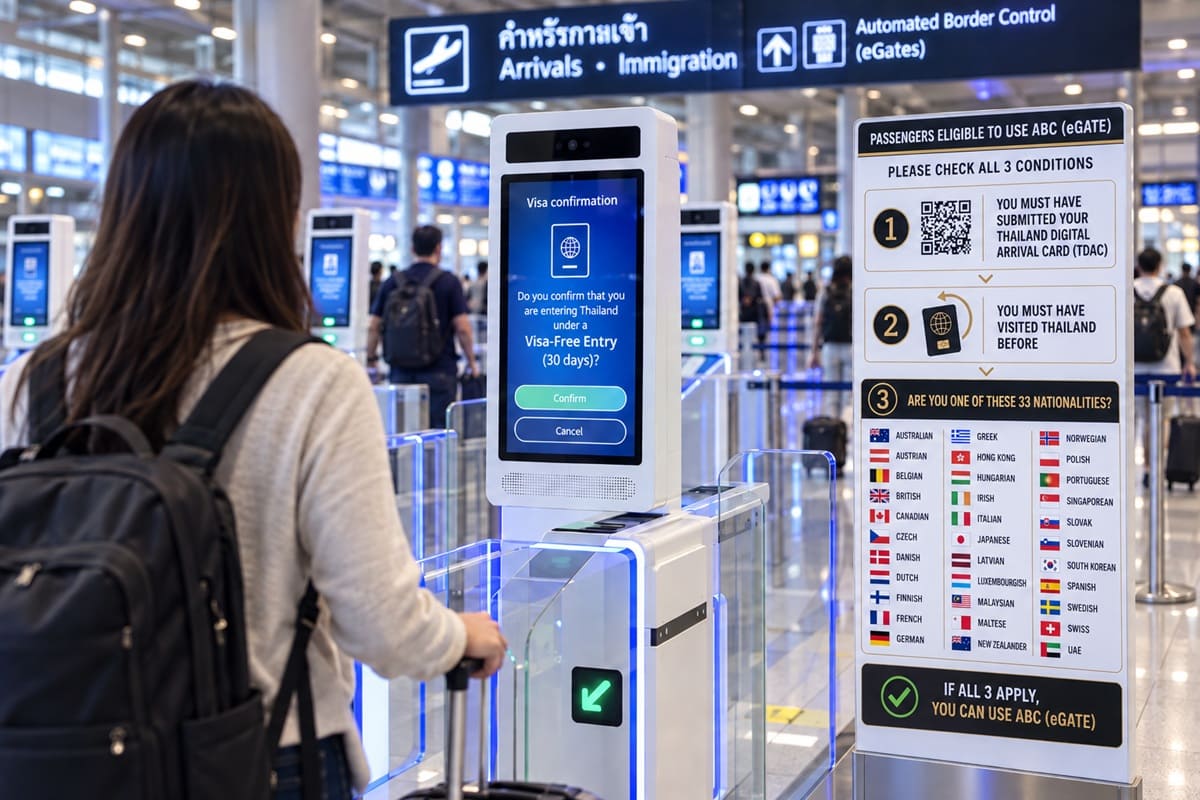
As part of long-term measures, the Immigration Bureau developed the Thailand Digital Arrival Card (TDAC), a digital arrival system that has been operational since May 1, 2025.
The TDAC replaces the previously proposed Electronic Travel Authorization (ETA) system.
It allows travelers to submit their arrival information online within 72 hours prior to entering Thailand, helping streamline border processing while strengthening data collection.
Increased vigilance regarding abuse of the 60-day visa exemption scheme
While the broader strategy aims to support tourism and economic growth, Thai authorities have also acknowledged concerns related to misuse of the 60-day visa exemption scheme.
Since its implementation in July 2024, cases of abuse have been identified. Authorities noted that extending the exemption from 30 to 60 days has, in some instances, been exploited by visitors engaging in activities inconsistent with their status or making repeated back-to-back entries. These practices have complicated enforcement of residency rules and created a perception of vulnerabilities in border controls.
In previous official statements, several officials had already indicated the possibility of adjusting the permitted length of stay or modifying entry conditions to prevent such misuse. Some even raised the option of partially reverting to shorter authorized stays.
These issues reportedly have implications for the domestic labor market, national security, and the country’s international reputation.
In response, and as mentioned last October, the Prime Minister signed a decree establishing a new committee tasked with overseeing immigration policy. The committee will evaluate the impact of the visa exemption program, analyze data related to documented abuses, and propose potential adjustments “as quickly as possible,” whether through stricter oversight, reinforced enforcement measures, or revised eligibility criteria.
At the same time, the government is reviewing the criteria for long-stay visas aimed at foreign retirees. The goal is to attract individuals with strong economic potential while ensuring appropriate regulatory oversight.