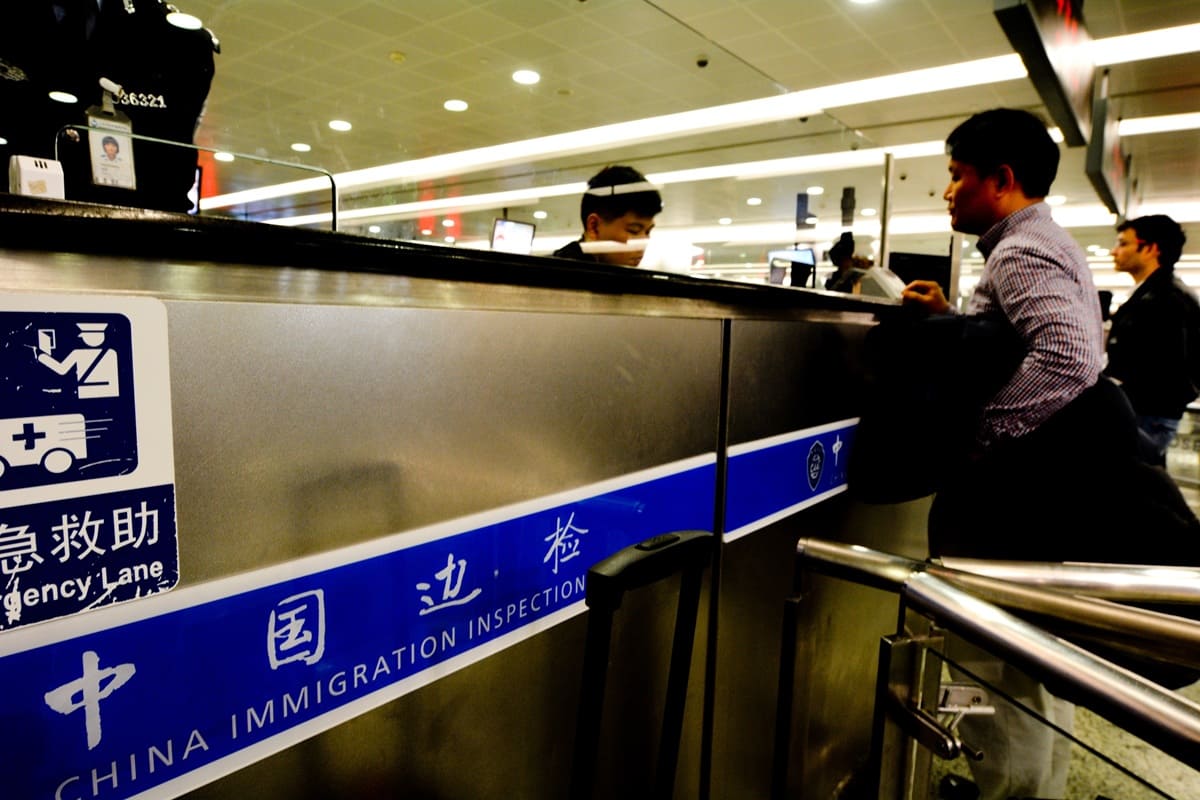
On Wednesday, January 28, 2025, China’s National Immigration Administration (NIA) held a press conference to present its key statistics for the year 2025, marked by record levels of cross-border mobility and the introduction of new measures aimed at facilitating entry for foreign nationals.
In 2025, Chinese authorities recorded 697 million border crossings, representing a year-on-year increase of 14.2%.
Of the 82 million entries by foreign nationals into China in 2025, more than 30 million were made without a visa.
“Visa-exempt foreign entries reached 30.08 million, representing 73.1% of all foreign entries and a 49.5% year-on-year increase,” the NIA announced.
Expansion of visa exemptions and transit policies in China
This growth is largely attributed to the gradual expansion of visa exemption policies.
The number of countries granted unilateral visa-free access to China has increased to 48, while 29 countries are now covered by reciprocal visa waiver agreements.
Nationals of the following countries are eligible for a 30-day visa-free stay in China for tourism, business, or private visits until December 31, 2026:
- Andorra, Argentina, Australia, Austria, Bahrain, Belgium, Brazil, Bulgaria, Chile, Croatia, Cyprus, Denmark, Estonia, Finland, France, Germany, Greece, Hungary, Iceland, Ireland, Italy, Japan, Kuwait, Latvia, Liechtenstein, Luxembourg, Malta, Monaco, Montenegro, Netherlands, New Zealand, North Macedonia, Norway, Oman, Peru, Poland, Portugal, Romania, Saudi Arabia, Slovakia, Slovenia, South Korea, Spain, Sweden, Switzerland, and Uruguay.
Canada may soon be added to the list of countries granted unilateral visa-free access to China, while Russian citizens benefit from the same exemption regime until September 14, 2026.
At the same time, China’s 240-hour visa-free transit policy has been expanded, with Indonesia added to the list of eligible countries and additional ports of entry designated, bringing the total number to 65.
Targeted measures have also been introduced, including a visa exemption for ASEAN tour groups traveling to Xishuangbanna in Yunnan Province, as well as adjustments designed to facilitate travel between mainland China, Hong Kong, Macao, and Taiwan.
Gradual rollout of the digital arrival card
Alongside visa-related measures, the NIA highlighted the introduction of a digital arrival card for foreign nationals.
This digital arrival card is intended to streamline border procedures and reduce inspection times, as part of a broader push toward digitalization, including the pilot project for electronic visa at selected ports of entry, particularly in Shanghai.
These initiatives are being rolled out in parallel with the nationwide implementation of one-stop border inspection procedures, facial recognition systems, and visa-free temporary entry permit services.
According to the NIA, these measures reflect the Chinese authorities’ commitment to supporting economic, tourism, and people-to-people exchanges while improving administrative efficiency at the border. The year 2025 thus marks a new phase in China’s gradual opening, combining more flexible visa policies with the modernization of entry procedures.