As of January 1, 2026, the “Visa Prior to Arrival” (VPA) system has disappeared from Pakistan’s official electronic visa portal (visa.nadra.gov.pk).
On the “Pak ID” mobile application, launched in February 2025, the “Visa Prior to Arrival” options are still visible. However, selecting them consistently redirects users to a message instructing them to submit their application through the POVS (Pakistan Online Visa System) portal, “under the appropriate visa category.”
So far, no public statement has been issued to confirm or explain the suspension, nor to clarify whether it is temporary or permanent.
Introduced in August 2024, the VPA had nevertheless been one of the cornerstones of Pakistan’s new strategy to boost tourism and economic attractiveness, as announced by the government. The program allowed citizens of 126 countries to obtain a free 90-day tourist or business visa, valid for multiple entries, through a significantly simplified process.

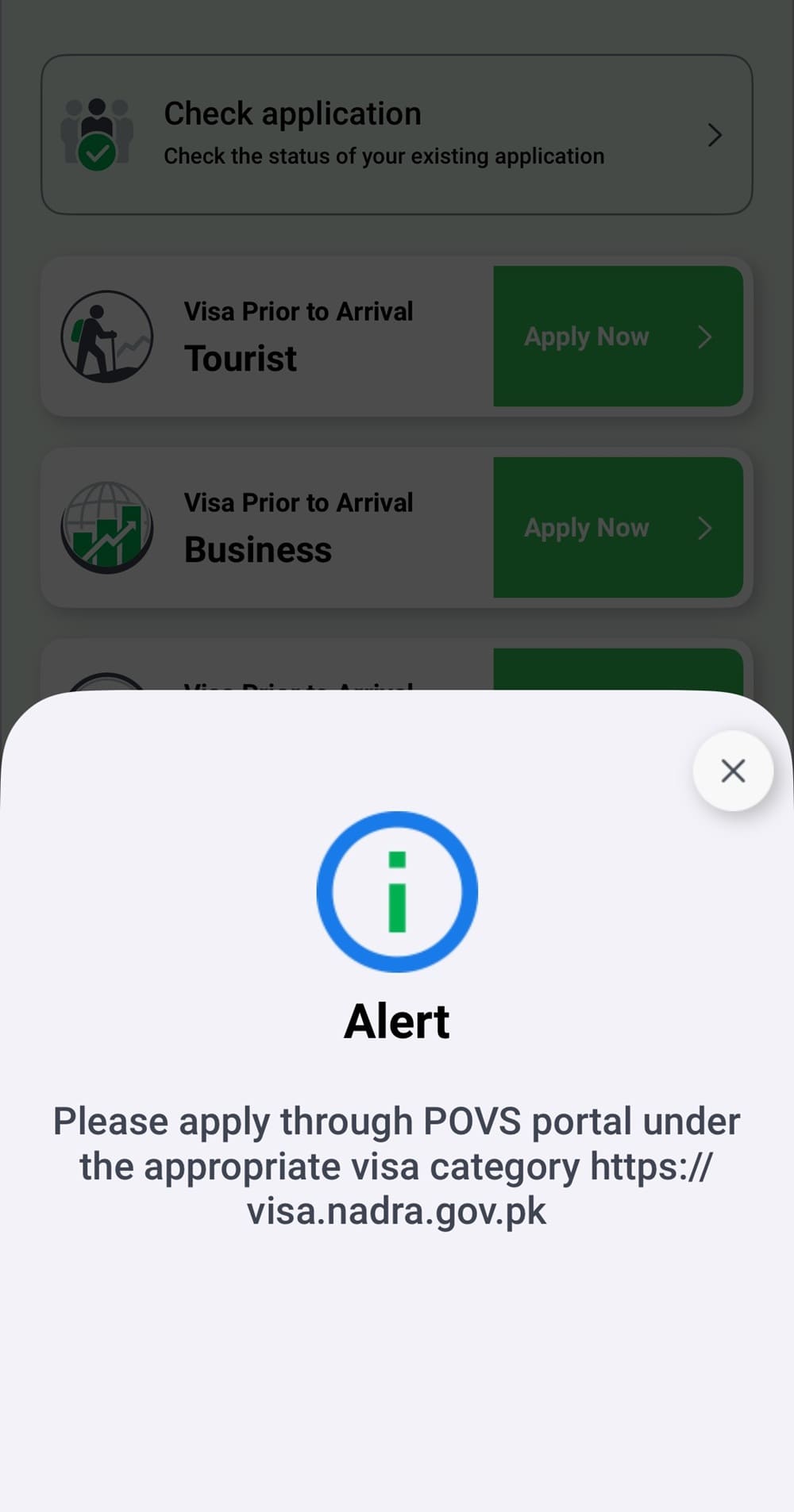
Return to paid e-Visa for 126 countries
The suspension of the “Visa Prior to Arrival” program therefore affects citizens of the following 126 countries and territories, who had benefited from a free, fast-tracked visa for Pakistan until the end of 2025:
Europe:
- Albania, Andorra, Austria, Belarus, Belgium, Bosnia and Herzegovina, Bulgaria, Croatia, Czech Republic, Denmark, Estonia, Finland, France, Germany, Greece, Hungary, Iceland, Ireland, Italy, Kosovo, Latvia, Liechtenstein, Lithuania, Luxembourg, Malta, Moldova, Montenegro, Netherlands, North Macedonia, Norway, Poland, Portugal, Romania, Russia, San Marino, Slovakia, Slovenia, Spain, Sweden, Switzerland, Ukraine, and United Kingdom.
Africa:
- Algeria, Angola, Benin, Cameroon, Comoros, Côte d’Ivoire, Democratic Republic of the Congo, Djibouti, Egypt, Ethiopia, Gambia, Ghana, Guinea, Guinea-Bissau, Kenya, Madagascar, Malawi, Mauritius, Mauritania, Morocco, Mozambique, Nigeria, Rwanda, Senegal, Seychelles, Sierra Leone, South Africa, South Sudan, Tanzania, Togo, Tunisia, Uganda, Zambia, and Zimbabwe.
Asia:
- Azerbaijan, Bahrain, Bangladesh, Bhutan, Brunei, Cambodia, China, Indonesia, Iran, Iraq, Japan, Jordan, Kazakhstan, Kyrgyzstan, Kuwait, Lebanon, Malaysia, Maldives, Myanmar, Nepal, Oman, Philippines, Qatar, Saudi Arabia, Singapore, South Korea, Sri Lanka, Tajikistan, Thailand, Turkey, Turkmenistan, Uzbekistan, and Vietnam.
Americas:
- Argentina, Brazil, Canada, Chile, Colombia, Ecuador, Guatemala, Honduras, Mexico, Panama, Paraguay, Peru, and United States.
Oceania:
- Australia and New Zealand.
Travelers from these countries must now apply for a “standard” paid e-Visa, with fees varying by nationality. For example:
- USD 35 for a single-entry, three-month tourist visa for citizens of the European Union;
- USD 60 for nationals of the United States, Canada, and the United Kingdom;
- Different amounts apply depending on the applicant’s nationality.
Visa for Pakistan: longer processing times and more formalities
Another significant change concerns processing times. While VPA approvals were generally issued within 24 to 48 hours, Pakistani authorities now indicate that tourist e-Visa applications may take up to seven business days to process.
The application form has also become substantially more complex. Previously limited to around twenty questions under the VPA system, it now includes numerous additional sections, notably the requirement to provide proof of accommodation, bringing the process closer to pre-2024 visa requirements.
At present, no official information has been released regarding whether the “Visa Prior to Arrival” program will be reinstated, in what form, or within what timeframe.
In the absence of communication from Pakistani authorities, travelers and industry professionals must now contend with a framework that is more restrictive, more expensive, and less predictable.
When the VPA was launched, Prime Minister Shehbaz Sharif emphasized that easing visa requirements was intended to enhance Pakistan’s appeal for tourism and foreign investment. At the time, Federal Minister for Information Attaullah Tarar highlighted a significant reduction in bureaucracy and administrative delays.
The quiet suspension of the VPA therefore stands in contrast to those initial commitments—particularly given the wide range of countries affected across all regions of the world.