

Until recently, India’s 30-day tourist e-Visa imposed a strict constraint on travelers: applications could only be submitted within 30 days prior to arrival in India.
As of Thursday, December 18, this validity window has been extended to four months. The official Indian e-Visa portal, indianvisaonline.gov.in, now allows applicants to enter an arrival date within 120 days.
This change applies only to Electronic Travel Authorizations (ETAs) approved from that date onward and is therefore not retroactive. It allows travelers to plan and complete their administrative formalities earlier, while maintaining the same conditions as the short-term tourist visa. The measure is particularly welcomed by international tourists who organize their trips well in advance.
For travelers wishing to stay longer in India, the one-year tourist e-Visa remains an alternative. It allows stays of up to 90 consecutive days and can also be applied for within 120 days prior to arrival.
First land entry point now authorized with an e-Visa: Raxaul
Another notable development is the expansion of authorized entry points for e-Visa holders. Since its introduction, India’s e-Visa program allowed first entry only by air or sea, through 32 international airports and 6 seaports.
Indian authorities have now added the first land border crossing to this list: Raxaul, located on the India–Nepal border.
This decision facilitates regional travel, particularly for visitors moving within South Asia who wish to enter India by land without applying for a traditional visa through an embassy or consulate.
As of today, entry into India with an e-Visa is permitted through the following points of entry:
International Airports:
- Ahmedabad, Amritsar, Bagdogra, Bengaluru, Bhubaneswar, Calicut, Chandigarh, Chennai, Cochin, Coimbatore, Delhi, Gaya, Goa (Dabolim), Goa (Mopa), Guwahati, Hyderabad, Indore, Jaipur, Kannur, Kolkata, Lucknow, Madurai, Mangalore, Mumbai, Nagpur, Port Blair, Pune, Surat, Thiruvananthapuram, Trichy, Varanasi, and Visakhapatnam.
Seaports:
- Chennai, Cochin, Goa, Mangalore, Mumbai, and Port Blair.
Land Border:
- Raxaul.
Once the first entry has been completed using the Electronic Travel Authorization (ETA) and the e-Visa entry stamp has been placed in the passport, any subsequent entries into India may be made through all Integrated Check Posts (ICPs) across the country.
Rapid expansion of India’s e-Visa categories
Alongside these adjustments, India continues to expand the range of visa categories available online.
Prior to 2025, the e-Visa system included the following types:
- e-Tourist Visa
- e-Business Visa
- e-Conference Visa
- e-Medical Visa
- e-Medical Attendant Visa
- e-Ayush Visa
- e-Ayush Attendant Visa
In January 2025, Indian authorities introduced two new categories: the e-Student Visa and the e-Student Dependent Visa. In recent weeks, additional categories have been launched to address more specialized needs:
- e-Transit Visa
- e-Mountaineering Visa
- e-Film Visa
- e-Entry Visa
- e-Production Investment Visa
This diversification reflects India’s commitment to further digitizing its immigration procedures and tailoring its visa offerings to a wide range of purposes, including transit, specialized tourism, education, audiovisual production, and investment.
India recently launched the e-Arrival Card
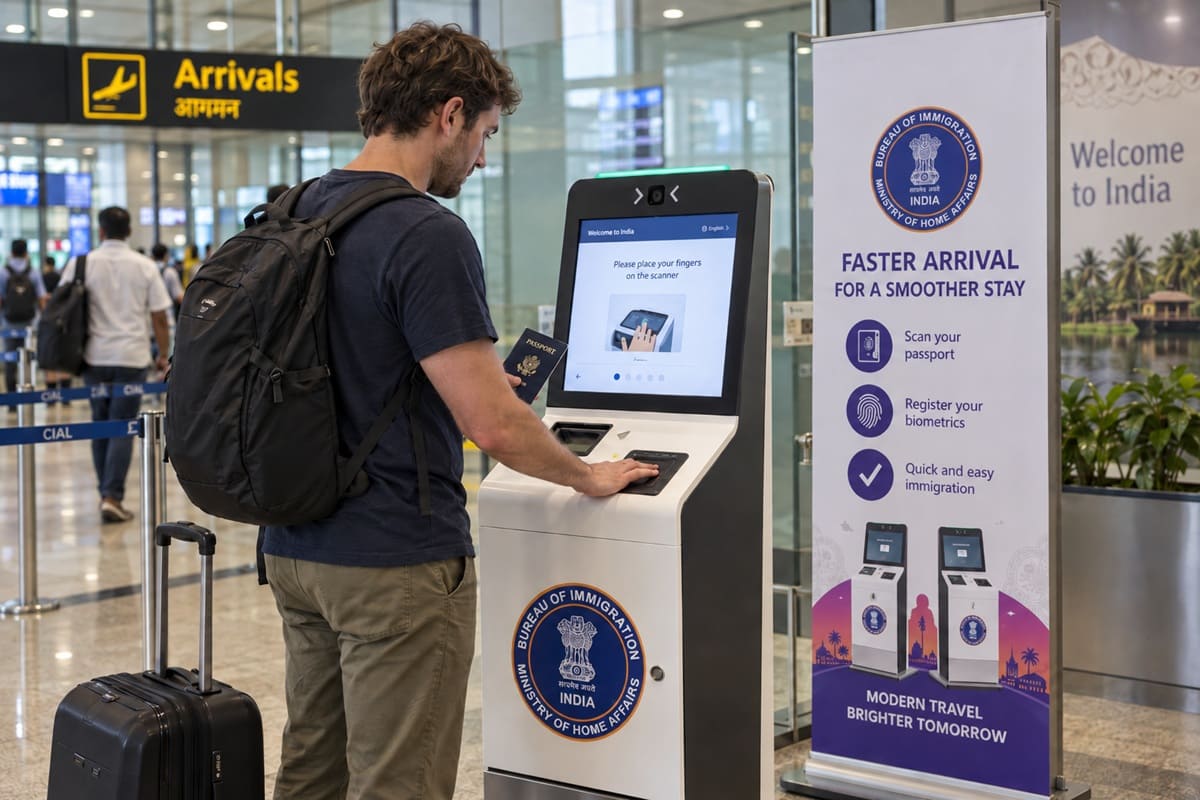
As part of its ongoing modernization of entry procedures, India has also introduced the e-Arrival Card, a digital arrival form for foreign travelers.
Effective October 1, 2025, this new system allows travelers to submit arrival information online, with the aim of streamlining border formalities and reducing paper usage.
The e-Arrival Card can be completed up to 72 hours prior to arrival via the official platform at indianvisaonline.gov.in/earrival. It currently operates alongside the traditional paper arrival card, which will remain in use during a transitional period of up to six months.
Indian authorities emphasize that the digital arrival card does not replace a visa, whether electronic or traditional, but serves solely as a declarative arrival form and does not constitute authorization to enter the country.



Are you saying that Raxaul has an evisa immigration office?
If I only get an e-visa approved paper
Are you saying that I can get an first e-visa stamp by land from Nepal to India?