During a ceremony held at the El Rancho Hotel in Port-au-Prince, Haiti’s Directorate of Immigration and Emigration (DIE) officially unveiled on Thursday, December 4, the pilot phase of the new digital embarkation and disembarkation card, known as “iKat.”
Described as an event of “national importance,” the presentation brought together representatives of the Presidential Transitional Council, the Prime Minister’s Office, several government ministries, technical and financial partners, as well as stakeholders from the travel and aviation sectors.
Developed in collaboration with the Haitian Institute of Statistics and Informatics (IHSI), the DIE’s technical partner, the “iKat” project marks a critical step toward modernizing and securing migration procedures in Haiti.
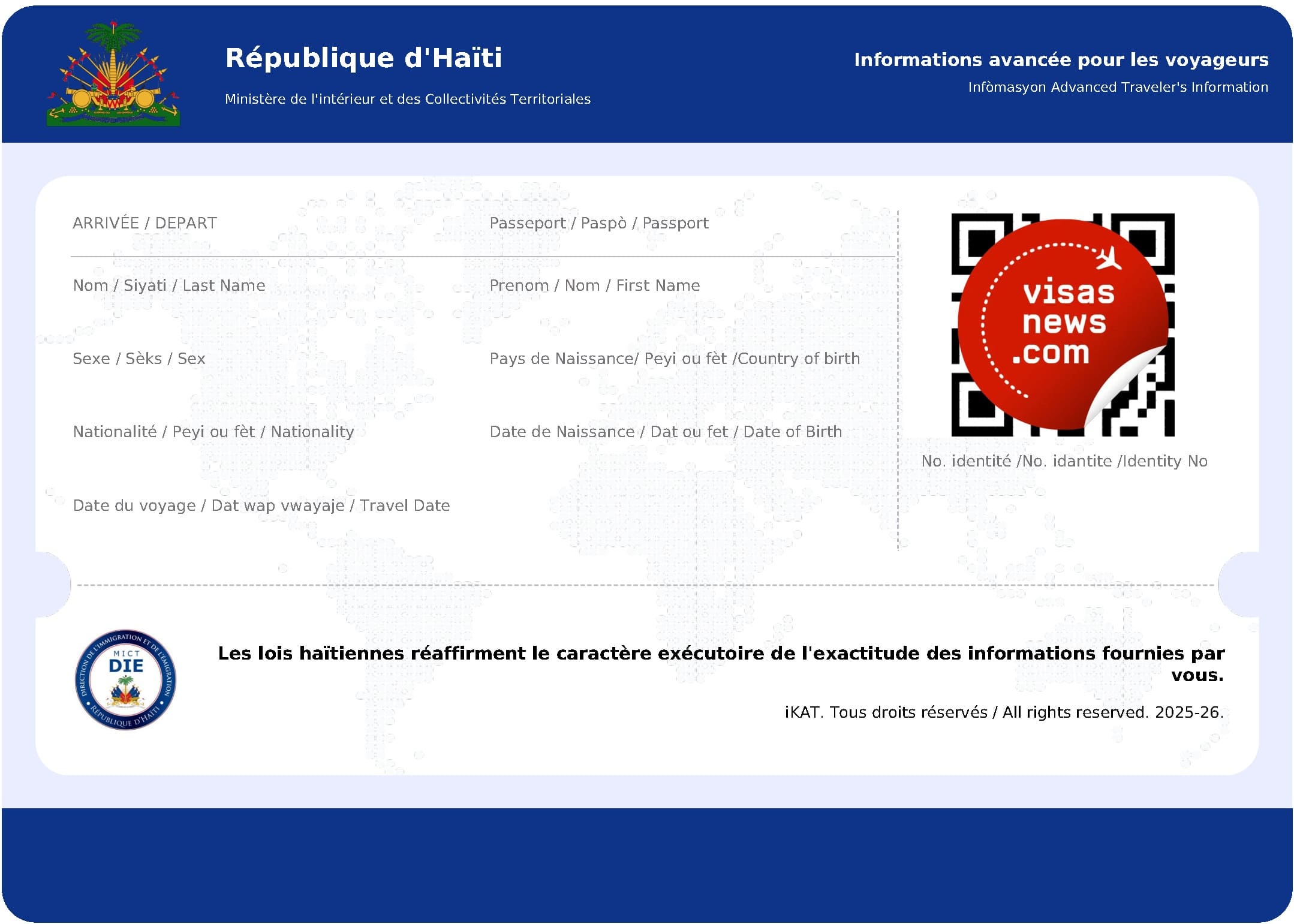
According to the DIE, the digital arrival card “iKat” is designed to “gradually replace the traditional physical card through a pre-established digital subscription, allowing travelers to complete their form online up to 72 hours before arrival.”
DIE Director General Antoine Jean Simon Fénelon took the opportunity to commend Prime Minister Alix Didier Fils-Aimé, “who made iKat his flagship project from the moment it was introduced.”
A tool for administrative modernization and data consolidation
Haitian authorities emphasize that the “iKat” project primarily aims to “optimize the management and monitoring of migration flows within Haitian territory.”
For the government, this modernization is meant to improve traveler processing and strengthen oversight capabilities through the digitalization and centralization of information submitted to authorities.
The system will also help build a reliable and consolidated database, essential for analyzing migratory movements, particularly for monitoring stays that exceed the legal limit of 90 days. The goal is to provide institutions with a coherent, actionable statistical framework for regulatory enforcement.
In addition, the iKat platform will provide the DIE with an upgraded tool for authentication and stay analysis, based on interconnected data that can be shared with partner agencies. This integrated approach is expected to allow faster and more accurate processing of migration information.
According to officials, the unveiling of the “iKat” project “demonstrates the Government’s commitment to strengthening migration governance, improving the quality of services offered to travelers, and firmly anchoring Haiti’s public administration in a culture of innovation and efficiency.”
How to complete the “iKat” digital card for travel to Haiti
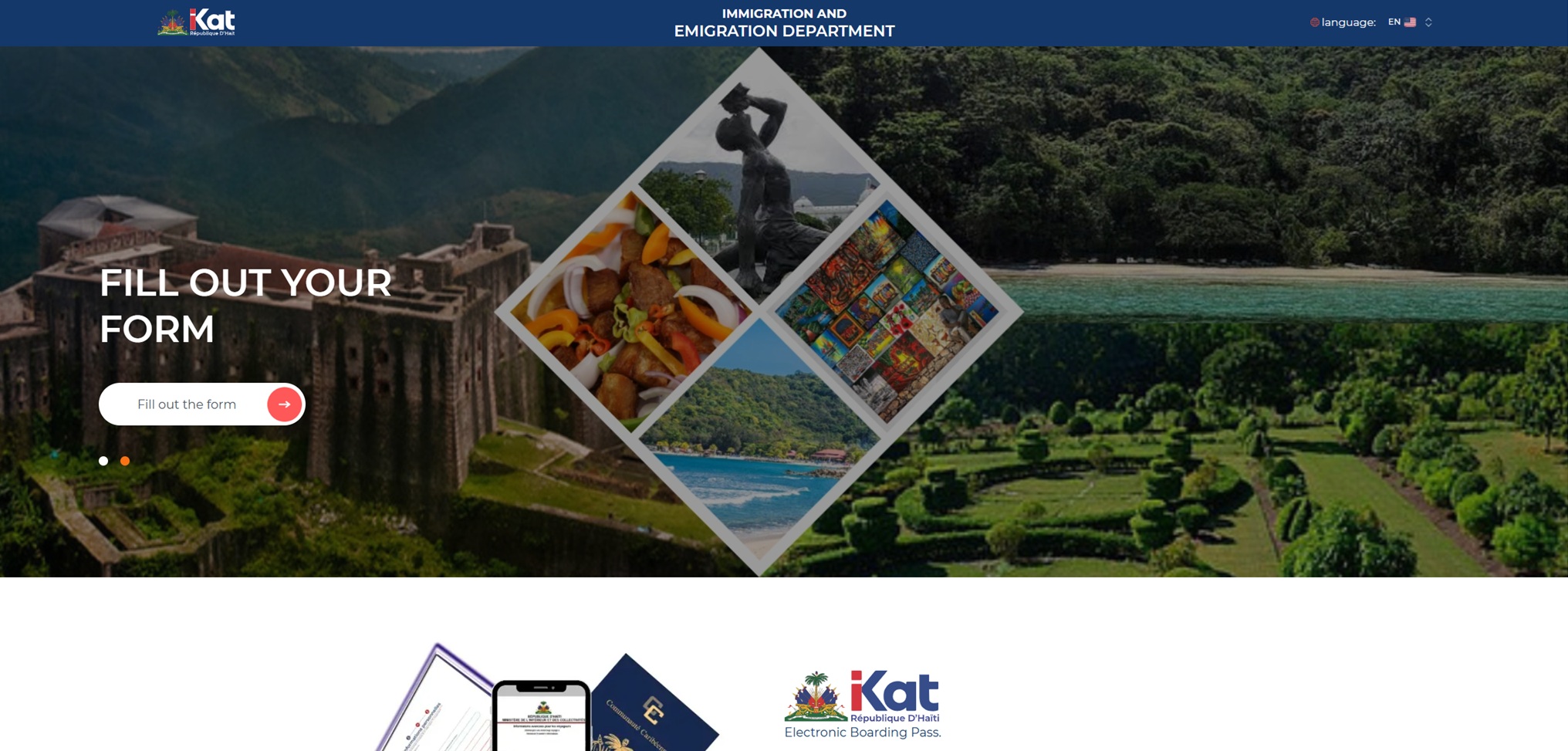
The digital embarkation and disembarkation card “iKat” can be filled out online through the official platform: delidoc.gouv.ht/ikat, by all travelers, Haitian and foreign alike.
The portal is described as “a tool that allows travelers to provide information in advance, 72 hours before their arrival or departure, to speed up formalities at all entry points, including airports, seaports, and land border crossings.”
Travelers are required to complete the form before departure. “If you fail to do so, you will have to complete it before passing through the various control points, which will complicate your trip,” Haitian authorities warn.
Online, travelers must provide the following information:
Personal Information
- Nationality
- Last name
- First name
- Gender
- Date of birth
- Passport number
- Passport expiration date
- Marital status
- Country of birth
- Email address
- Country of residence
- Phone number
- Home address
- Type of accommodation during stay
- Address of lodging during stay
Migration information
- Means of transportation (air, land, or sea)
- Date of arrival in Haiti
- Country of departure
- Purpose of stay (tourism, business, work, study, health, other)
- Length of stay
- Airline name (or land/sea arrival information)
- Flight number (or land/sea arrival information)
- Port of embarkation
- Port of disembarkation (Port-au-Prince Toussaint Louverture International Airport, Cap-Haïtien Hugo Chavez International Airport, Les Cayes International Airport, Jacmel International Airport, etc.)
Customs information
- Family members traveling together
- Goods to declare
- Currency exceeding 400,000 Gourdes or 10,000 USD to declare
- Food items to declare
- Other customs declarations
Health information
- Health issues to declare
- Countries visited in the past 3 weeks
- Emergency contact
- Emergency contact phone number
Once the form is completed and successfully submitted, a PDF document containing a QR code can be downloaded directly from the portal and is also emailed to the traveler. This document must be presented upon arrival in Haiti, either printed or stored digitally (phone, tablet, etc.).
A nine-character alphanumeric code is also provided, allowing travelers to modify the form in case of errors or changes to travel information.