Travelers planning to visit Canada could soon face an additional requirement when applying for an electronic travel authorization (eTA).
In its 2026 federal budget, presented on November 5, the Canadian government reaffirmed its intention to expand biometric data collection as part of its immigration procedures. Among the proposed measures is a new requirement for visa-exempt foreign nationals applying for an eTA to travel to Canada by air.
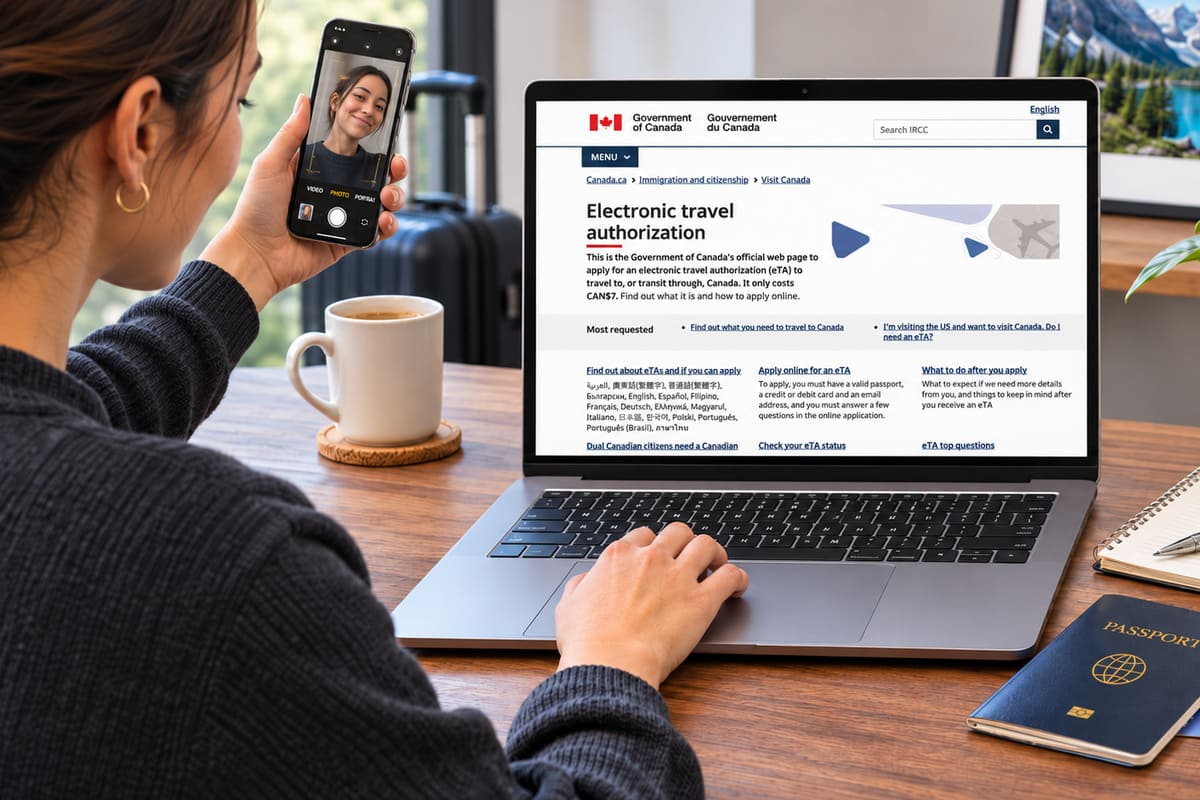
These travelers could be required to submit a facial image remotely, allowing Canadian authorities to verify their identity before departure.
The proposal itself is not entirely new, but its inclusion in Canada’s latest budget plans signals further progress toward implementing the reform.
Canada plans facial biometric verification for eTA applicants
The Canadian government has proposed allocating CA$90 million over four years, beginning in fiscal year 2027–2028, to Immigration, Refugees and Citizenship Canada (IRCC).
The funding would support expanded biometric screening for a broader range of travelers, including the use of fingerprints and facial images.
The budget specifically addresses electronic travel authorization applicants, outlining a proposed requirement for them to submit a facial image remotely.
The stated objective is to strengthen identity verification and reduce the risks of document fraud and identity theft.
In practical terms, the change could mean that travelers would need to capture an image of their face or upload a photograph during the eTA application process, in addition to providing their personal information and passport details.
However, the technical requirements have yet to be established. Canadian authorities have not specified whether facial images would be collected directly through the online application portal, using a smartphone, or through a dedicated application.
The budget also does not explain how facial images would be compared or whether applicants might be subject to additional identity checks.
Canada’s eTA reform has been in development since 2025
The proposed expansion of biometric screening is not a completely new development.
In July 2025, VisasNews reported on Canada’s plans to expand biometric data collection, particularly for visa-exempt travelers applying for an eTA.
The proposal has appeared in IRCC’s Forward Regulatory Plan since July 16, 2025.
The department explains that it intends to amend the Immigration and Refugee Protection Regulations to expand the collection and use of facial biometric data across its immigration programs.
More specifically, the changes would introduce a new biometric requirement for visa-exempt travelers seeking electronic travel authorization.
In April 2026, VisasNews also examined another proposed modernization of Canada’s eTA application process, this time involving the digital capture of passport information.
That initiative is intended to enable the remote extraction of information from travel documents, helping automatically populate application forms, reduce data-entry errors, and improve passport authentication.
The two initiatives are complementary. IRCC has indicated that the regulatory changes should be coordinated to strengthen traveler identity management.
Eventually, Canada’s eTA application process could therefore involve two distinct verification measures: digital passport authentication and biometric collection of the applicant’s facial image.
Canada is developing a national traveler biometrics strategy
Beyond the eTA application process, Ottawa is looking to expand the use of biometric technologies throughout the transportation system and at its borders.
The 2026 federal budget also proposes an additional CA$4.3 million over four years, beginning in 2026–2027, to support Transport Canada’s development of a national traveler biometrics strategy.
The initiative aims to make air travel more efficient and convenient, potentially through the use of digital identity credentials.
The goal would be to streamline passenger processing at airports and border entry points, bringing together airlines, airport operators, aviation security organizations, and border authorities.
The government also plans to appoint a special advisor to lead the strategy and coordinate its implementation among the various stakeholders.
Data protection, privacy, cybersecurity, accessibility, and freedom of choice are among the principles that the strategy is expected to address.
This broader initiative is separate from the proposed biometric requirement for eTA applications. It would cover more aspects of the travel experience, from airport operations to border controls.
Separately, the government has proposed investing CA$192.5 million over four years, starting in 2027–2028, followed by CA$42.5 million annually, to modernize and stabilize the Canada Border Services Agency’s (CBSA) technology infrastructure.
In a statement issued on November 6, the Canadian Airports Council welcomed these initiatives, highlighting the potential of biometrics to streamline passenger processing and improve the airport experience.
What would this mean for visa-exempt travelers?
For travelers from countries such as the United Kingdom, Australia, Japan, France, Germany, and other nations whose citizens are generally exempt from Canadian visa requirements, the proposed changes could significantly alter what is currently a relatively straightforward application process.
Under the existing rules, eligible passport holders from these countries generally need an eTA when traveling to Canada by air, unless they qualify for a specific exemption.
Currently, eTA applications are completed entirely online, primarily using information from the traveler’s passport.
The official application fee is CA$7. Most applications are approved within minutes, although some may take longer to process.
Once approved, an eTA is electronically linked to the passport used for the application and remains valid for up to five years, or until the passport expires, whichever comes first.
Introducing facial biometric verification would therefore add another step to a process that currently does not require applicants to systematically submit facial biometric images.
The reform could also lead to additional costs for applicants. IRCC acknowledges this possibility in its regulatory plan, although no increase in the eTA application fee has been announced.
The department also recognizes that Canada’s tourism industry may have concerns about the impact of additional administrative requirements on international visitors.
Nevertheless, Canadian authorities aim to bring their procedures more closely in line with those of other destinations that have already introduced biometric requirements into their travel authorization or pre-departure screening systems.
When could facial biometric verification become mandatory for Canada’s eTA?
No implementation date has been announced for the proposed requirement.
The fact that funding is planned to begin in 2027–2028 does not mean that facial biometric collection will automatically become mandatory during that period.
The regulatory proposal must still move through the necessary approval process, including consultations and the advance publication of proposed amendments in the Canada Gazette, allowing members of the public to provide feedback.
Canadian authorities will also need to clarify the technical requirements, any associated fees, and how the new rules would apply to different categories of travelers.
Until these changes are officially introduced, the current eTA requirements remain unchanged.
Eligible British, Australian, Japanese, European, and other visa-exempt travelers flying to Canada must therefore continue to obtain their electronic travel authorization through the existing process, unless they qualify for an exemption. Mandatory remote facial biometric submission is not currently part of that process.
VisasNews Take
Canada’s 2026 budget provides more concrete financial backing for a reform that has been under consideration since 2025. By combining facial biometric verification with proposed digital passport scanning, Ottawa is looking to strengthen identity checks before visa-exempt travelers depart for Canada. The key questions now concern when the measures will take effect and how they will work in practice — two factors that will determine how significantly they change an eTA application process that has traditionally been quick and straightforward.