

Tbilisi has a compact historic center, varied terrain, and transport links that suit short visits. Travelers can cover the main central districts without rushing, especially when walking is combined with metro, buses, cable cars, and ride services for steeper sections.
Why Tbilisi Works Well for a Short Stay
The central districts sit close together, so visitors can move between the Old Town, Abanotubani, Rustaveli Avenue, Sololaki, and riverfront areas with relatively short transfers. Public transport is inexpensive, while taxis and ride-hailing apps are useful for hills or airport journeys.
Many outdoor sights do not require timed tickets, making plans easier to adjust around weather, energy levels, or longer meals. This flexibility makes Tbilisi particularly convenient for a two- or three-day stay without a tightly packed itinerary.
How to Pace a Two- or Three-Day Tbilisi Itinerary
A relaxed rhythm starts with the lower Old Town, adds viewpoints and Mtatsminda on day two, and leaves markets and neighborhood streets for day three. This order reduces repeated uphill walks and keeps the busiest parts of the itinerary separated.

Day One: Old Town, Abanotubani, and an Easy First Evening
Begin around Freedom Square and walk into the Old Town before continuing toward Abanotubani. Individual sulfur bathhouses set their own schedules, and private rooms are worth booking ahead on busy weekends.
Finish with an easy riverside walk or dinner in the central districts. Keeping the first evening simple works especially well after a flight or long journey.
Day Two: Narikala Area, Mtatsminda, and City Views
Take the Rike–Narikala cable car for elevated views over the Old Town. The one-way fare is 2.5 GEL. Access conditions around Narikala can change during restoration work, so check current information before planning to enter the fortress itself.
Later, return toward central Tbilisi and head to the lower funicular station on Chonkadze Street for the ride to Mtatsminda. Treating Narikala and Mtatsminda as separate parts of the day avoids turning the route into one long uphill walk.
Day Three: Markets, Cafés, and Neighborhoods Beyond the Main Sights
Morning works well for Dezerter Bazaar, which generally operates from about 07:00 to 17:00. Dry Bridge Market is another easy stop for antiques, art, and second-hand finds, with late morning through the afternoon usually being the most practical time to visit.
Orbeliani Bazaar can fit later in the day before a final walk through Sololaki or along Rustaveli Avenue. This leaves the last day flexible enough for a slower meal or an earlier departure.
Areas of Tbilisi That Are Best Explored on Foot
Historic zones reward slow movement, but gradients and paving vary significantly. Rustaveli Avenue provides one of the easier long corridors, while Betlemi Street and the Narikala approaches involve steeper climbs and uneven surfaces.
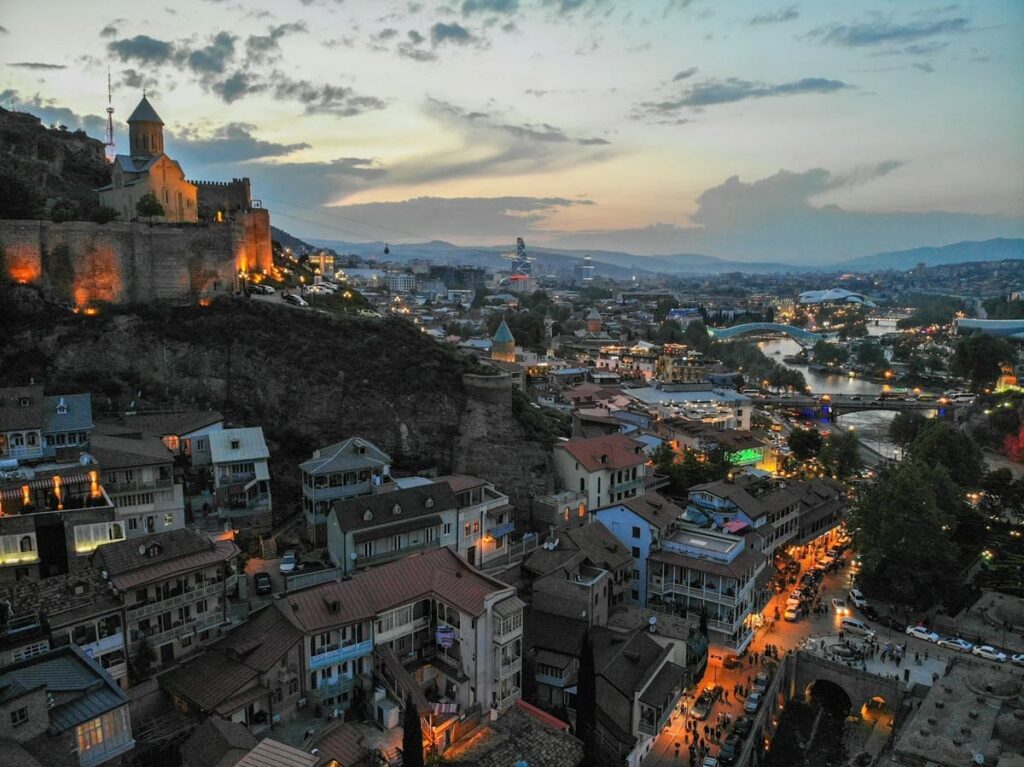
The Old Town and Abanotubani Sulfur Bath District
Narrow lanes and uneven paving define this part of Tbilisi. Bathhouses operate independently, so opening hours, room types, and prices differ between businesses.
Allow extra time instead of fitting the district between tightly scheduled attractions. The area works better when there is room to stop for a café, viewpoint, or longer bath session.
Narikala, Betlemi Streets, and the Views Above the City
Steep streets connect the upper Old Town with lower neighborhoods. The cable car removes part of the climb, but comfortable shoes still matter.
If restoration affects access to the fortress, nearby viewpoints and surrounding streets can still fit naturally into the day. Planning the steeper sections while there is plenty of daylight also makes the route easier.
Rustaveli, Sololaki, and the Left Bank
Rustaveli Avenue and parts of the left bank are easier for longer walks. Metro and bus connections provide simple returns when energy runs low, while Sololaki is best explored slowly for its streets, courtyards, cafés, and architecture.
These districts also work well as flexible parts of the itinerary because they do not depend on a single attraction or fixed admission time.
Where to Slow Down for Food, Cafés, Markets, and Short Breaks
Lunch is easy to keep flexible, while popular small restaurants can fill up on Friday and Saturday evenings. Markets also provide simple stops for snacks between walking sections and make it easier to avoid planning every meal in advance.
Arrival and departure days are often harder to schedule. If hotel check-in, check-out, or a late flight leaves several free hours, carrying suitcases through the Old Town can make a short walk unnecessarily difficult. Travelers who want to explore without bags can check storage options on the official website and plan the rest of the day around the city rather than their luggage.
Practical Notes on Walking, Transport, and Timing
| Option | Cost (GEL) | Typical time to center | Best for |
|---|---|---|---|
| Airport bus 337 | 1 per ride | 30–70 minutes | Budget arrivals during operating hours |
| Ride-hailing apps | About 15–30 | 20–30 minutes | Direct trips when the app fare is reasonable |
| Official airport taxi | 40–60 | 20–30 minutes | Direct hotel transfer |
| Metro or municipal bus | 1 per ride | Varies | Longer city routes |
| Rike–Narikala cable car | 2.5 one way | A few minutes | Reaching the upper Old Town |
| Walking | Free | Depends on route | Old Town, Sololaki, and central districts |
Bus 337 runs approximately from 06:59 to 22:59. A 1 GEL municipal ticket provides 90 minutes of travel on eligible city transport when paid through the supported fare system.
Before setting out, it helps to:
- check current cable-car and funicular hours;
- reserve a private sulfur bath room ahead on busy weekends;
- carry a transport card or supported bank card;
- plan steeper walks earlier in the day;
- visit produce markets in the morning;
- allow extra time on uneven Old Town streets;
- keep one meal or café stop flexible.
Entry Rules, Insurance, and Final Travel Checks
Citizens of many countries, including EU member states, the UK, the United States, Canada, and Australia, may enter Georgia visa-free for up to one full year. Entry rules still depend on nationality and travel documents, so it is worth confirming the latest requirements through official government sources before departure.
Travelers entering Georgia are also required to hold valid health and accident insurance for the full duration of their stay, including the arrival and departure dates. The policy may be issued by a Georgian or foreign insurer, should be available in Georgian or English, and requires minimum coverage of 30,000 GEL.
Keeping a digital or physical copy of the policy together with passport and booking details makes arrival easier if documents need to be checked. Georgia uses 112 for police, fire, and emergency medical assistance, so saving the number before the trip is a simple final preparation step.

