Southern Africa’s long-running plan for a common tourist visa has reached one of its most significant milestones yet.
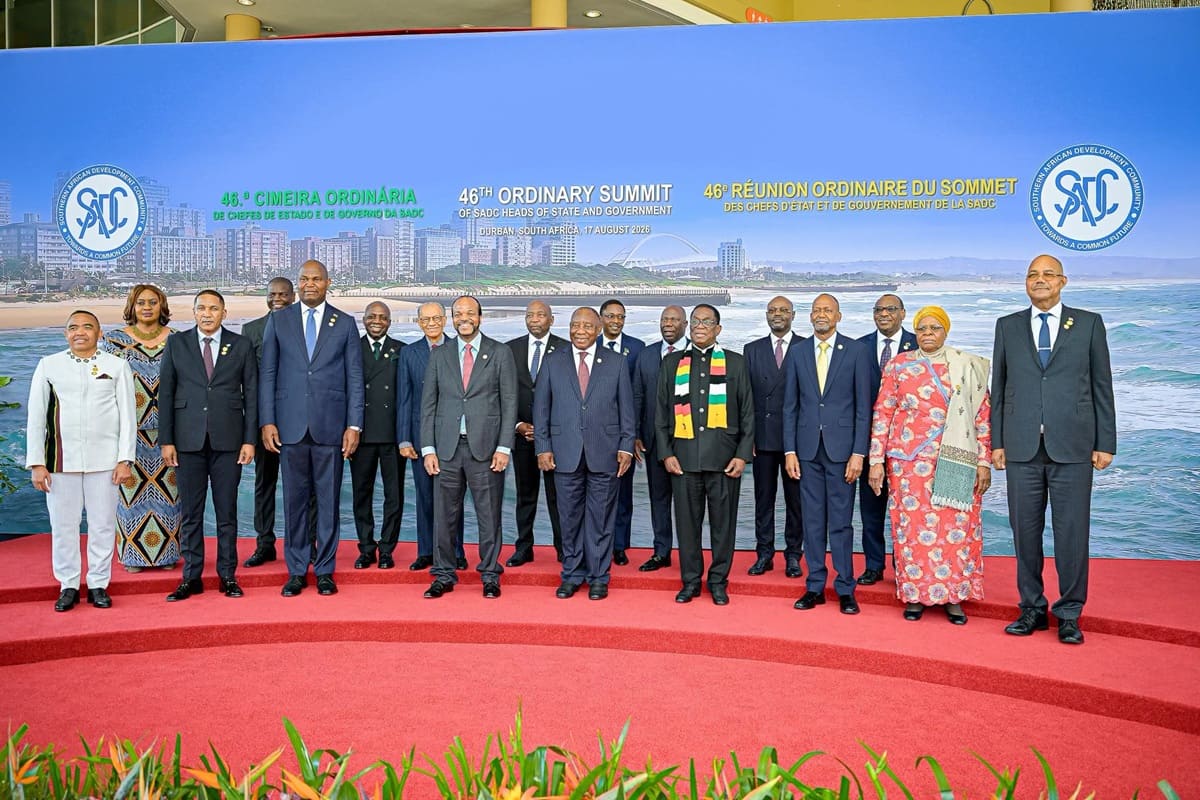
At the conclusion of the 46th Ordinary Summit of SADC Heads of State and Government, held on August 17, 2026, in Durban, South Africa, leaders of the regional bloc formally approved the agreement establishing the SADC Tourism UNIVISA.
In its final communiqué, the Summit stated that it had “approved the Agreement Establishing the SADC Tourism UNIVISA” and called on member states to sign it.
SADC describes the agreement as a tool to facilitate travel across the region, support tourism growth and regional integration, and help increase international visitor arrivals and investment.
UNIVISA is designed to allow travel across several countries with a single visa
Once implemented, the SADC Tourism UNIVISA is expected to allow eligible travelers to visit several participating countries using a single tourist visa, rather than having to apply separately for a visa for each destination.
In May 2026, when the draft agreement was still under review by the region’s legal bodies, SADC said it was intended to establish the procedures and conditions for issuing the UNIVISA for transit and tourism-related stays within the territories of participating states parties.
That distinction matters: UNIVISA does not necessarily mean that one visa will immediately be valid across all 16 SADC member states. The system is expected to operate among countries that formally participate in the program and join its legal framework.
SADC currently comprises Angola, Botswana, Comoros, the Democratic Republic of the Congo, Eswatini, Lesotho, Madagascar, Malawi, Mauritius, Mozambique, Namibia, Seychelles, South Africa, Tanzania, Zambia and Zimbabwe.
Five countries selected for the SADC Tourism UNIVISA pilot
Before any broader regional expansion, UNIVISA is expected to be tested through a pilot program involving five countries:
- Angola
- Mozambique
- Namibia
- South Africa
- Zimbabwe
The five countries formally agreed to participate in the pilot during the SADC Summit on Transfrontier Conservation Areas, held in Harare in May 2025. At the time, regional leaders described UNIVISA as a way to simplify cross-border travel and encourage tourism within Southern Africa.
Technical and legal preparations have continued since then.
In March 2026, SADC said that IT systems, legal frameworks and revenue-sharing models had already been developed for the pilot project. The work has drawn in part on the KAZA UNIVISA, already used between Zambia and Zimbabwe, as well as the East African Tourist Visa.
The KAZA UNIVISA currently allows eligible travelers to use a single visa for multiple trips between Zambia and Zimbabwe for up to 30 days.
SADC’s goal is therefore to expand that concept on a broader regional scale.
More work remains before UNIVISA can launch
Approval of the agreement on August 17, 2026, marks a major political and legal step, but it does not mean the UNIVISA has launched yet.
Just one month earlier, SADC said several issues still needed to be resolved before the pilot could begin.
In July 2026, the bloc’s ministers called on Angola, Mozambique, Namibia, South Africa and Zimbabwe to accelerate the harmonization of their visa policies, finalize revenue-sharing arrangements and complete the technical preparations needed to launch the pilot phase.
The newly approved agreement now provides a common framework for that future cooperation.
SADC justice ministers and attorneys general reviewed the draft in June 2026 before forwarding it to the Council of Ministers and then to the Summit of Heads of State and Government. At the time, the agreement was described as a framework intended to facilitate tourism and cross-border travel through a harmonized visa system for participating states.
Agreement signatures, pilot rollout: What happens next?
The communiqué adopted in Durban also makes a clear distinction between approval of the agreement and the actual introduction of UNIVISA.
After approving the text, SADC leaders called on member states to sign the agreement. In the same communiqué, the organization more broadly urged its members to accelerate the signature and ratification of regional instruments that have been adopted but have not yet entered into force.
At this stage, no official launch date has been announced for the SADC Tourism UNIVISA.
Regional authorities have also yet to publish the key practical details travelers will need, including eligible nationalities, the visa fee, validity period, number of permitted entries, application process and the exact list of border crossings and other entry points where UNIVISA will be accepted.
The timetable for the pilot in the five participating countries also remains to be confirmed.
SADC did, however, identify the project in February as a priority initiative within its tourism strategy. According to the organization, simplifying travel procedures should make Southern Africa more competitive as a destination, encourage multi-country itineraries and increase the length of visitor stays.
In May, during Africa’s Travel Indaba in Durban, the SADC Secretariat confirmed that UNIVISA was moving through the regional decision-making process and was heading toward consideration by heads of state.
Three months later, the agreement establishing the common visa has now been approved. The next challenge will be turning that regional decision into a system travelers can actually use.
VisasNews Take
The approval of the agreement establishing the SADC Tourism UNIVISA is a major step forward, but Southern Africa’s common tourist visa is not yet available. The agreement must now be signed by member states, while the five countries selected for the pilot — Angola, Mozambique, Namibia, South Africa and Zimbabwe — still need to complete the technical and regulatory work required for its launch. No official rollout date, list of eligible nationalities, visa fee or application procedure has been announced so far.