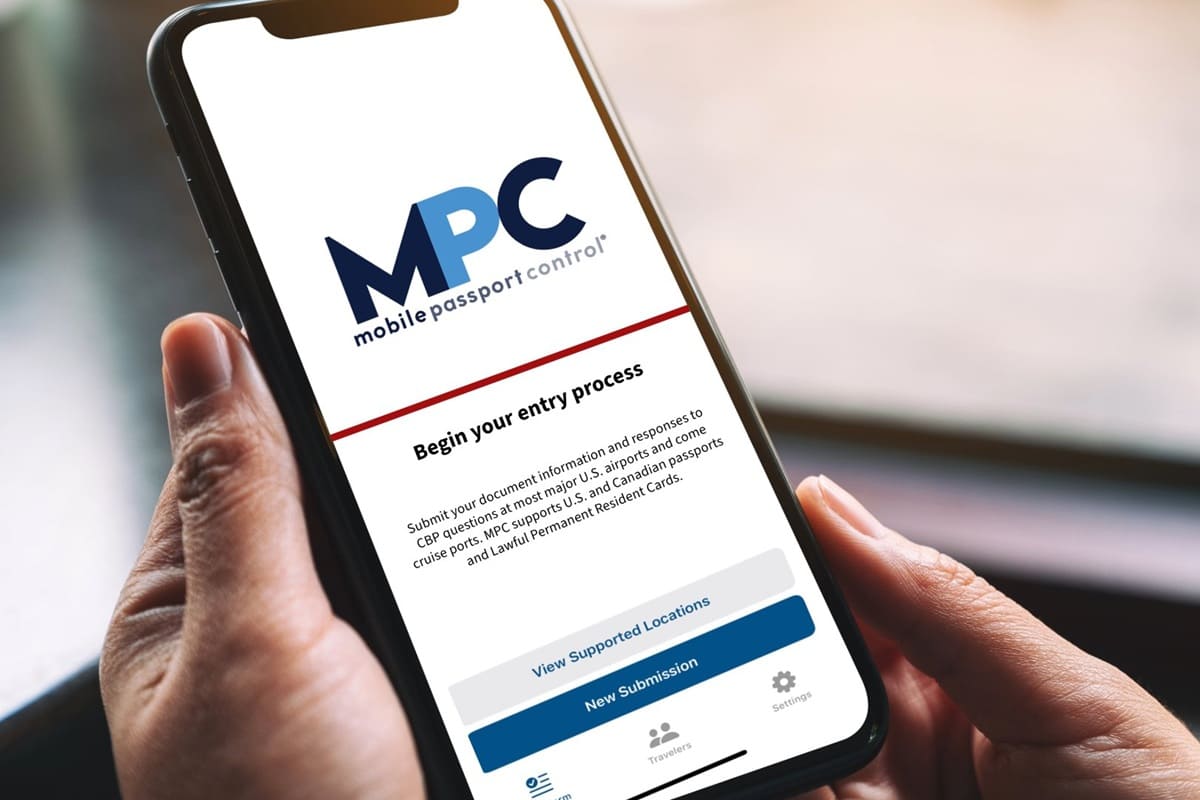
As U.S. authorities have just announced the rollout of Mobile Passport Control (MPC) at four pedestrian land border crossings in Washington State along the Canadian border, this is a good opportunity to revisit an app that remains unfamiliar to some international travelers.
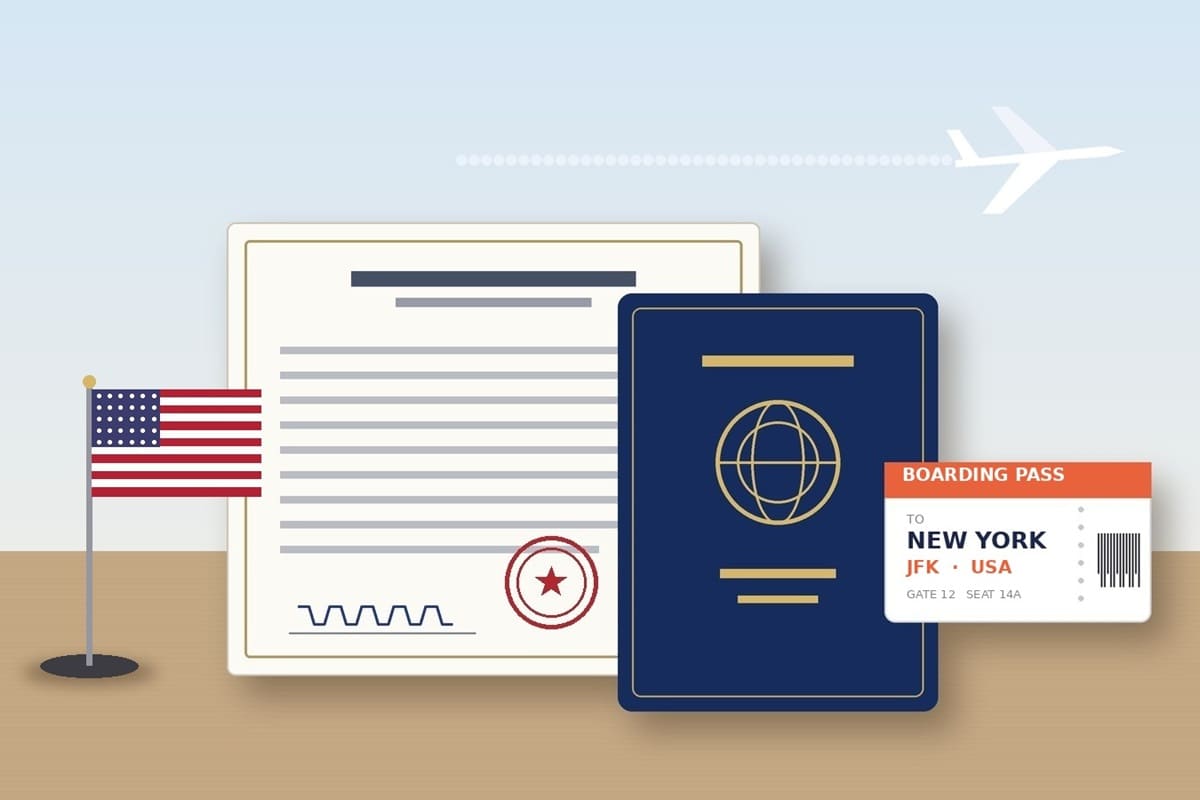
Developed by U.S. Customs and Border Protection (CBP), it is neither a visa, nor a travel authorization, nor an additional right of entry into the United States. Its role is simpler. It allows eligible travelers to submit certain travel and identity information in advance from their phone before presenting themselves for border inspection.
CBP highlights several practical benefits, including potentially shorter wait times, a free and easy-to-use app, and the ability to process up to 12 people in a single submission.
For travelers discovering this tool for the first time, the best way to understand it is as a pre-arrival declaration service that complements standard entry formalities rather than replaces them.
An official app to prepare for arrival in the United States
On its dedicated page, CBP describes Mobile Passport Control (MPC) as a free, secure mobile app that allows eligible travelers to submit their travel document, photo, and customs declaration before inspection.
In practice, users first create a profile in the app using their passport information. They can then enter the required travel details and submit their declaration to CBP shortly before arrival.
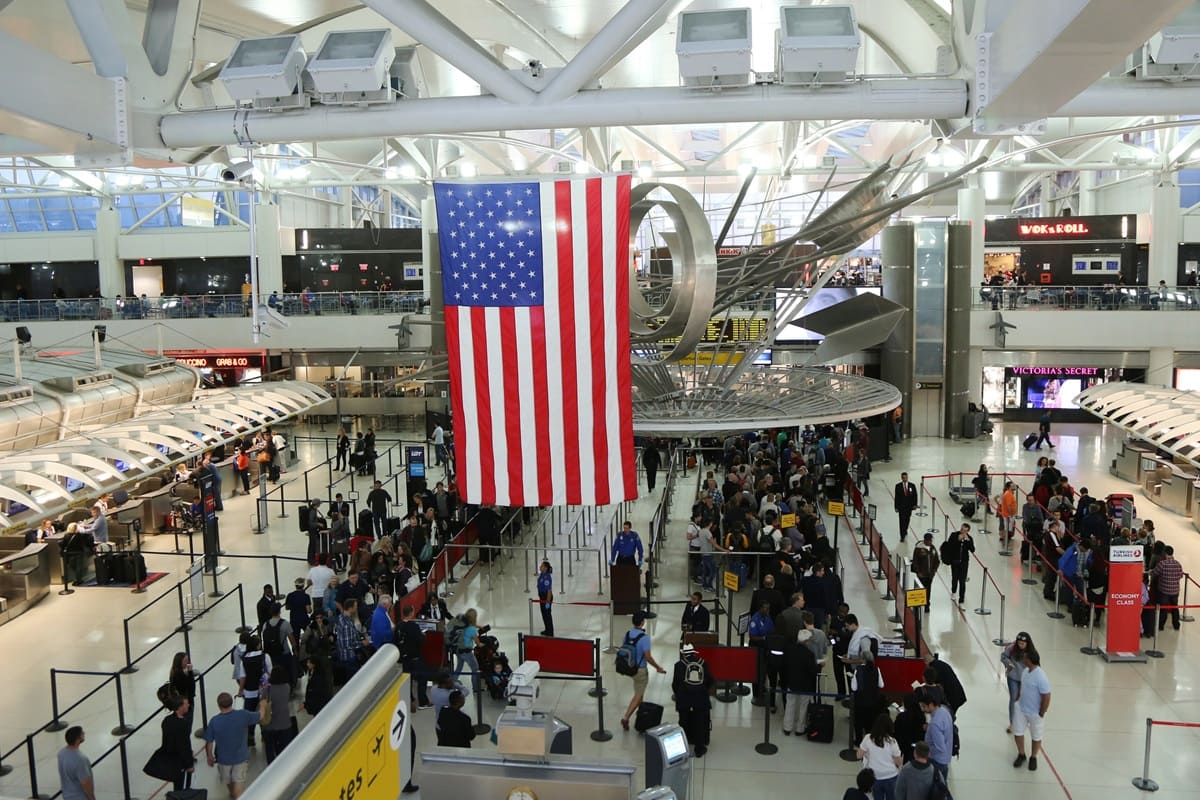
CBP states that, for air arrivals, this step can be completed up to four hours before landing or immediately after arrival. Once inside the inspection area, travelers must look for the MPC lane, where available, and present their passport, or permanent resident card when applicable, to the border officer.
The app does not eliminate the interview or document check. Its main purpose is to make the process smoother when the port of entry is equipped to handle it.
Who is the Mobile Passport Control app for, and what practical benefits does it offer travelers?
U.S. authorities explain that Mobile Passport Control is not available to all travelers.
The app is open to U.S. citizens, lawful permanent residents of the United States, Canadian visitors holding a B1 or B2 visa, and travelers under the Visa Waiver Program with an approved ESTA. MPC therefore does not replace ESTA authorization.
A French, British, Spanish, Japanese, or Australian traveler entering the United States under the Visa Waiver Program must still hold a valid ESTA when required. The app simply adds a digital step to prepare for inspection and does not change admission requirements or the CBP officer’s discretionary authority at the port of entry.
For travelers using a U.S. visa, the logic is the same. The app may make the process easier if the traveler belongs to one of the eligible groups, but it does not alter the legal basis for admission.
Download the Mobile Passport Control (MPC) app on:


CBP highlights several practical advantages. The first is the potential reduction in time spent waiting in line and during the initial inspection stage. The second is ease of use, since the app is free and can be used on a smartphone. The third is its usefulness for groups and families, with the option to include up to 12 profiles in a single transaction.
Travelers who use the app properly no longer need to fill out a paper customs declaration form and may, depending on the location, be directed to a dedicated lane. That does not guarantee instant processing, but the tool can help reduce congestion and shorten certain on-site procedures.
Form I-94, the other part of land-entry formalities
Another important point for understanding the tool is that Form I-94 does not disappear. This document, also known as the Arrival/Departure Record, is used to track the admission and entry and exit movements of many nonimmigrant travelers in the United States. CBP notes that it allows travelers, among other things, to access their admission number and travel history, and that a provisional application may be submitted before arrival at a land border.
For land entries, CBP encourages international visitors to apply for their I-94 online or through the CBP Link app before arriving at the border crossing. Authorities also note that a direct link to this process appears in the Mobile Passport Control app. This clearly shows that the two tools are complementary: MPC is used to prepare for inspection, while the I-94 remains, for many eligible travelers, a separate admission formality.
Where can the Mobile Passport Control (MPC) app be used?
Here are the 59 air, sea, and land ports of entry where the Mobile Passport Control app is currently available:
Airports (51):
- Zayed International Airport, Abu Dhabi (AUH)
- Ted Stevens Anchorage International Airport, Anchorage (ANC)
- Hartsfield-Jackson Atlanta International Airport, Atlanta (ATL)
- Queen Beatrix International Airport, Aruba (AUA)
- L.F. Wade International Airport, Bermuda (BDA)
- Baltimore/Washington International Thurgood Marshall Airport, Baltimore/Washington (BWI)
- Logan International Airport, Boston (BOS)
- Calgary International Airport, Calgary (YYC)
- Cleveland Hopkins International Airport, Cleveland (CLE)
- Charlotte Douglas International Airport, Charlotte (CLT)
- O’Hare International Airport, Chicago (ORD)
- Dallas/Fort Worth International Airport, Dallas/Fort Worth (DFW)
- Denver International Airport, Denver (DEN)
- Detroit Metropolitan Airport, Detroit (DTW)
- Washington Dulles International Airport, Dulles (IAD)
- Dublin Airport, Dublin (DUB)
- Edmonton International Airport, Edmonton (YEG)
- Fairbanks International Airport, Fairbanks (FAI)
- Fort Lauderdale-Hollywood International Airport, Fort Lauderdale (FLL)
- Halifax Stanfield International Airport, Halifax (YHZ)
- Daniel K. Inouye International Airport, Honolulu (HNL)
- George Bush Intercontinental Airport, Houston (IAH)
- William P. Hobby Airport, Houston (HOU)
- John F. Kennedy International Airport, New York (JFK)
- Kansas City International Airport, Kansas City (MCI)
- Harry Reid International Airport, Las Vegas (LAS)
- Los Angeles International Airport, Los Angeles (LAX)
- Miami International Airport, Miami (MIA)
- Minneapolis-Saint Paul International Airport, Minneapolis-Saint Paul (MSP)
- Montréal-Trudeau International Airport, Montréal (YUL)
- Lynden Pindling International Airport, Nassau (NAS)
- Newark Liberty International Airport, New York/Newark (EWR)
- Oakland International Airport, Oakland (OAK)
- Orlando International Airport, Orlando (MCO)
- Ottawa International Airport, Ottawa (YOW)
- Philadelphia International Airport, Philadelphia (PHL)
- Phoenix Sky Harbor International Airport, Phoenix (PHX)
- Pittsburgh International Airport, Pittsburgh (PIT)
- Portland International Airport, Portland (PDX)
- Sacramento International Airport, Sacramento (SMF)
- Salt Lake City International Airport, Salt Lake City (SLC)
- San Diego International Airport, San Diego (SAN)
- San Francisco International Airport, San Francisco (SFO)
- San Jose International Airport, San Jose (SJC)
- Luis Muñoz Marín International Airport, San Juan (SJU)
- Seattle-Tacoma International Airport, Seattle (SEA)
- Shannon Airport, Shannon (SNN)
- Tampa International Airport, Tampa (TPA)
- Toronto Pearson International Airport, Toronto (YYZ)
- Vancouver International Airport, Vancouver (YVR)
- Winnipeg James A. Richardson International Airport, Winnipeg (YWG)
Seaports (4):
- Port of Miami (MSE)
- Port of Palm Beach (WPB)
- Port Everglades, Fort Lauderdale (PEV)
- Port of San Juan (SAJ)
Pedestrian border crossings (4):
- Blaine – Peace Arch pedestrian crossing (Washington State)
- Blaine – Pacific Highway pedestrian crossing (Washington State)
- Lynden-Aldergrove pedestrian crossing (Washington State)
- Sumas pedestrian crossing (Washington State)
A useful tool, but one that does not change entry rules
Ultimately, Mobile Passport Control should be seen as a time-saving tool for certain travelers, not as a new standalone entry requirement.
The app can save time, eliminate paperwork, and streamline the process for a couple, a family, or a small group. It does not, however, provide any substantive advantage in the underlying case. Passport, ESTA, visa, or I-94 requirements remain subject to the usual rules depending on the traveler’s situation.
For eligible travelers, the value of MPC is therefore mainly practical. It is a tool designed to help travelers prepare and move through inspection more efficiently, not a legal shortcut to entering the United States.