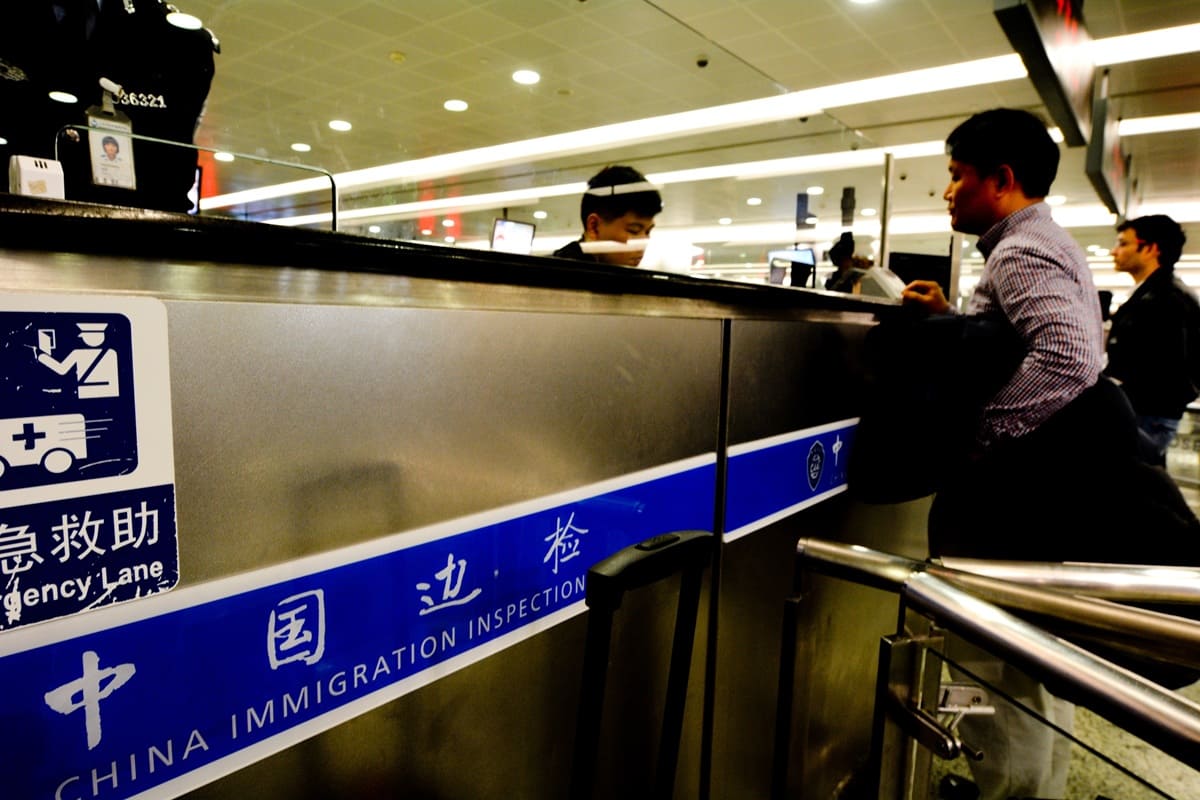
As part of a national strategy aimed at reviving inbound tourism and boosting spending by international visitors, China is formalizing a new set of measures regarding the entry of foreign travelers.
The Ministry of Commerce, in coordination with eight other administrations, including the Ministry of Foreign Affairs and the National Immigration Administration, today released a package of “policy measures to promote the export of travel services and increase consumption by inbound visitors.”
This plan aligns directly with the directives of the Central Committee of the Communist Party of China and the State Council, with the goal of enhancing the country’s international appeal and supporting the development of trade in services.
Within this framework, Beijing explicitly mentions for the first time the potential introduction of an electronic visa system.
Chinese authorities state that they intend to “explore the implementation of an electronic visa, test the online application system, and shorten processing times.”
Until now, China has stood out among major global destinations. While many countries have widely adopted electronic visas (e-Visas) or electronic travel authorizations (ETAs), such as India, Thailand, the United States, the United Kingdom, and soon the European Union, China has continued to rely primarily on a consular visa system requiring physical applications submitted through authorized centers.
The introduction of an e-Visa would therefore represent a significant structural shift, likely to greatly simplify procedures for international travelers subject to visa requirements.
At this stage, however, Chinese authorities have not provided a timeline or concrete implementation details, suggesting that the project remains in a study and pilot phase.
Electronic visa for China: an existing pilot through the “Port e-Visa”
Although China does not yet offer a nationwide e-Visa accessible to the general public, it has already begun a form of digitalization since 2024 through a specific system: the port electronic visa, commonly referred to as the “Port e-Visa.”
Deployed notably in Shanghai, this system operates on a fully digital basis. Unlike traditional visas, no sticker is affixed to the passport. Instead, information is issued electronically, allowing travelers to enter the country by presenting their passport along with the corresponding digital document.
Applications are initiated online by a company or institution based in China via dedicated administrative platforms, then approved by local authorities before the electronic document is issued.
This system currently allows for the issuance of several visa categories, including for business, visits, employment, or personal matters. However, it remains tightly regulated, typically offering a single entry, with a validity of 15 days, a maximum stay of 30 days, and a mandatory entry point in Shanghai, although exit may occur through other open border crossings.
Beyond its technical features, the “Port e-Visa” represents an initial step in the digital transformation of China’s immigration policy. By eliminating paper documents, digitizing the application process, and simplifying certain procedures, it foreshadows broader developments that Beijing now appears to be considering.
As it stands, however, the system remains limited in both access and scope. It primarily targets travelers invited by local entities and does not constitute a fully open tourist e-Visa system.
Visa-free policy in China set to expand further
Alongside its reflections on electronic visas, China confirms its intention to continue expanding its visa exemption policies.
Authorities have expressed their intention to “orderly expand” the list of countries eligible for unilateral visa-free entry, building on recent decisions aimed at facilitating short-term stays. They also plan to “continuously optimize the transit visa exemption policy,” a mechanism already widely used by travelers.
This strategy has already resulted in visa-free access being extended to numerous countries, including several in Europe, allowing their nationals to visit China without a visa for stays of up to 30 days for tourism, business, or family visits.
The following 48 countries and territories currently benefit from this unilateral policy until December 31, 2026, while Russia follows a separate timeline set for September 14, 2026:
- Andorra, Argentina, Australia, Austria, Bahrain, Belgium, Brazil, Bulgaria, Canada, Chile, Croatia, Cyprus, Denmark, Estonia, Finland, France, Germany, Greece, Hungary, Iceland, Ireland, Italy, Japan, Kuwait, Latvia, Liechtenstein, Luxembourg, Malta, Monaco, Montenegro, Netherlands, New Zealand, North Macedonia, Norway, Oman, Peru, Poland, Portugal, Romania, Russia, Saudi Arabia, Slovakia, Slovenia, South Korea, Spain, Sweden, Switzerland, United Kingdom, and Uruguay.
Promoting the digital arrival card
As part of this broader modernization effort, Chinese authorities also aim to further digitize border procedures by promoting the online completion of arrival cards for foreign travelers.
This initiative builds on a process launched on November 20 with the introduction of a digital arrival card. Today’s announcement highlights the authorities’ intention to expand its use and fully integrate it into the traveler journey.
In practical terms, the system allows travelers to complete this requirement online up to 90 days before arrival in China by providing personal information and travel details.
Once completed, the card can be presented electronically, streamlining border control procedures. Authorities now intend to strongly encourage this online process, which is expected to gradually become the standard at major entry points.
At the same time, alternative options remain available during the transition phase. Travelers can still complete their arrival card on-site, particularly via connected kiosks installed at major ports of entry or by scanning a QR code. A paper version also remains temporarily available to ensure accessibility for all passengers.
A comprehensive transformation of the foreign visitor experience
The plan unveiled by Beijing on March 20 goes beyond visas and entry procedures, addressing the broader experience of international visitors.
Authorities aim to build a true national tourism brand structured around concepts such as “Hello! China,” “Shop in China,” “Study in China,” and “Travel in China,” while also developing a centralized information platform for foreign travelers.
Tourism offerings are expected to evolve toward more integrated formats combining transportation, accommodation, activities, and consumption, with particular attention given to multi-destination trips and off-peak periods to better distribute visitor flows.
At the same time, authorities emphasize improvements in foreign-language services, modernization of reception infrastructure, and increased use of digital technologies and artificial intelligence to support a more connected tourism ecosystem.
Efforts will also focus on easing practical aspects of the visitor experience, including payments, VAT refunds, connectivity, and access to everyday services, areas often perceived as friction points for international travelers.
Finally, special attention is being given to major international events, whether sporting, cultural, or commercial, through the implementation of simplified entry procedures and dedicated arrangements to ensure optimal conditions for participants and spectators.