A City Built in Layers
The easiest way to understand Kyiv is to think of it as a place where different centuries sit right on top of each other, and none of them have been smoothed over.
Start with the Kyiv Pechersk Lavra – the Monastery of the Caves. Founded in the eleventh century, it’s a UNESCO World Heritage site and still one of the most striking places in Eastern Europe. Above ground, baroque bell towers and gilded domes rise above the Dnipro. Below ground, you take a candle and walk through narrow limestone tunnels past the glass-covered remains of monks who lived here a thousand years ago. It’s not a museum recreation. It’s the actual place, largely unchanged, still functioning as a working monastery. That combination of the accessible and the ancient is hard to find anywhere else in Europe.
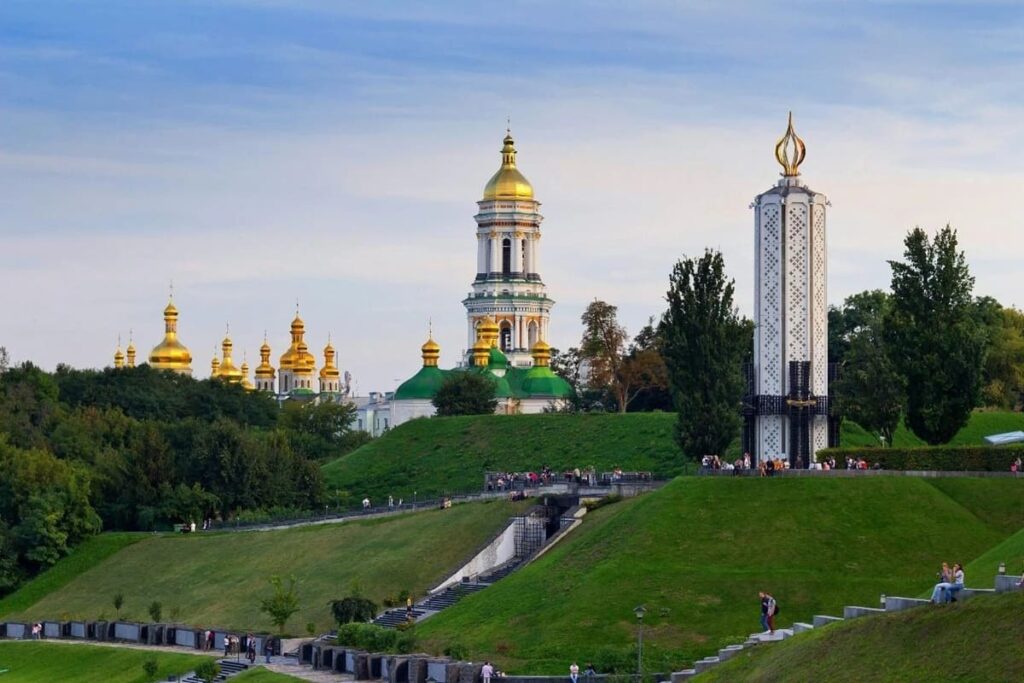
A short distance away, Saint Sophia Cathedral has been standing since the early eleventh century. Built under Prince Yaroslav the Wise to rival the churches of Constantinople, it contains some of the best-preserved medieval mosaics on the continent. The bell tower next to the cathedral is worth climbing for the view alone.
These aren’t museums in the traditional sense. They’re buildings that have been continuously significant for over a thousand years, and you can feel that when you’re inside them.
Andriivskyi Descent and the Podil District
Not everything in Kyiv is monumental in scale. Andriivskyi Descent is a cobblestone street that runs steeply downhill from the upper city to the riverside district of Podil, and it’s one of the more enjoyable walks in any European capital. The street is lined with 19th-century houses, art galleries, antique dealers, and vendors selling ceramics, embroidered textiles, and old coins. At the top sits St. Andrew’s Church – a baroque building in pale blue and white, designed by the Italian architect Bartolomeo Rastrelli in the eighteenth century. The view from its terrace over the Podil rooftops is quietly excellent.
Podil itself, at the bottom of the hill, was historically the city’s merchant and trading district, where goods arrived by river, and trade fairs filled Kontraktova Square. Today it’s a neighborhood of students, artists, and independent businesses. Vintage trams still run past the historic Kyiv Mohyla Academy. Flea markets on weekends turn up Soviet-era memorabilia, vinyl records, and handmade jewelry. There are courtyard bars, independent bookshops, and enough coffee shops to keep you going for a week. The atmosphere is unhurried and local, which is a contrast to the grand avenues of the upper city, and the better for it.
Where to Stay
Finding the best hotels in Kyiv is straightforward if you know which neighborhoods suit your plans. The city center, around Khreshchatyk and the Maidan, puts you within walking distance of the main landmarks and has the widest range of accommodation, from large international hotels with river views to smaller boutique properties in restored imperial buildings.
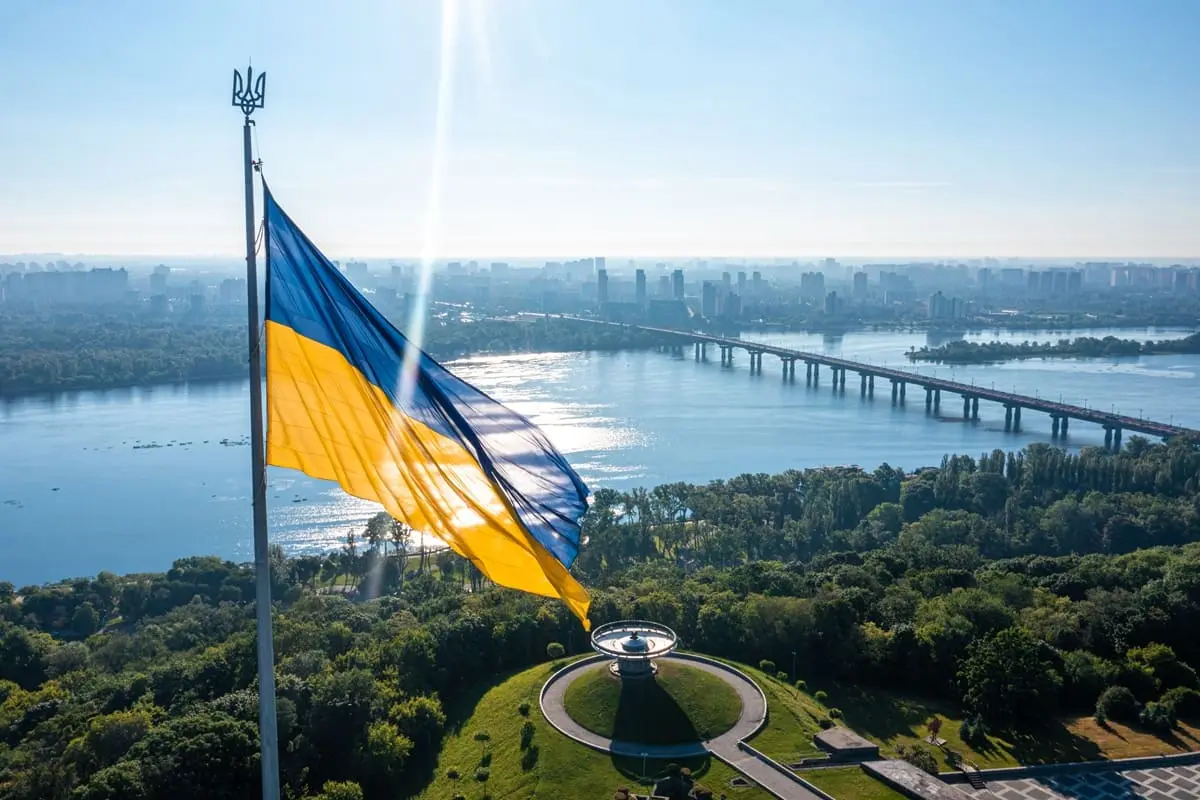
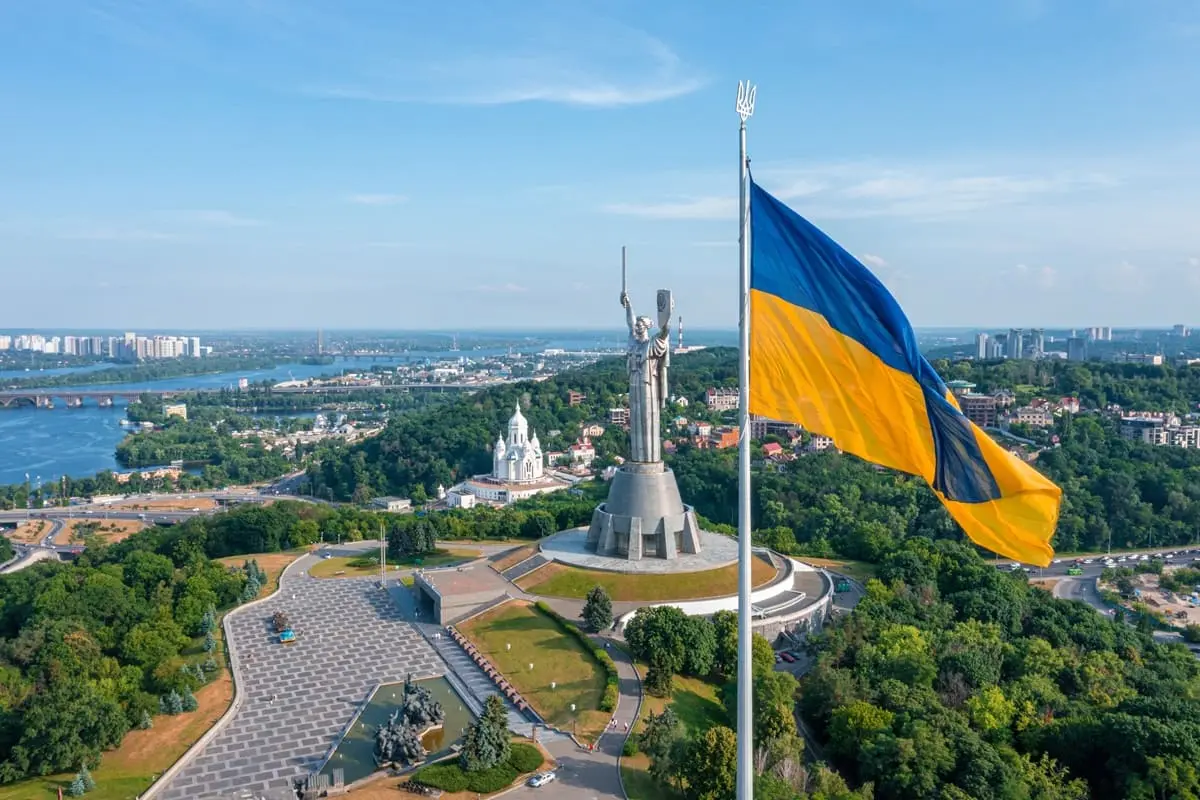
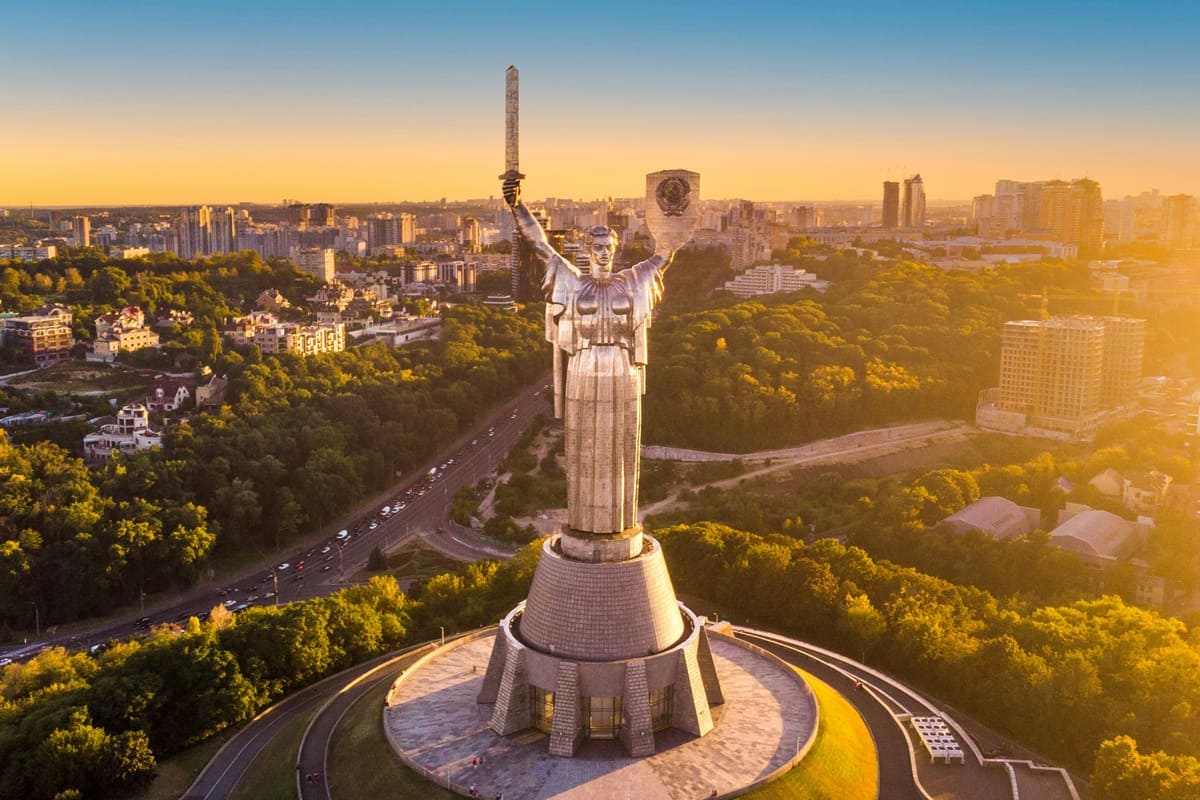
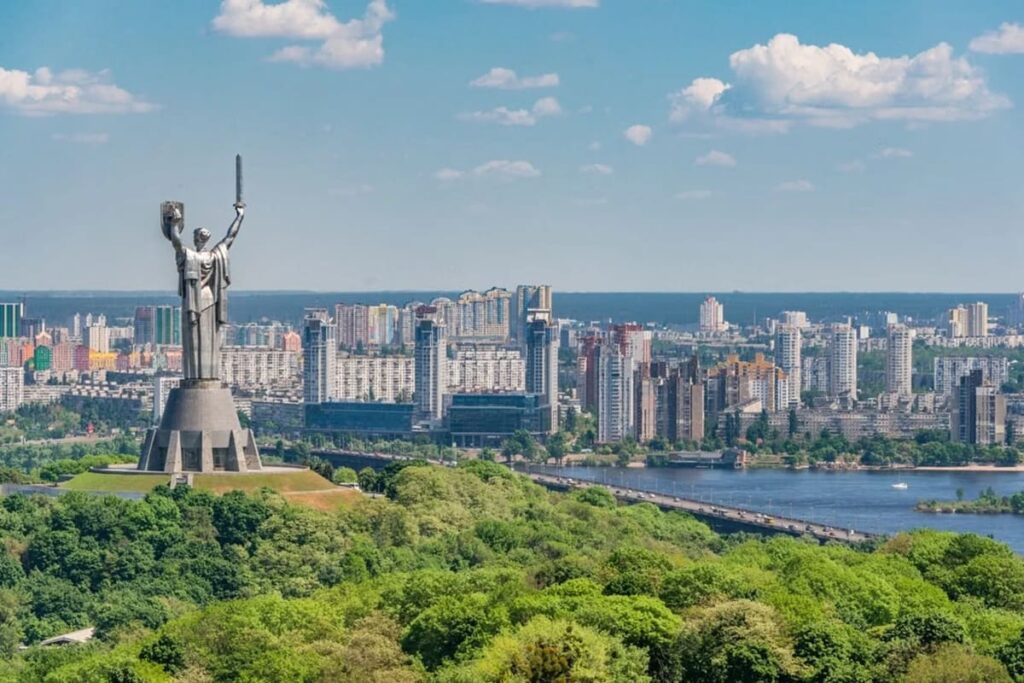
Podil is a good alternative if you prefer a neighborhood feel. The streets are quieter, the restaurants are better value, and the major sites are still reachable on foot or by metro. For those visiting primarily for the Lavra and the Motherland Monument, the Pechersk district to the south offers proximity to the eastern riverbank landmarks without the bustle of the center. Wherever you stay, Kyiv’s metro system is fast and inexpensive, so no part of the city is inconvenient.
Green Space and the River
Kyiv is one of the greener European capitals, and that’s not a minor detail – the parks and riverbanks are genuinely part of daily life here, not just decorative. Trukhaniv Island, reachable by footbridge from the centre, is a long strip of parkland and sandy riverbank where locals cycle, swim, and picnic from spring through early autumn. It’s free, unhurried, and completely without tourist infrastructure, which makes it a good place to spend an afternoon if you want a break from sightseeing.
The Grishko National Botanical Garden sits on the hillside above the Dnipro, with views across the river and into the forest parks on the opposite bank. In late spring, when the lilac collection is in bloom, it’s one of the more beautiful urban green spaces you’ll find anywhere in Europe. The rest of the year it’s still worth an hour or two, particularly in the sections that overlook the water.
Food, Coffee, and the Rest
Kyiv has developed a serious food culture over the past decade, and it goes well beyond the traditional dishes that appear in every guide. Borscht and varenyky are worth ordering, particularly in Podil, where a few traditional restaurants do them properly, but the city also has a strong modern restaurant scene. Ukrainian bistros serving updated versions of regional dishes sit alongside restaurants doing genuine fusion cooking, and the quality is high relative to what you’d pay in Western Europe.

Coffee is taken seriously to an almost remarkable degree. Kyiv has more specialty coffee shops per square kilometer than most cities twice its size. They range from tiny single-origin espresso bars tucked into archways to large industrial spaces in converted factories. ART-ZAVOD Platforma, a revitalized factory complex on the east side, is worth visiting for its food hall and general atmosphere, particularly on weekends.
Why Go Now
Kyiv is a city that has been through a great deal and continues to be. Walking its streets today means seeing a place with an unresolved, living history, where the past isn’t packaged for visitors but is simply present, built into the architecture and the daily habits of the people who live there. The ancient monasteries, the independent coffee shops, the Dnipro River wide and silver in the late afternoon coexist without any particular effort to make them coherent for outsiders.
That’s precisely what makes Kyiv worth the trip.
A note on travel: Ukraine remains at war, and visiting Kyiv comes with serious risks. Air-raid alerts, disruptions to transport and infrastructure, and rapidly changing security conditions are part of the reality on the ground. Anyone considering a trip should consult current official travel advisories, understand local safety procedures, and make an informed decision based on the situation at the time of travel.