Entry requirements for the US made their way to the White House this week.
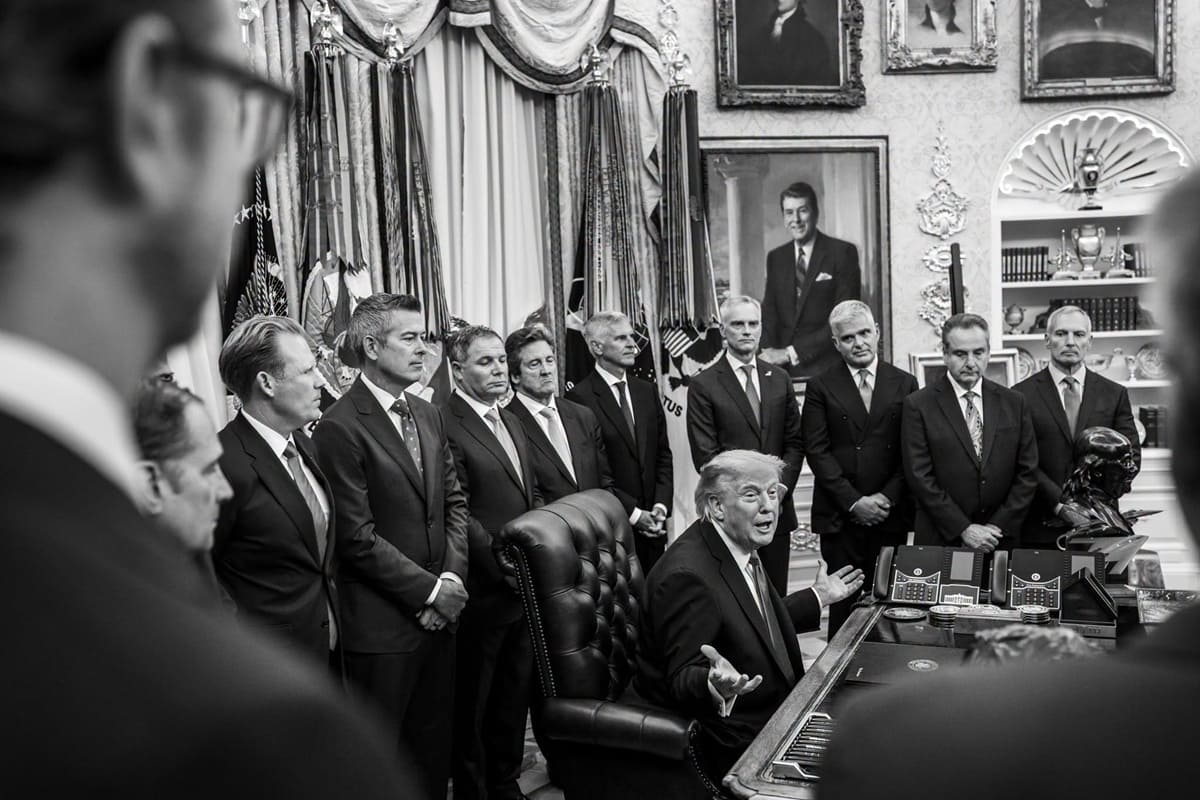
President Donald Trump met on Wednesday, September 2, with executives from some of the country’s largest travel and tourism companies to discuss ways to increase international visitor numbers.
The White House published footage of the meeting, which brought together representatives from American Airlines, Hilton, Marriott, IHG Hotels & Resorts, Booking.com, MGM Resorts, Caesars Entertainment, The Venetian, Hard Rock International and Carnival, among others.
The meeting comes as US international tourism continues to struggle to regain sustained momentum, despite the temporary boost provided by this summer’s FIFA World Cup in North America.
A target of 100 million international visitors a year
Following the meeting, Geoff Freeman, president and CEO of the U.S. Travel Association, set an ambitious target: bringing 100 million international visitors a year to the United States by 2030.
In a statement released after the meeting, the industry group estimated that reaching that goal could generate an additional $81 billion in spending and support more than 400,000 US jobs.
During the meeting itself, Freeman framed the ambition even more directly: making the United States the world’s most visited destination. He pointed to France, which currently holds that position, and called on the industry and the administration to work together to reclaim the top spot.
The challenge is significant. According to the latest data from the National Travel and Tourism Office (NTTO), part of the US Department of Commerce, the United States welcomed 68.3 million international visitors in 2025. The NTTO currently forecasts 70.5 million arrivals in 2026 and about 85.2 million in 2030, well below the new target being promoted by the industry.
According to Reuters, despite the boost provided by the World Cup this summer, arrivals from international markets excluding Canada and Mexico were still down 4.7% over the first seven months of 2026.
Washington touts progress on visas and the traveler experience
During the meeting, Trump himself cited visas as one of the tools his administration has used to support the travel industry.
The president said his administration had cut visa wait times by 40% over the latest travel season. He also highlighted faster connections between international and domestic flights through the One Stop Security pilot program, as well as a $12.5 billion investment aimed at modernizing US air travel.
Freeman also praised measures taken “on the visa side” and at customs, linking them to the successful handling of international visitors during the World Cup.
Launched in 2025 by the Transportation Security Administration (TSA), the One Stop Security program allows some travelers arriving in the United States from participating foreign airports to continue onto domestic connecting flights without going through TSA security screening again.
After clearing US immigration and customs formalities, checked baggage can also be transferred to the connecting flight without being rescreened. The program initially launched with flights from London Heathrow to Dallas Fort Worth and Atlanta.
The administration is also highlighting the $12.5 billion allocated to modernizing the US air traffic control system, including the replacement of aging equipment, communications systems and infrastructure in control towers.
Transportation Secretary Sean Duffy said during the meeting that a new announcement related to the modernization effort was expected in the coming weeks.
Major international events also remain central to the strategy. Following the 2026 World Cup, Trump pointed to the 2028 Los Angeles Olympic Games, with LA28 chairman Casey Wasserman attending the meeting, as another opportunity to extend the tourism momentum generated this summer.
Visa wait times and bonds remain among the obstacles
The progress highlighted by the administration may not be enough, however, to reach the 100 million visitor goal, according to the travel industry.
Reuters reports that industry leaders see several factors weighing on international arrivals, including wait times for a visa appointment, high airfares, certain entry restrictions, tariffs and broader US immigration policies.
But particular attention has focused on the Visa Bond Program, which requires certain applicants for B-1/B-2 business and tourist visas to post a financial bond.
“We cannot get to 100 million travelers with a bond program that would discourage travelers,” Freeman said after the meeting, according to Reuters.
The U.S. Travel Association chief estimates that the measure has led to an approximately 80% drop in arrivals from the 50 countries covered by the program.
Visa bonds can reach $20,000
The issue is especially timely because Washington has only recently made the program permanent.
As VisasNews reported in early August, the State Department turned the experimental program launched in August 2025 into a permanent Visa Bond Program.
Nationals of designated countries applying for a B-1, B-2 or B-1/B-2 visa may now be required to post a bond of $10,000, $15,000 or $20,000 before the visa can be issued.
The standard amount is generally $15,000, although a consular officer may reduce or increase the bond depending on the applicant’s circumstances.
The State Department currently lists 50 countries subject to visa bonds, including Algeria, Cambodia, Georgia, Nepal, Nigeria, Senegal, Tunisia and Zambia.
In the final rule published in the Federal Register, the State Department itself acknowledges that the program has sharply reduced both demand and the number of visas issued.
During the first 10 months of the pilot program, approximately 20,000 visa applications were subject to a bond requirement, and nearly half of the affected applicants ultimately chose not to post the bond.
Over the same period, B-1/B-2 visa issuances to nationals of countries participating in the program fell 83% compared with the previous year.
Washington points to a very different trend when it comes to overstays. According to figures included in the final rule, the 50 countries covered by the program recorded 45,488 overstays in 2024, compared with fewer than 50 among visa holders covered during the first 10 months of the pilot program.
The State Department argues that travelers who actually posted a bond overwhelmingly complied with the terms of their visas and authorized stays.
No changes to visa rules announced so far
The September 2 meeting does not mean the Trump administration is preparing to eliminate or ease the program.
The White House announced no changes to visa rules or to the Visa Bond Program following the discussions.
The U.S. Travel Association’s statement likewise focuses on the 100 million visitor target and the industry’s willingness to work with the administration, without reporting any commitment from Trump regarding visas or visa bonds.
The meeting nevertheless highlights a tension between two priorities currently being pursued in Washington: making it easier for international visitors to enter and move through the country in order to strengthen US tourism, while maintaining tighter controls that may discourage some of those same travelers.
Just weeks after the State Department made its visa bond program permanent, its potential impact on the attractiveness of the United States as a destination is now being discussed at the highest level of the US government.
The issue is worth watching closely, particularly because Freeman said in August that he had heard discussions about a possible expansion of the program to additional countries, although no such expansion has been officially announced so far.
VisasNews Take
The September 2 meeting at the White House does not change any US entry requirements. Nationals of countries currently subject to visa bonds remain covered by the Visa Bond Program, and no easing of the rules has been announced. Travelers eligible for the Visa Waiver Program, including citizens of the UK and many European countries, can still travel to the United States with an ESTA provided they meet the program’s requirements. The meeting nevertheless illustrates the two priorities Washington is currently trying to balance: tighter entry controls and a smoother traveler experience aimed at making the United States more attractive to international visitors. While the administration says it has cut visa wait times by 40% and introduced several measures to streamline airport connections, the US travel industry argues that visa bonds in particular could undermine the goal of attracting 100 million international visitors a year by 2030.