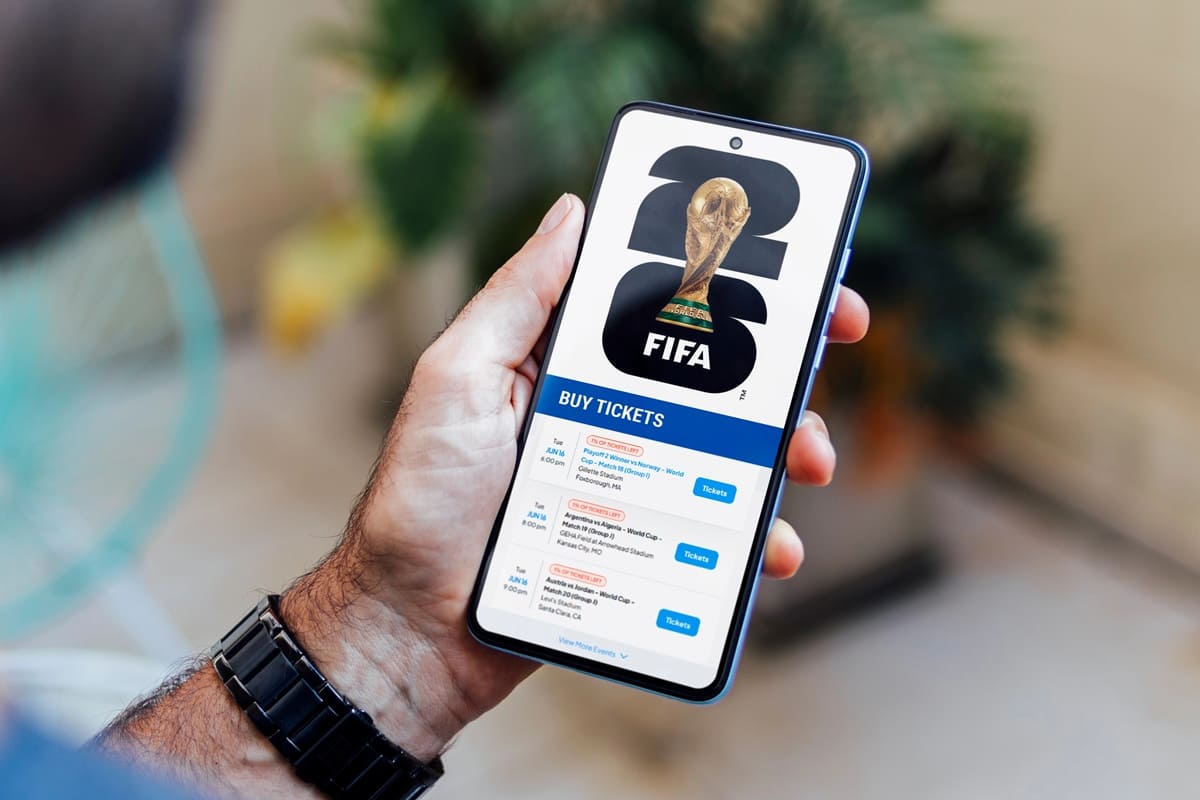
Less than a month before the start of the 2026 World Cup, which will be held from June 11 to July 19 in Canada, the United States and Mexico, U.S. authorities are easing a sensitive requirement for some foreign supporters.
According to information provided by the U.S. Department of State to the Associated Press (AP), confirmed ticket holders for the tournament will not be required to pay the visa bond that has been imposed for several months on nationals of certain countries.
The exemption applies to eligible travelers who have purchased World Cup tickets and registered through FIFA PASS, the system designed to provide priority visa appointment slots.
It does not remove the visa requirement where one applies, but it does lift a significant financial burden for some visitors expected to travel to the United States.
A targeted exemption for ticket holders
The measure applies to fans from countries covered by the U.S. “visa bond” program, which requires certain B1/B2 visa applicants to post a bond because of overstay rates or security concerns identified by U.S. authorities.
The State Department says affected nationals may be required to post a bond of $5,000, $10,000 or $15,000, with the amount determined during the consular interview. The bond is normally refunded if the traveler complies with the terms of the visa, does not travel to the United States before the visa expires, or is denied admission upon arrival.
For the 2026 World Cup, however, the bond will not be required for fans who meet the conditions announced by Washington. According to the Associated Press, the exemption applies to confirmed ticket holders who use FIFA PASS, a system set up to facilitate access to visa appointments ahead of the tournament.
“The United States is excited to organize the biggest and best FIFA World Cup in history,” said Mora Namdar, the Assistant Secretary of State for Consular Affairs. She said U.S. authorities “are waiving visa bonds for qualified fans who bought World Cup tickets” and use FIFA PASS, which has allowed expedited visa appointments since April 15.
Five qualified countries directly affected
The official list of countries subject to a visa bond currently includes around 50 states. Among them are several countries that have qualified for the 2026 World Cup, including Algeria, Cape Verde, Côte d’Ivoire, Senegal and Tunisia.
Fans from those countries could therefore, in theory, have faced a very high cost before departure, on top of visa fees, airfare, accommodation and match tickets. The exemption announced by the U.S. administration reduces that barrier, although it does not exempt travelers from obtaining the required visa or from undergoing the usual checks.
Players, coaches and some delegation members were already exempt from the bond under measures designed to prioritize visa processing linked to the tournament. The new announcement now covers ordinary fans, provided they meet the criteria defined by U.S. authorities.
FIFA PASS speeds up appointments, but does not guarantee a visa
FIFA PASS, short for FIFA Priority Appointment Scheduling System, was presented in November 2025 by FIFA and U.S. authorities. The system allows ticket holders for matches held in the United States to access priority slots for their visa interview.
It is not a special World Cup visa, nor is it an automatic authorization to enter the United States. Travelers must still apply for a visa if they are not eligible for the Visa Waiver Program, attend a consular interview where required, and show that they meet the applicable conditions.
FIFA also notes that fans from countries participating in the U.S. Visa Waiver Program may apply for ESTA authorization, as they would for a standard tourist trip to the United States.
No Fan ID or common entry system for the three host countries
The 2026 World Cup will be held across three countries, but entry requirements remain specific to each host nation. Travelers will therefore need to comply with the rules of Canada, the United States and Mexico, depending on the matches they plan to attend.
The official FAQ for World Cup hospitality packages states that no Fan ID or Hayya-style system, similar to those used at previous editions, will be introduced for this tournament. Supporters should therefore check the applicable travel requirements with the authorities of the country or countries they plan to visit before departure.
For the United States, this means travelers eligible for ESTA must obtain that authorization before traveling, while others must follow the appropriate visa procedure. Holding a match ticket may provide access to FIFA PASS, but it does not replace a valid travel authorization.
A closely watched announcement amid visa pressure
The exemption comes as U.S. visa processing times, costs and requirements are drawing particular attention ahead of the tournament. The Associated Press notes that U.S. hospitality industry groups have voiced concern about the impact of visa obstacles and uncertainty on international demand for the World Cup.
The measure affects only a limited number of fans, but it carries symbolic weight. It shows that U.S. authorities are seeking to balance tougher immigration controls with the need to welcome a major global sporting event.
For travelers, the practical message remains unchanged: they should check entry requirements as early as possible, avoid waiting until the last minute to apply for a visa or ESTA, and not treat a match ticket as a guarantee of entry into the United States.
What travelers should know
- Fans holding tickets for the 2026 World Cup may qualify for a visa bond exemption if they are covered by the U.S. visa bond program and meet the requirements linked to FIFA PASS.
- The exemption does not remove the visa requirement for travelers who cannot enter the United States with ESTA authorization. Visa applications remain subject to review by U.S. consular authorities.
- Entry requirements remain separate for the three 2026 World Cup host countries. A trip involving matches in Canada, the United States and Mexico may therefore require several checks before departure.